
Click to view image and other views




10737
For Sale
Country Group:
Item id: 10737
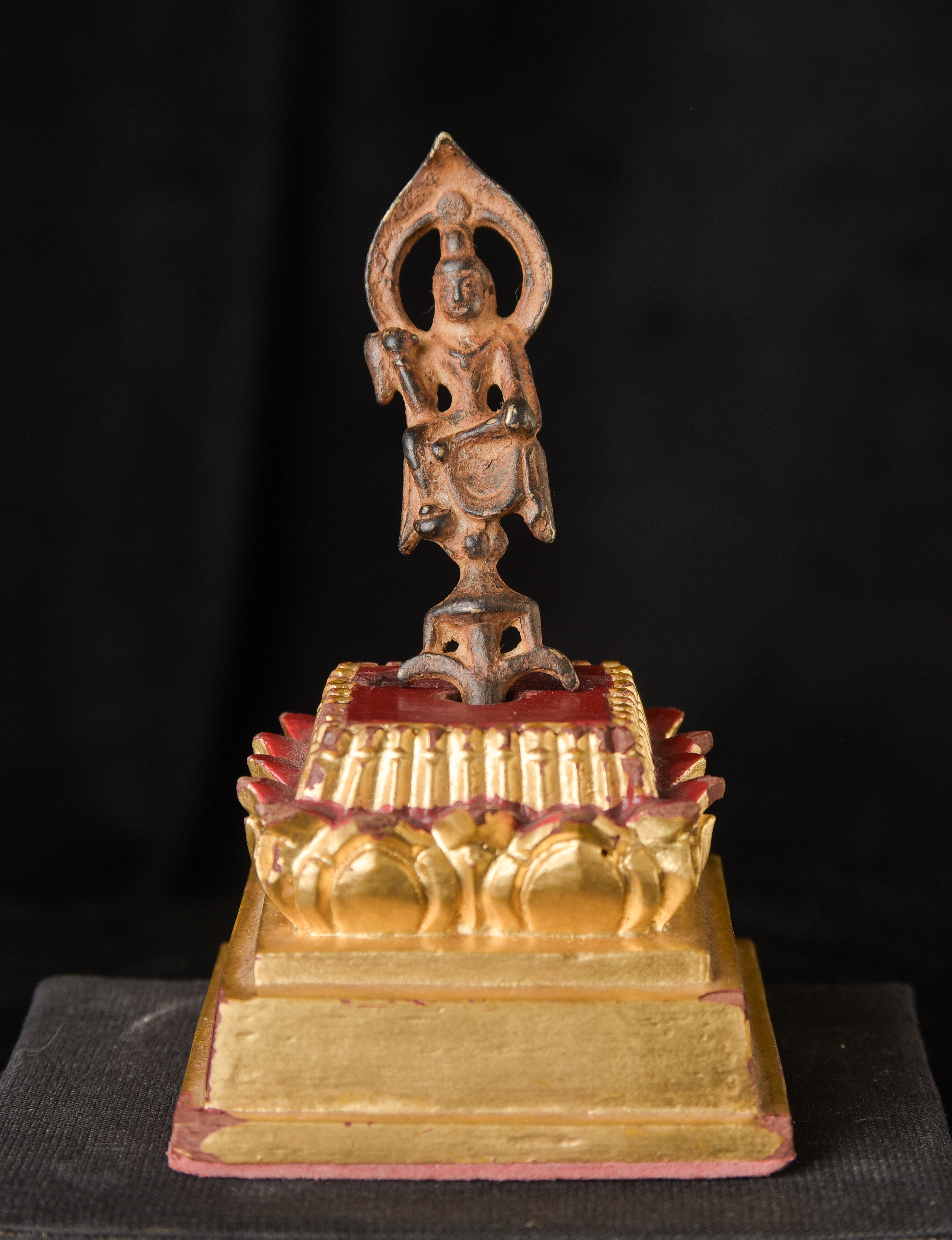
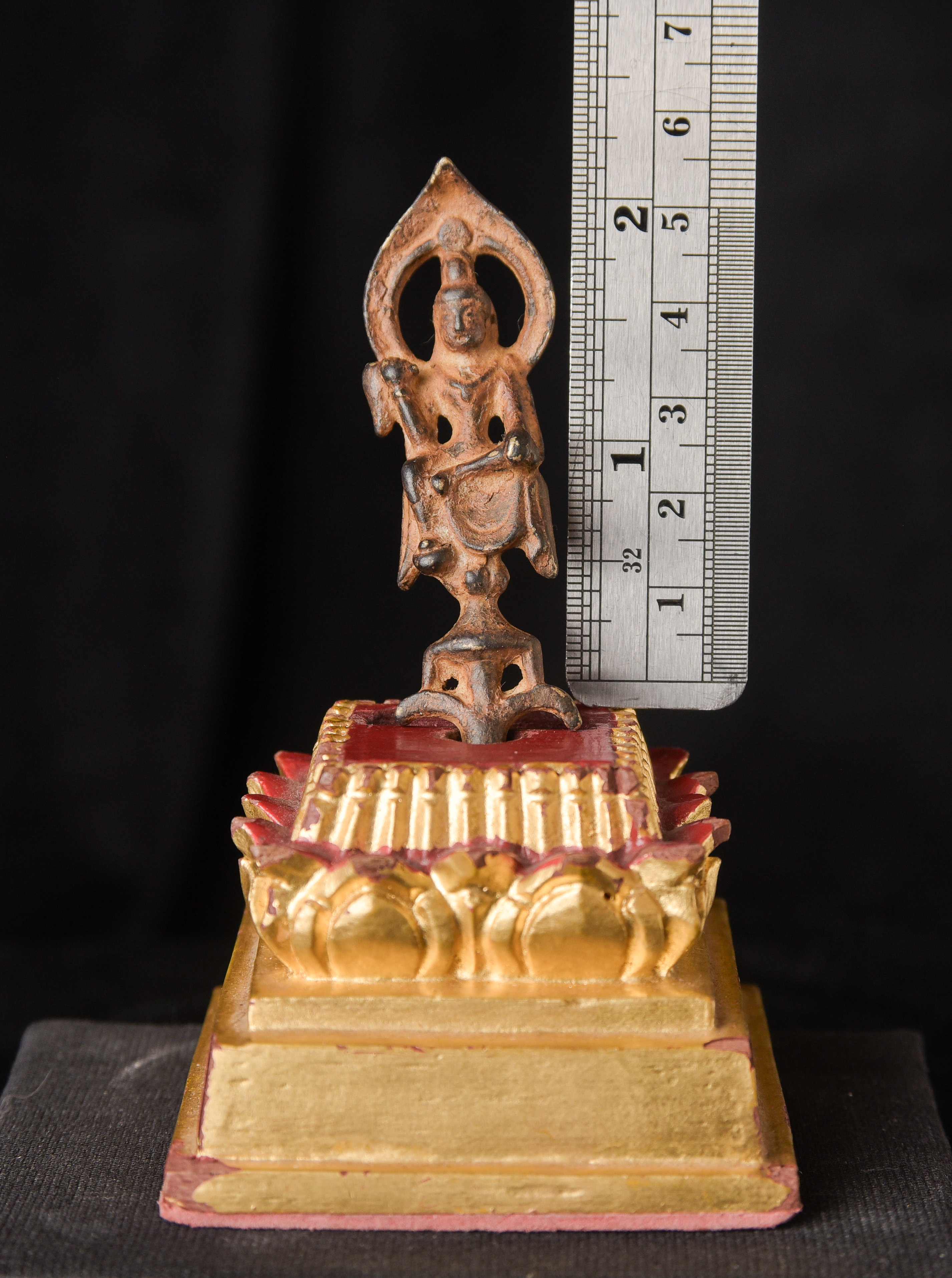
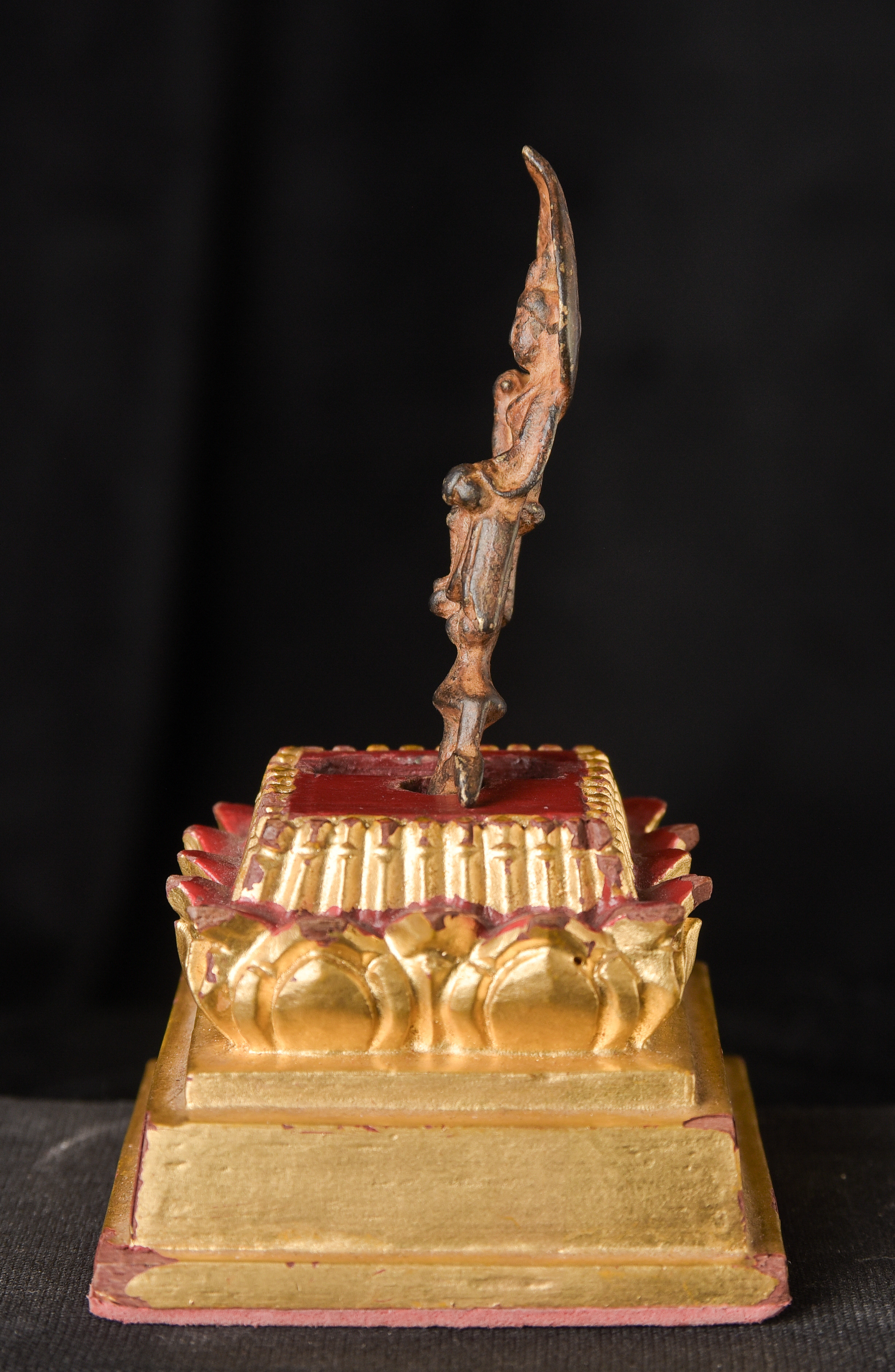
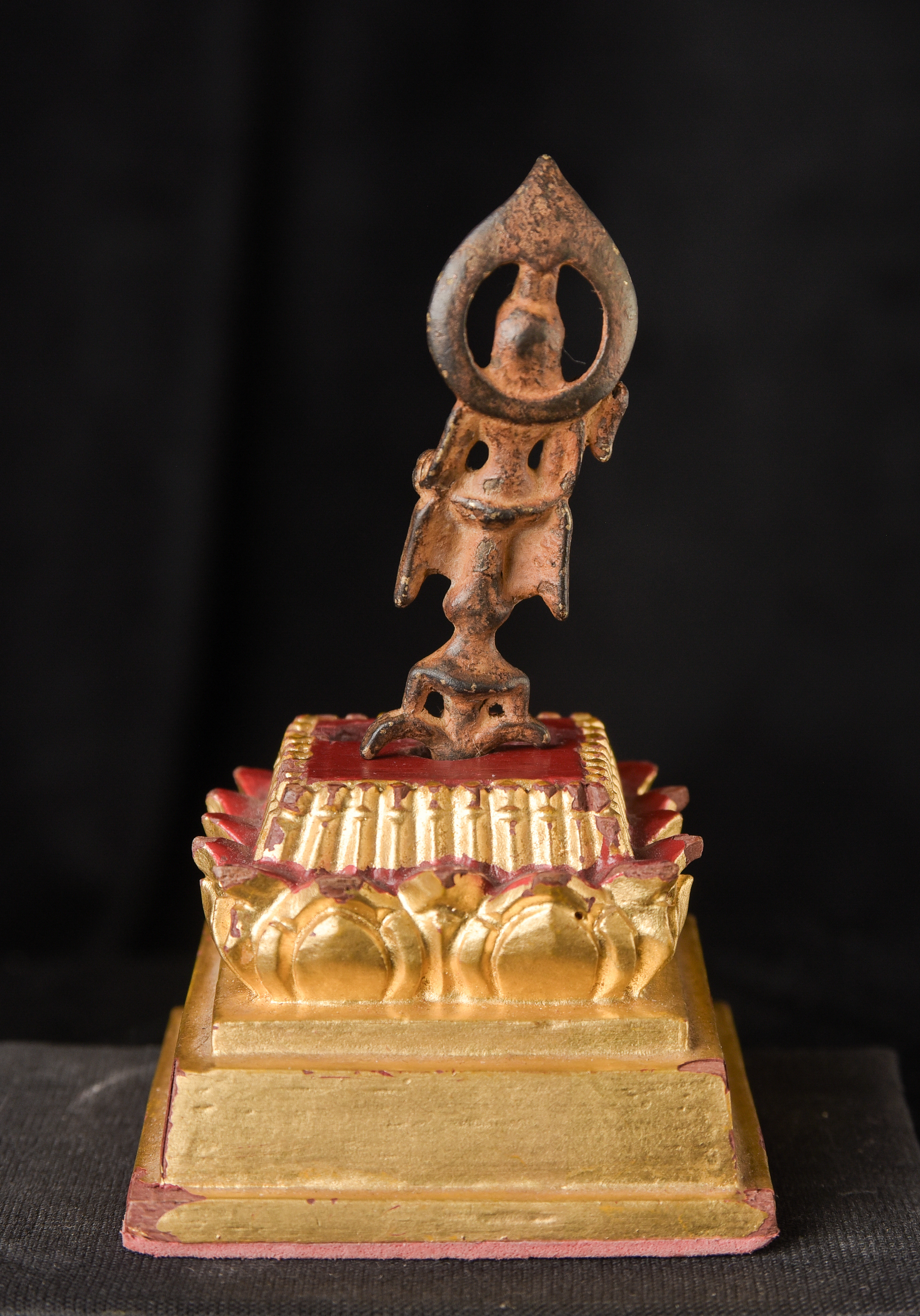
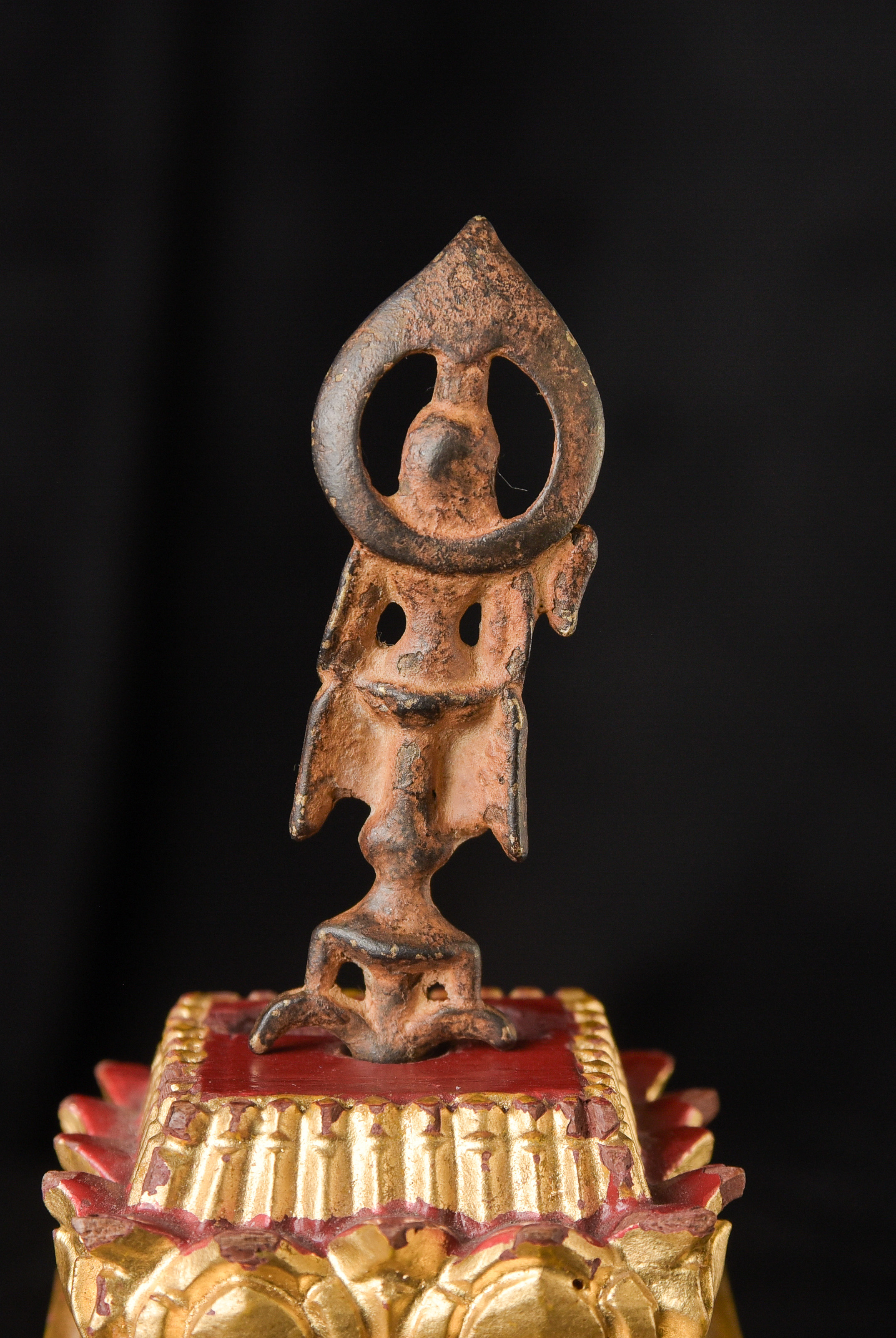
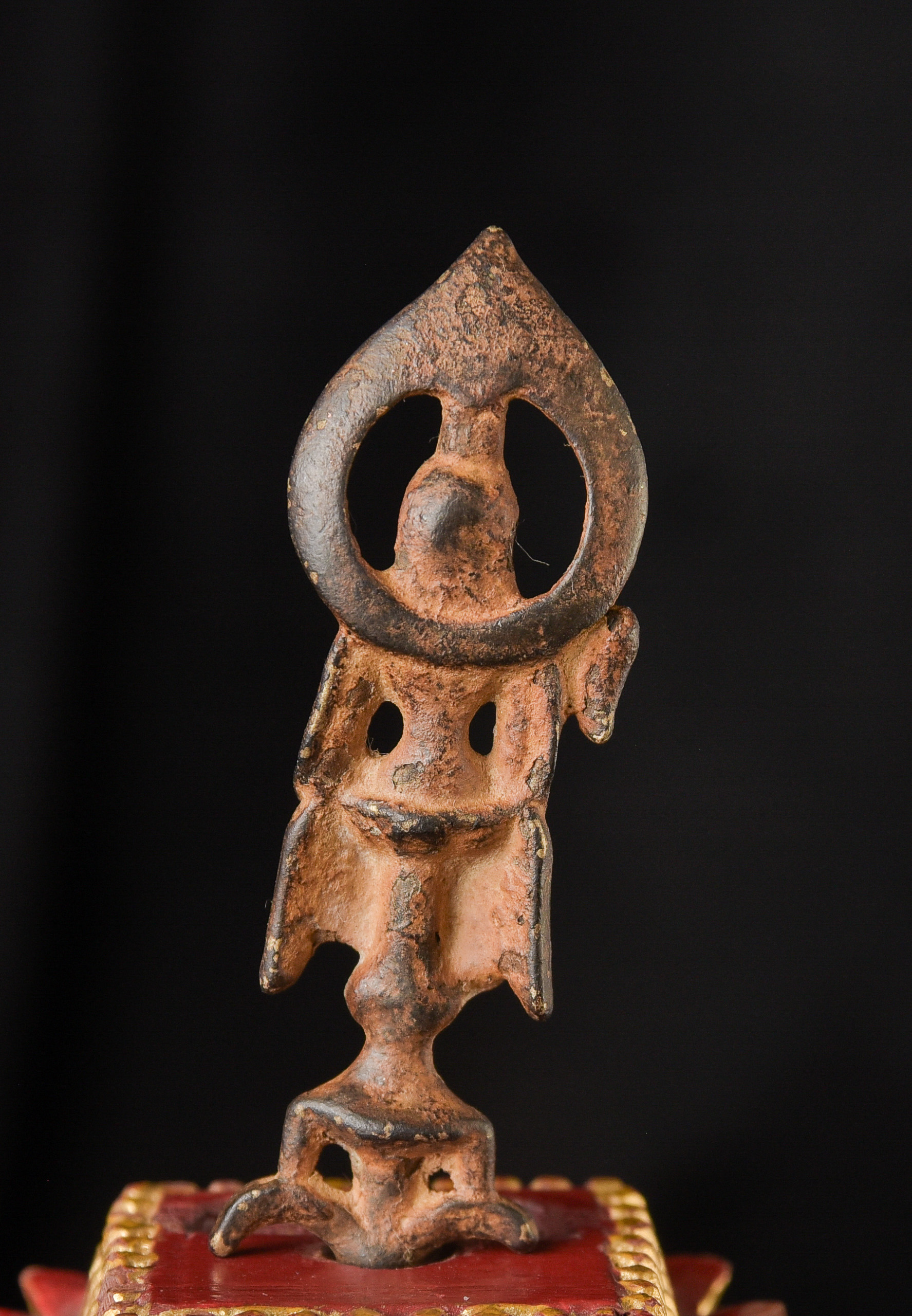
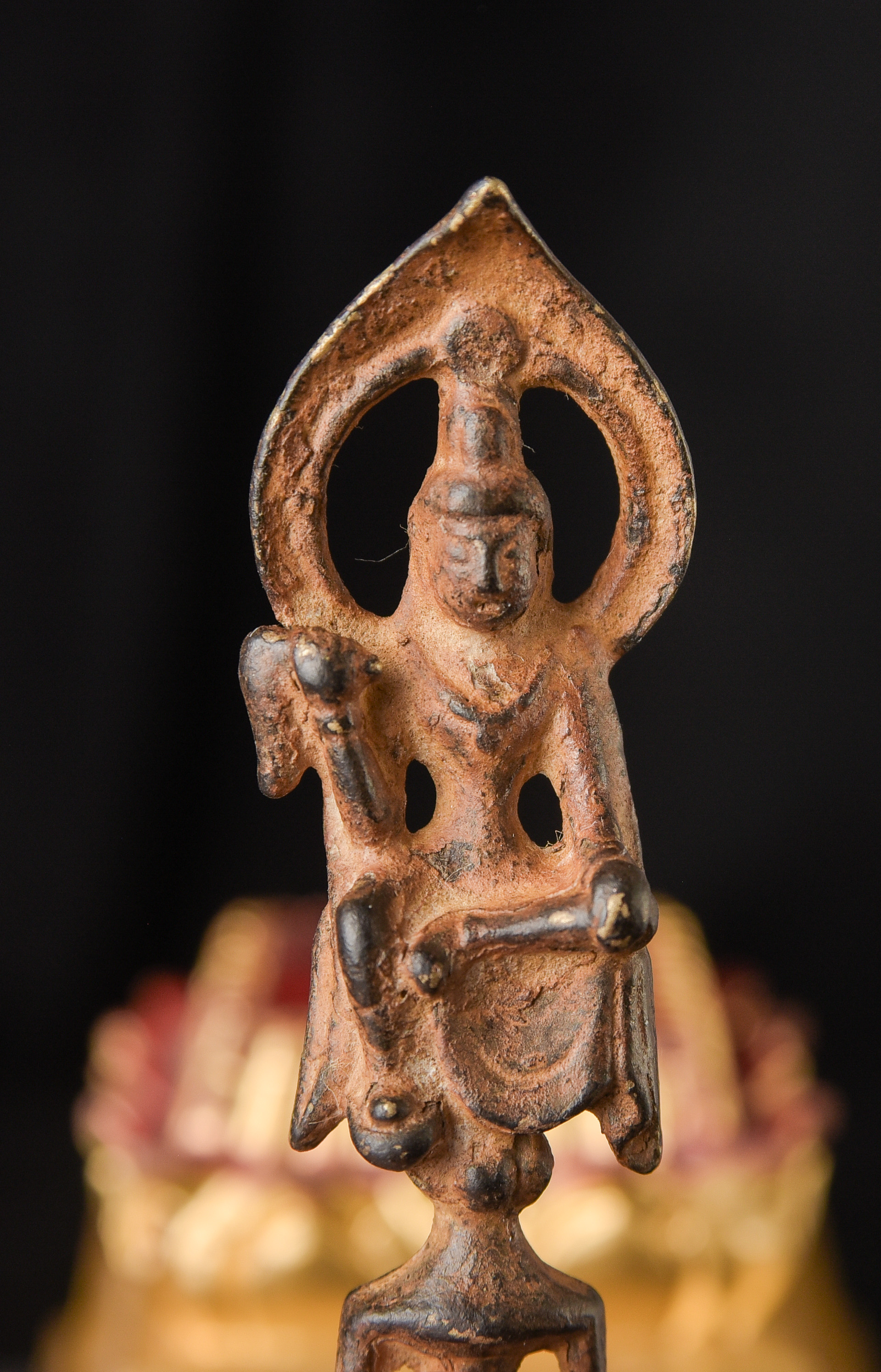
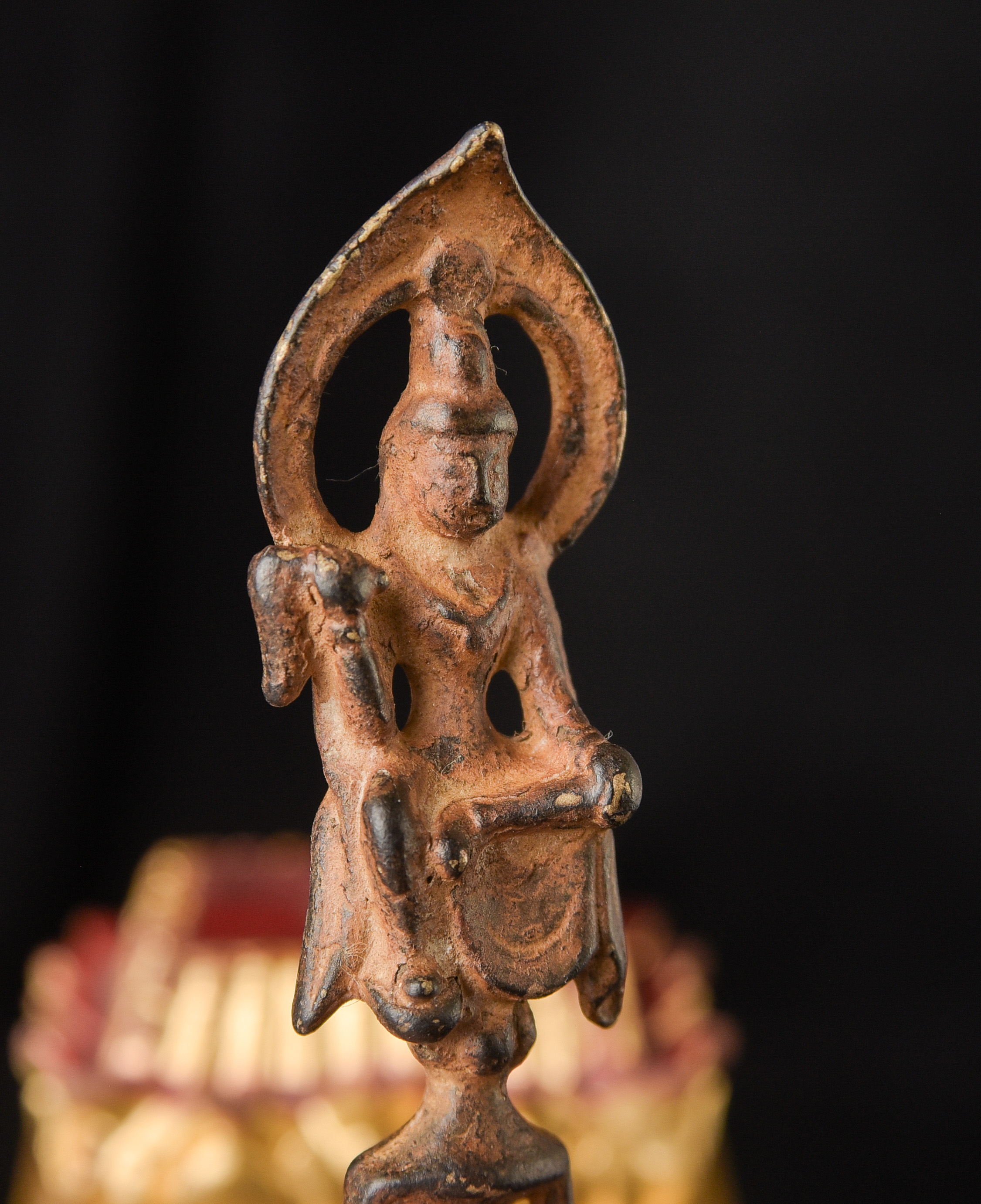
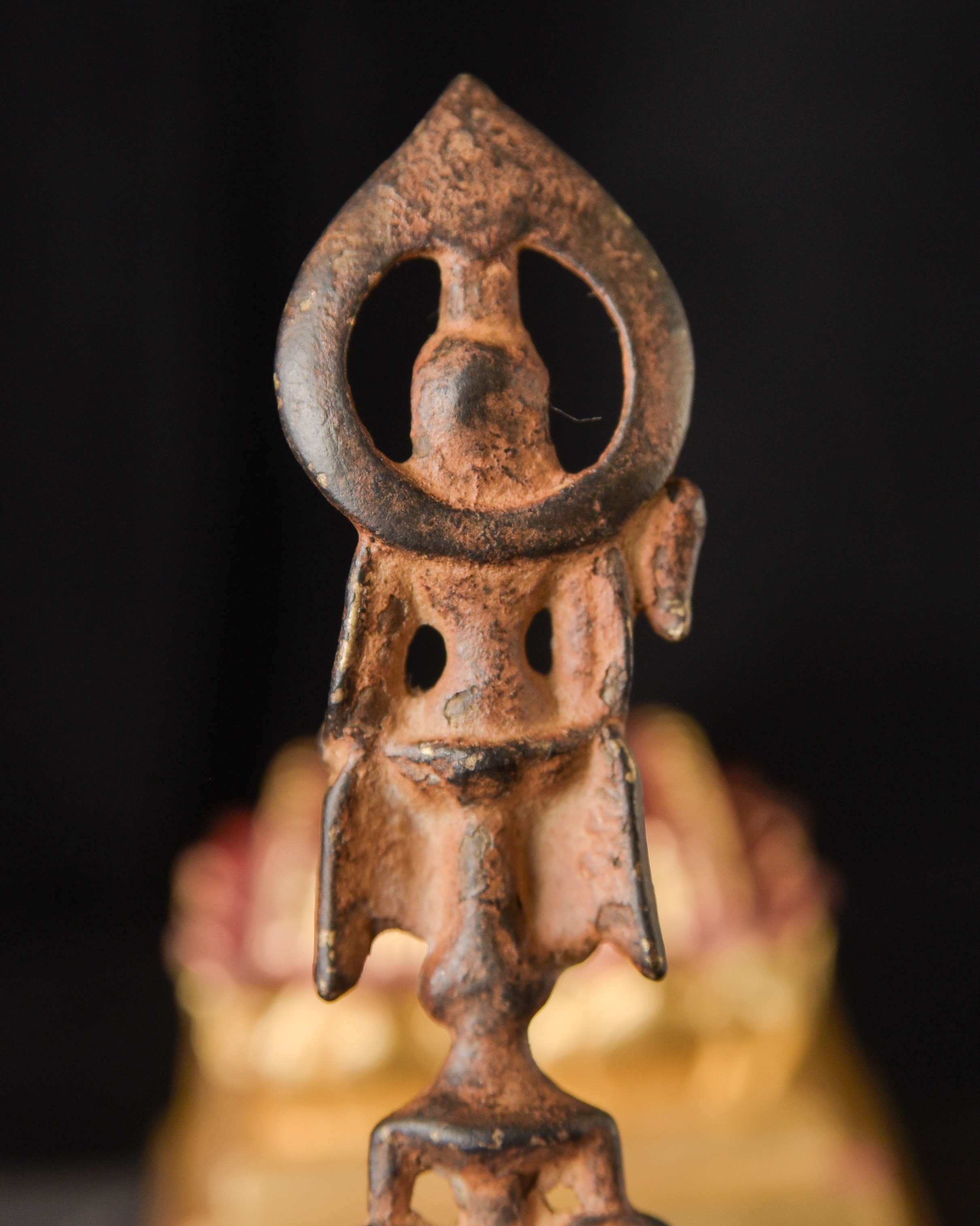
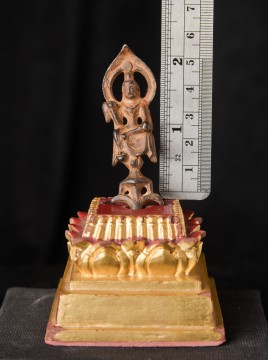
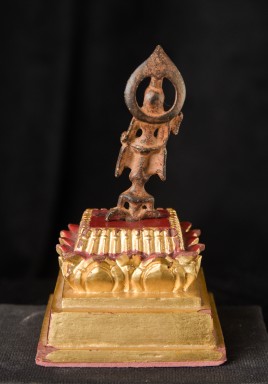
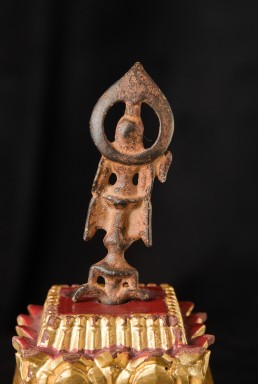
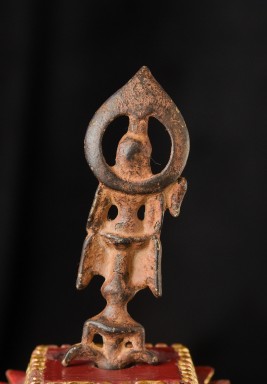
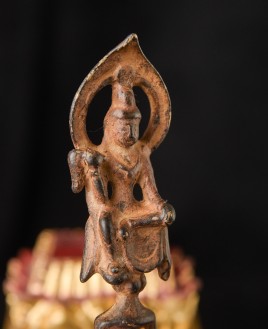
This finely cast Chinese bronze figure dates to the Tang dynasty period or slightly later and represents a standing bodhisattva rendered in a delicate openwork composition. The figure rises within a pierced aureole that frames the head and upper body, lending the sculpture a sense of vertical lift and spiritual clarity despite its small scale. Subtle remains of original gilding are still visible, now softened and fragmented by centuries of handling and exposure, blending beautifully with the warm, naturally aged bronze surface. The facial expression is calm and introspective, with restrained features that convey quiet compassion, while the proportions and open negative spaces reveal a high level of skill in both modeling and casting. Though miniature in size, the sculpture possesses a strong visual presence, enhanced by the careful balance between solidity and openness in its design. This piece comes from an old Japanese family collection of related miniature Chinese bronzes, assembled over time rather than as a single group, each sharing a common dedication to craftsmanship while differing in wear, gilding technique, and age. Many in the collection were solid cast with small mounting posts beneath, suggesting devotional or altar use. The base shown in the photographs is for display only and is not included in the listing; the offering is for the bronze figure alone. While precise dating remains open to further research, the quality of the casting, traces of gilding, and the character of the patina strongly support an early origin. This is a quietly compelling and uncommon example of early Chinese Buddhist bronze work, valued as much for its spiritual presence as for its refined execution.
 Send to a Friend
 Inquire About this Product
Search Settings