




Click to view image and other views



10738
For Sale
Country Group:
Item id: 10738
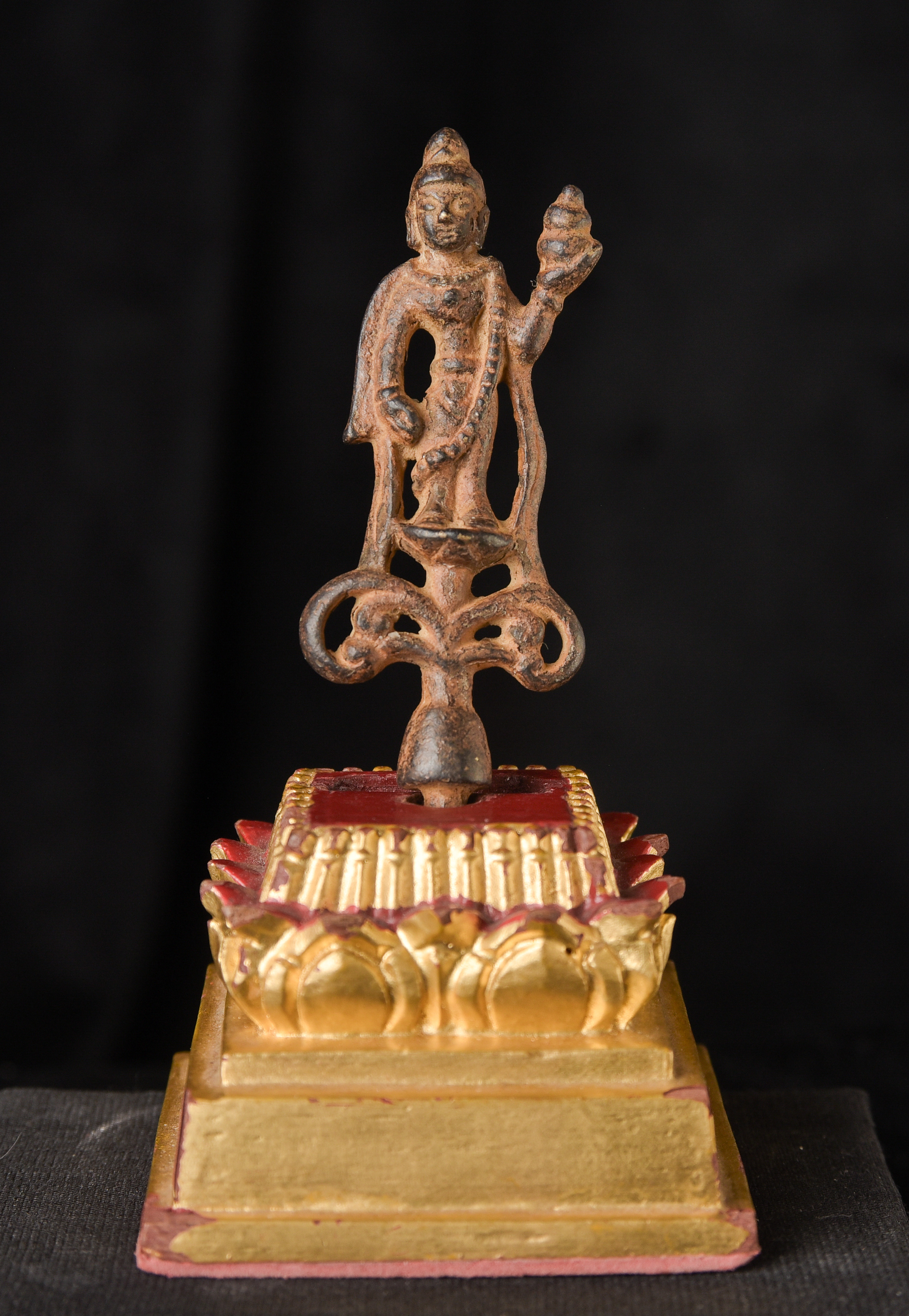
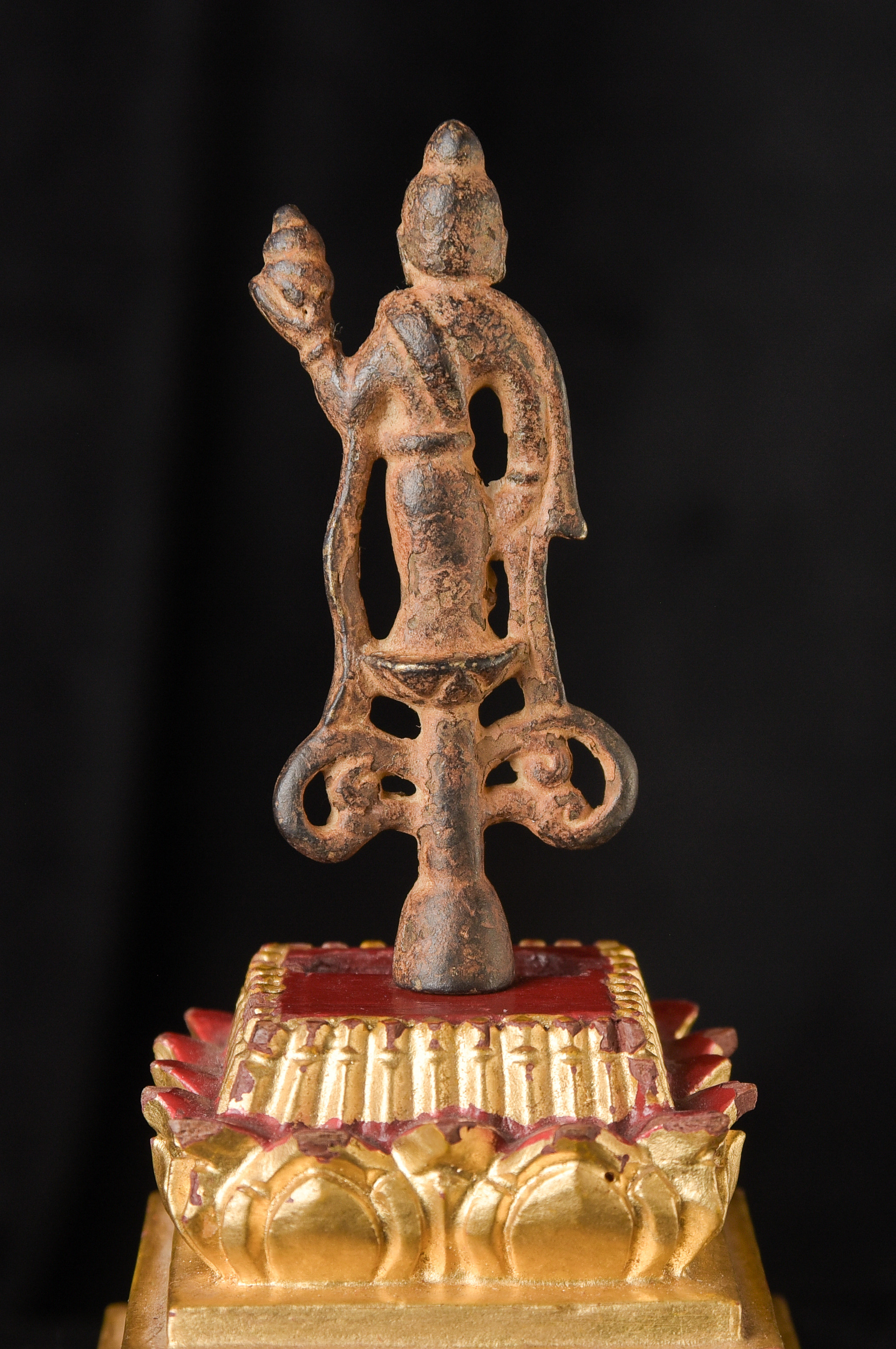
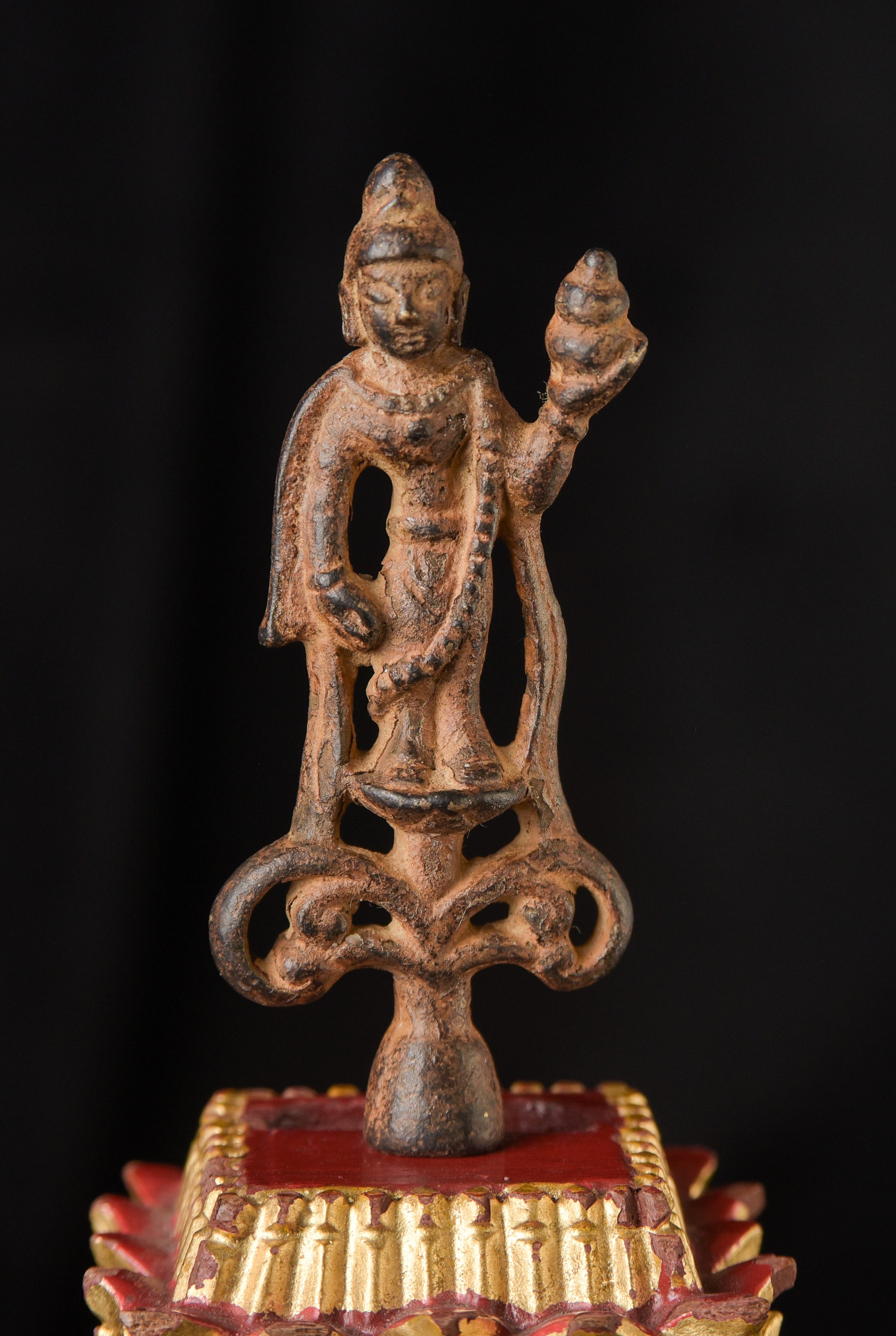
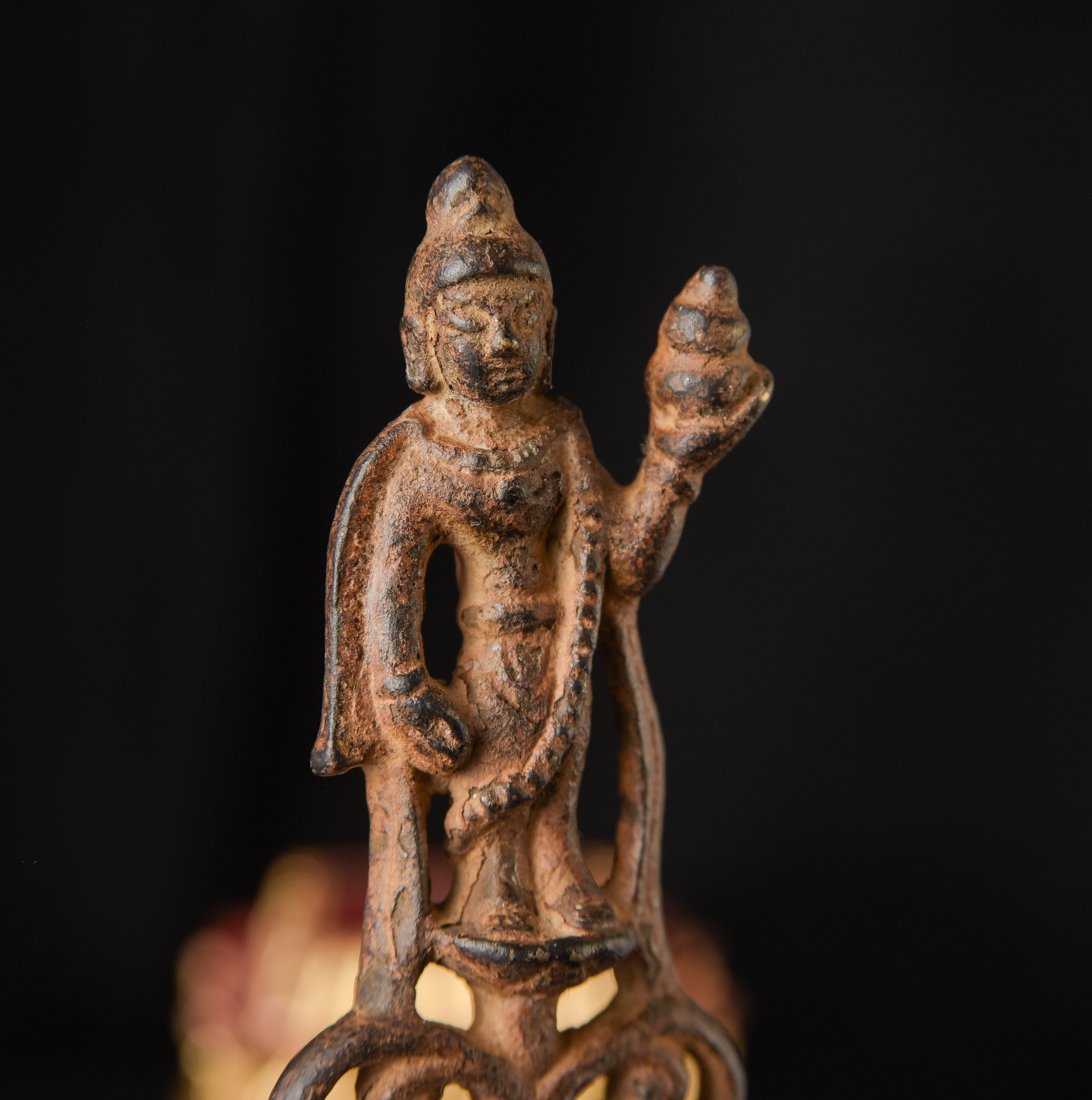
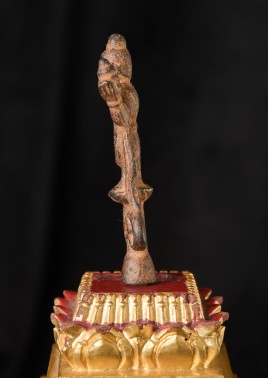
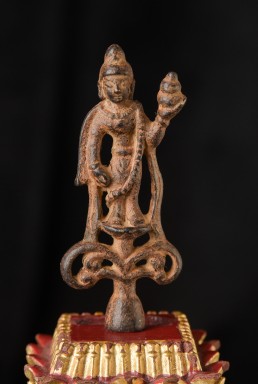
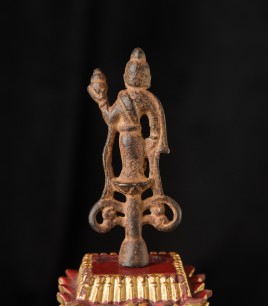
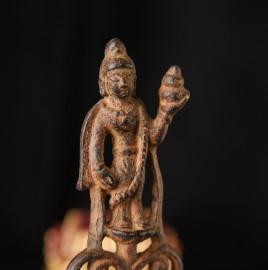
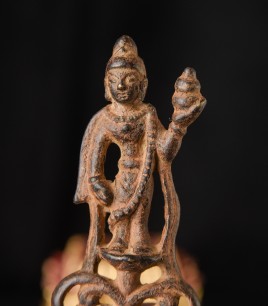
This refined Chinese bronze figure dates to the Tang dynasty period or later and represents a standing bodhisattva rendered in an elegant, openwork composition. The figure is shown holding a ritual object, likely a stupa or jewel, while standing above a pierced, scrolling support that lifts the form and gives the sculpture a distinctive vertical rhythm. Traces of original gilding remain across the surface, now softly worn and intermixed with exposed bronze, creating an appealing and authentic patina that reflects age and devotional handling.
The casting is confident and finely detailed, particularly in the facial features, headdress, and flowing contours of the body. Despite its small scale, the figure displays a high level of sculptural sophistication, with careful attention paid to balance, negative space, and silhouette. The openwork design is especially noteworthy, suggesting skilled workmanship and a desire to create a visually dynamic miniature rather than a purely solid form.
This bronze comes from an old Japanese family collection of related miniature Chinese figures. While each example in the group differs in form and wear, they share common qualities of scale, craftsmanship, and stylistic coherence. Many were solid cast with small posts beneath for mounting, and several retain remnants of various types of gilding. Some appear significantly older than others, indicating that the group was likely assembled over time rather than created as a single set.
The base shown in the photographs is for display purposes only and is not included; the listing is for the bronze figure alone. While further research may refine its precise dating, the quality of the casting, traces of gilding, and overall character strongly support an early origin. This is a charming and uncommon miniature Chinese bronze, notable for its elegant openwork form, fine detail, and quiet presence.
 Send to a Friend
 Inquire About this Product
Search Settings