
Click to view image and other views

10744
For Sale
Country Group: China, Japan and Korea
Item id: 10744
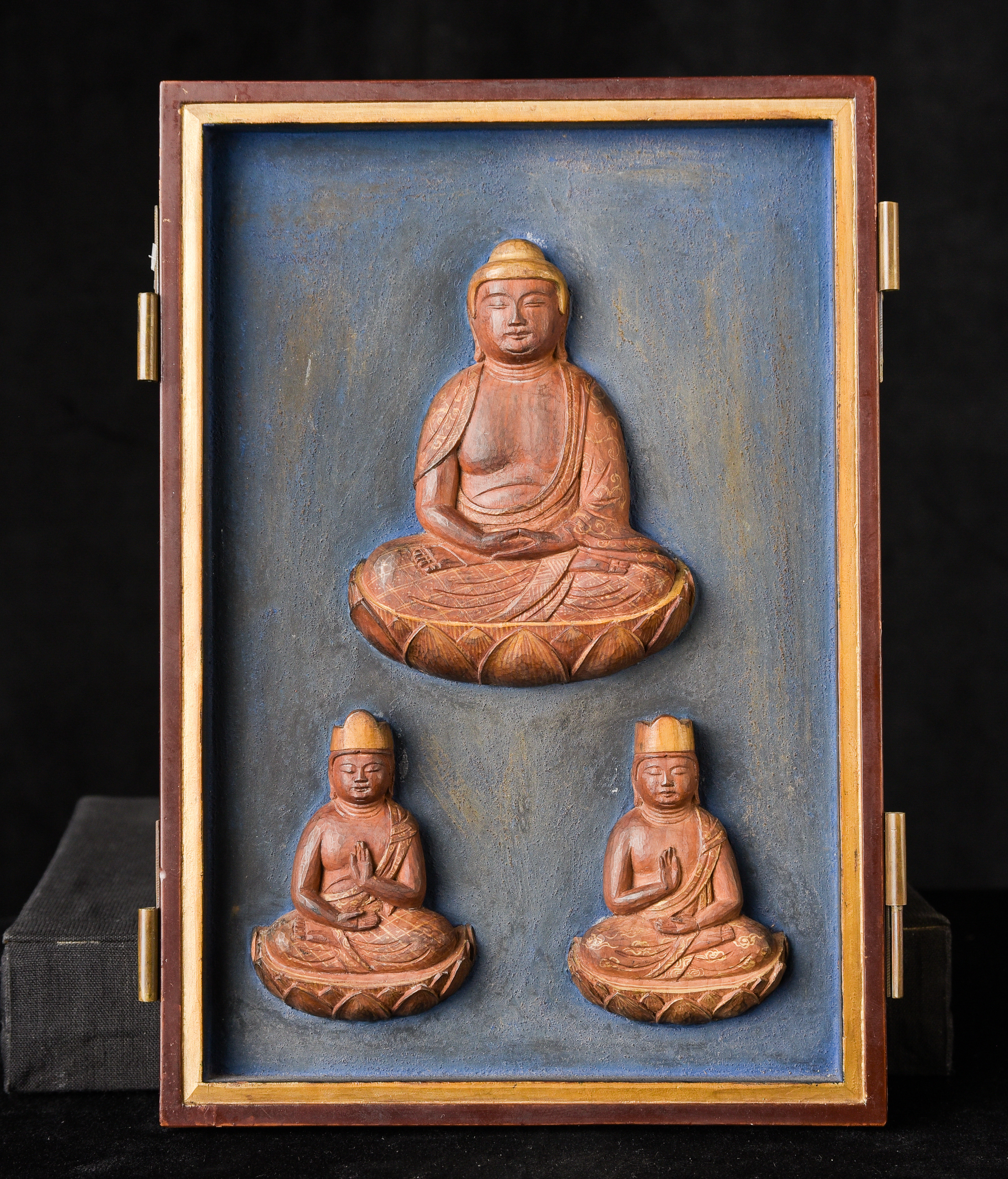
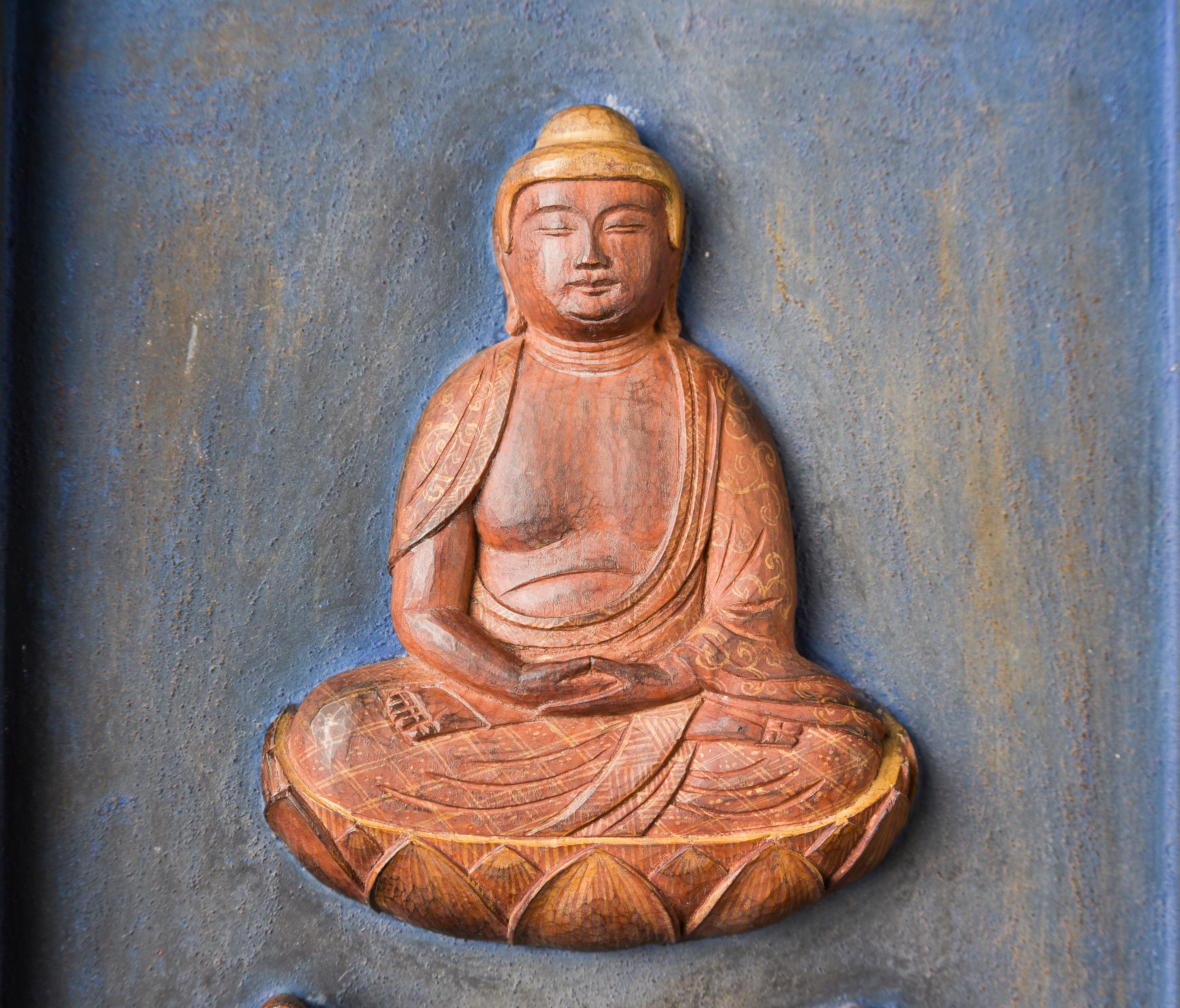
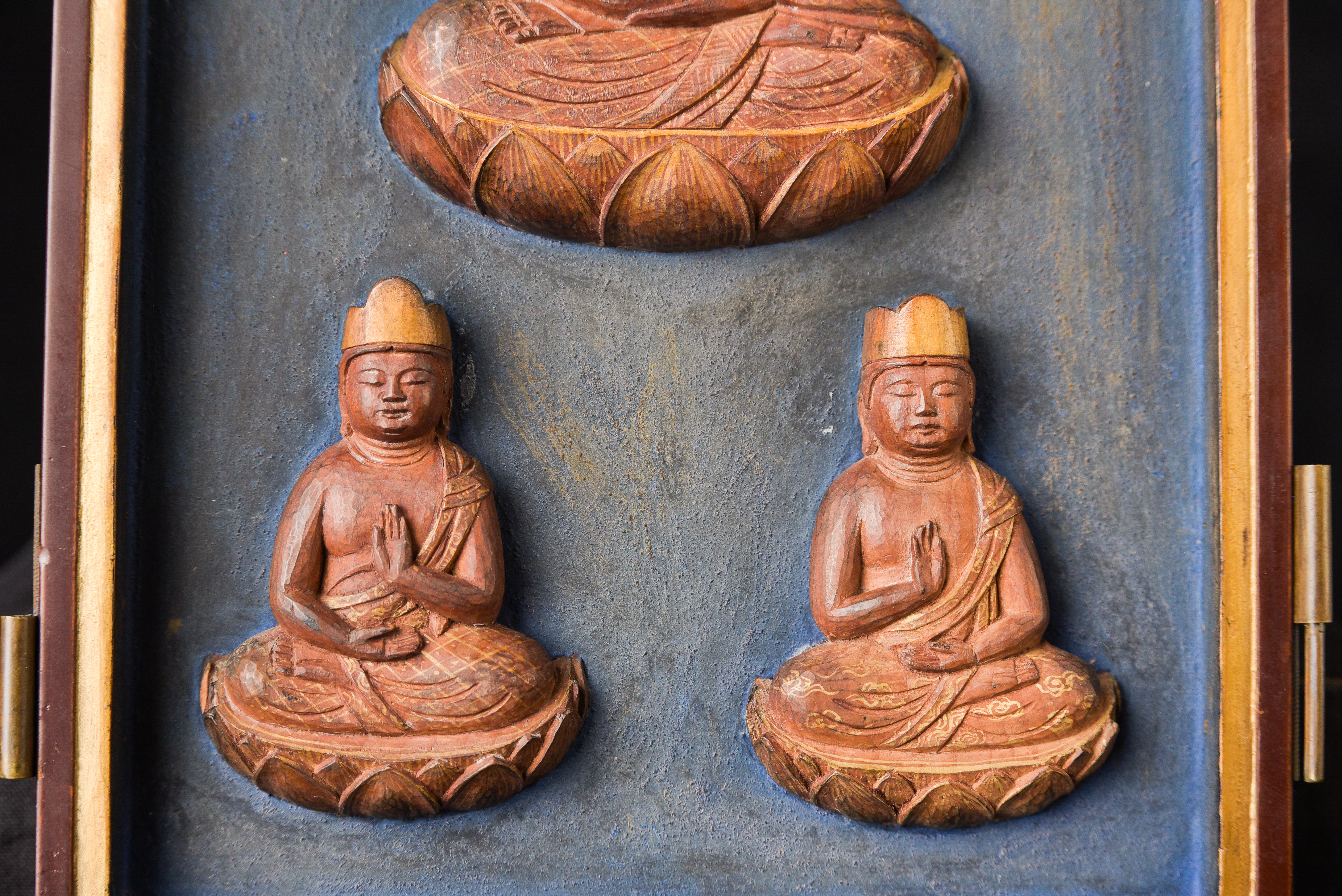
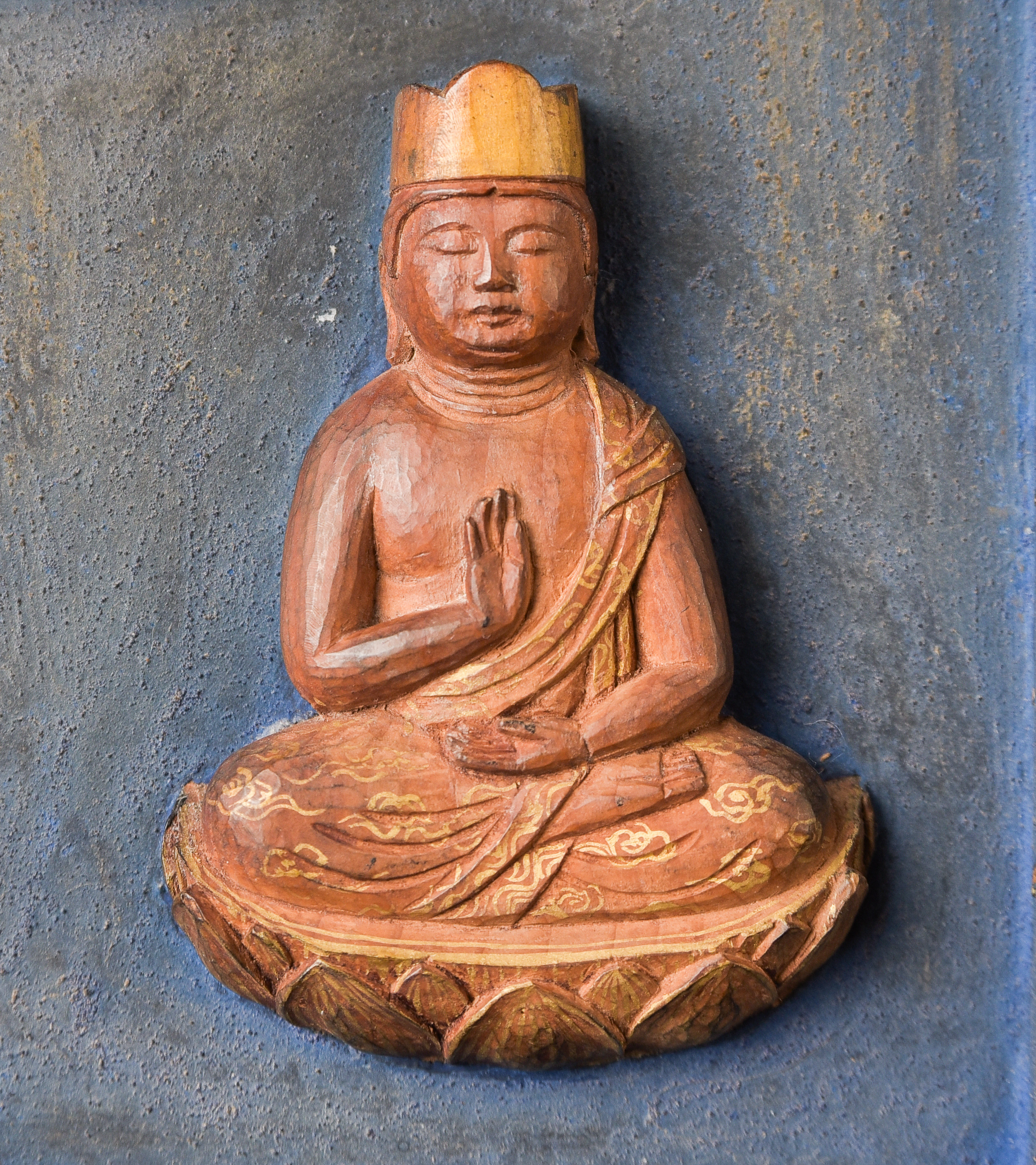
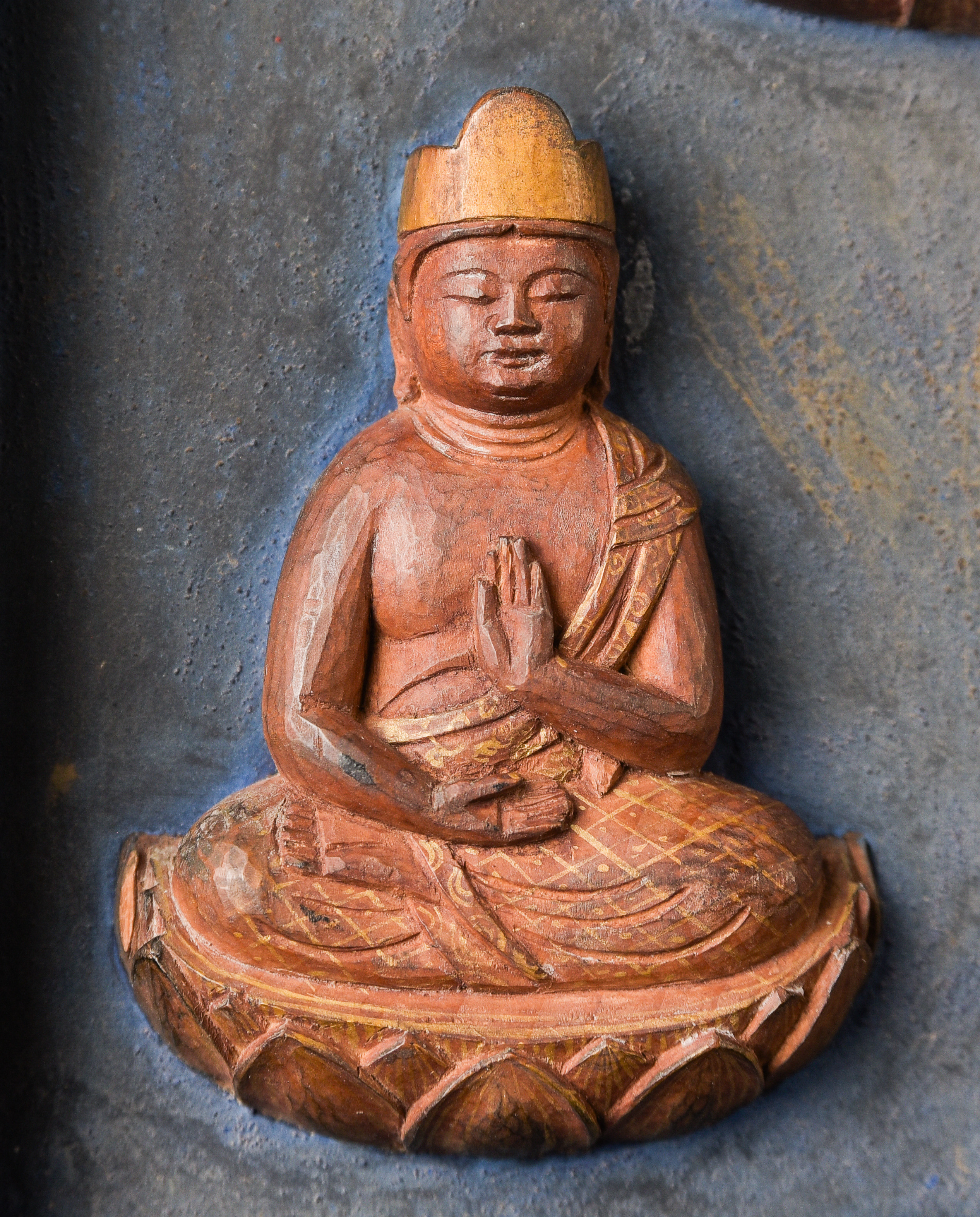
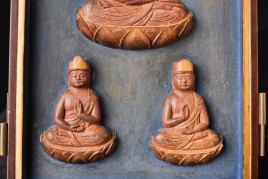
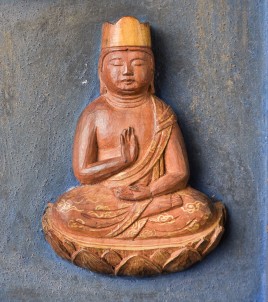
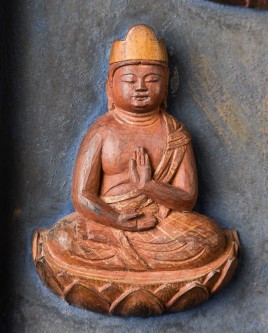
This extraordinary Edo period central section from a Japanese altar represents a level of carving and refinement that is rarely encountered. The panel is composed around a serene triad arrangement, with a larger central seated figure positioned above two smaller attendant figures, all shown seated in quiet meditation upon lotus bases. The figures are exquisitely sculpted, with softly rounded faces, calm expressions, and beautifully articulated robes that convey both dignity and spiritual stillness. The balance of the composition is masterful, drawing the eye naturally upward toward the central figure while maintaining harmony throughout the panel.
The background is finished with crushed lapis, creating a deep, luminous blue surface that provides a striking contrast to the warm tones of the carved figures. This rich ground enhances the sense of depth and sacred space, while subtle surface variation adds visual life without distracting from the sculptural elements. The carving quality is exceptional, with crisp details and fluid lines that clearly reflect the work of a highly skilled Edo-period artisan.
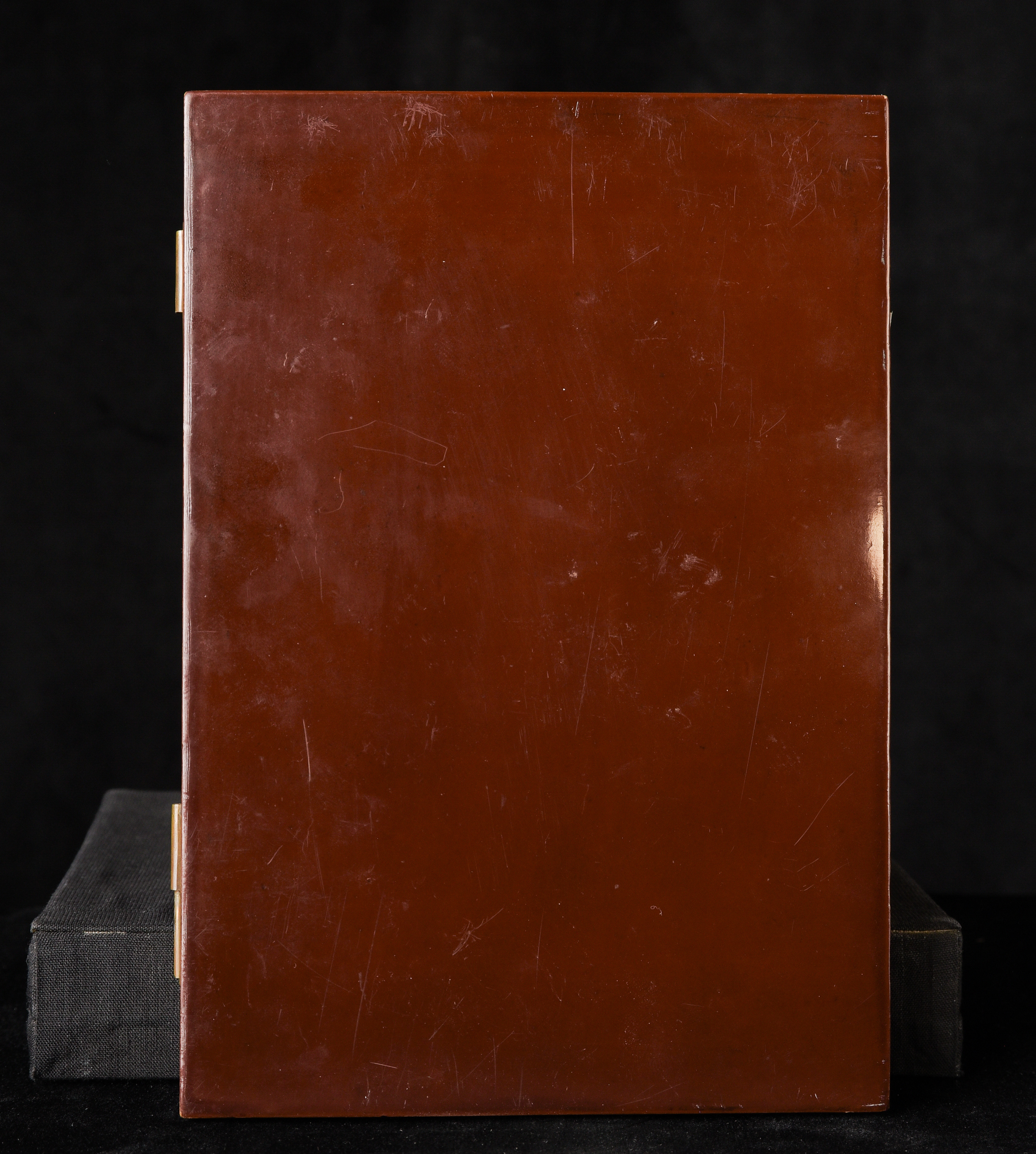
There are a few minor losses consistent with age, yet the overall condition remains remarkable, especially considering the delicacy of the carving and the survival of the lapis background. Having examined hundreds of Japanese altars and zushi, examples of this type, quality, and compositional sophistication are exceedingly rare. This panel stands out as a truly special work of Edo period Japanese religious art, notable for its sculptural excellence, contemplative presence, and unmistakable individuality.
Dimensions: 8.5"H x 5.75"W x .875"D
 Send to a Friend
 Inquire About this Product
Search Settings