
Click to view image and other views
10802
Sold
Country Group: South and Southeast Asia (Thailand, Burma, Laos, Cambodia, India, Indonesia, Sri Lanka and Vietnam)
Item id: 10802
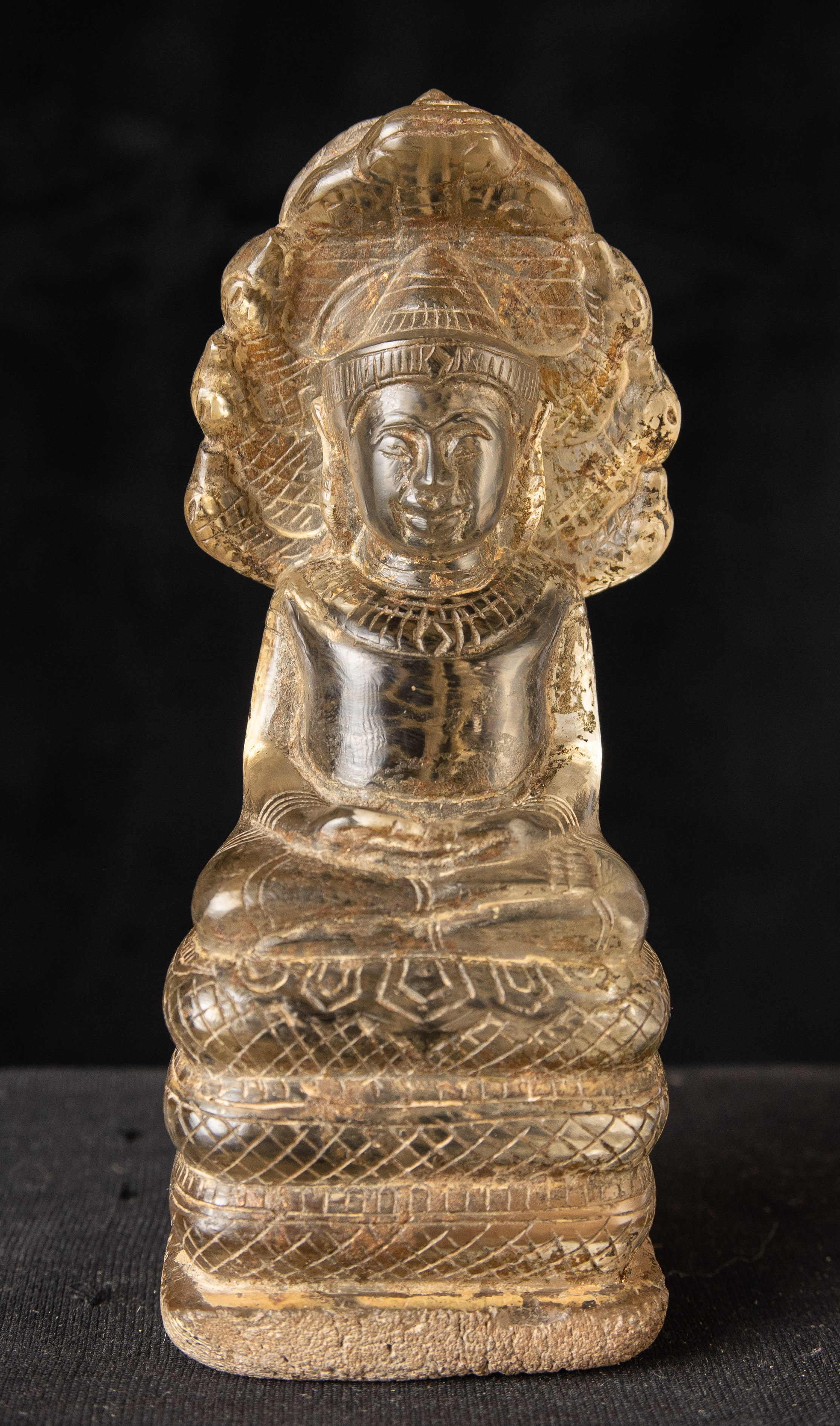
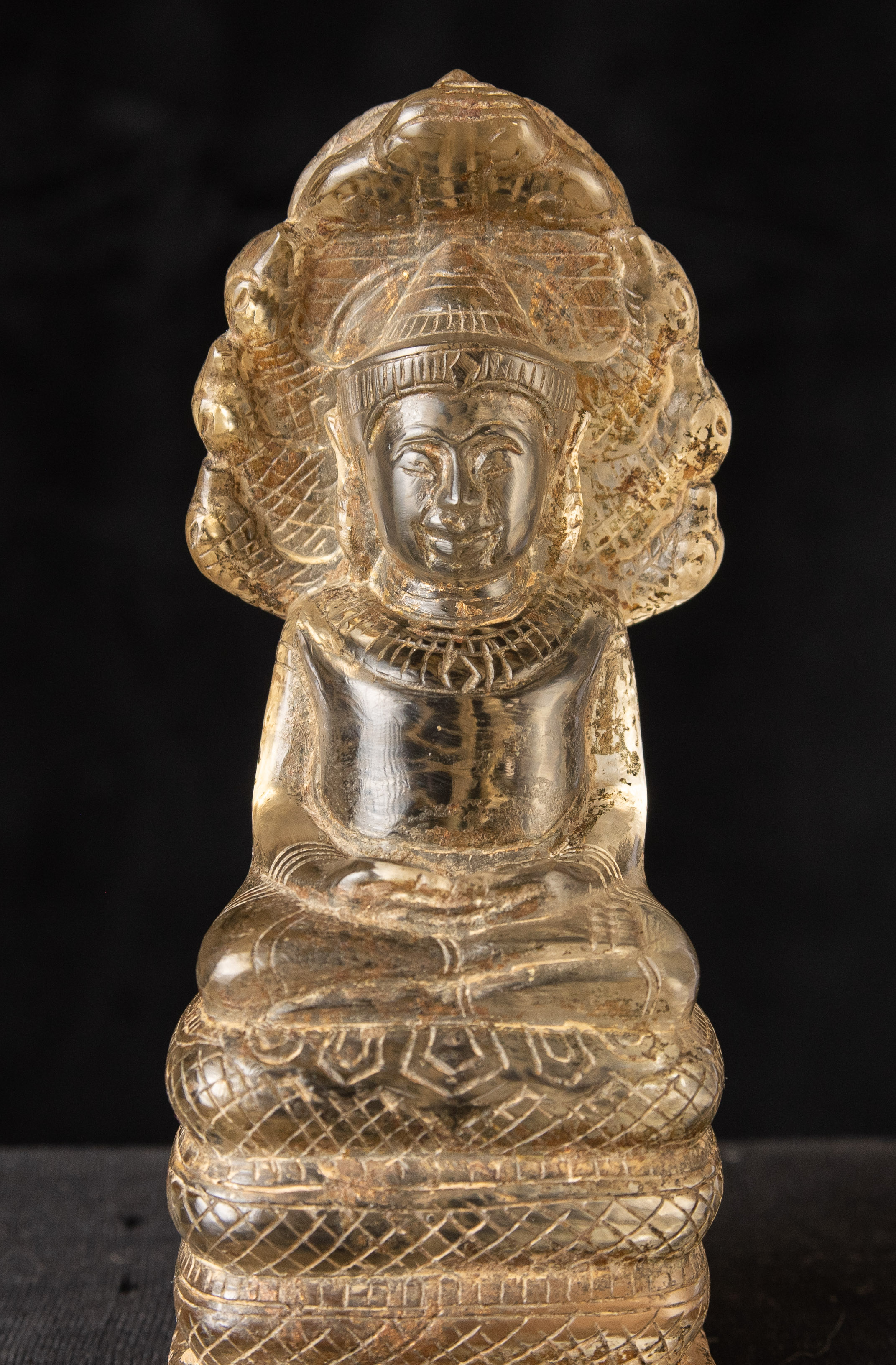
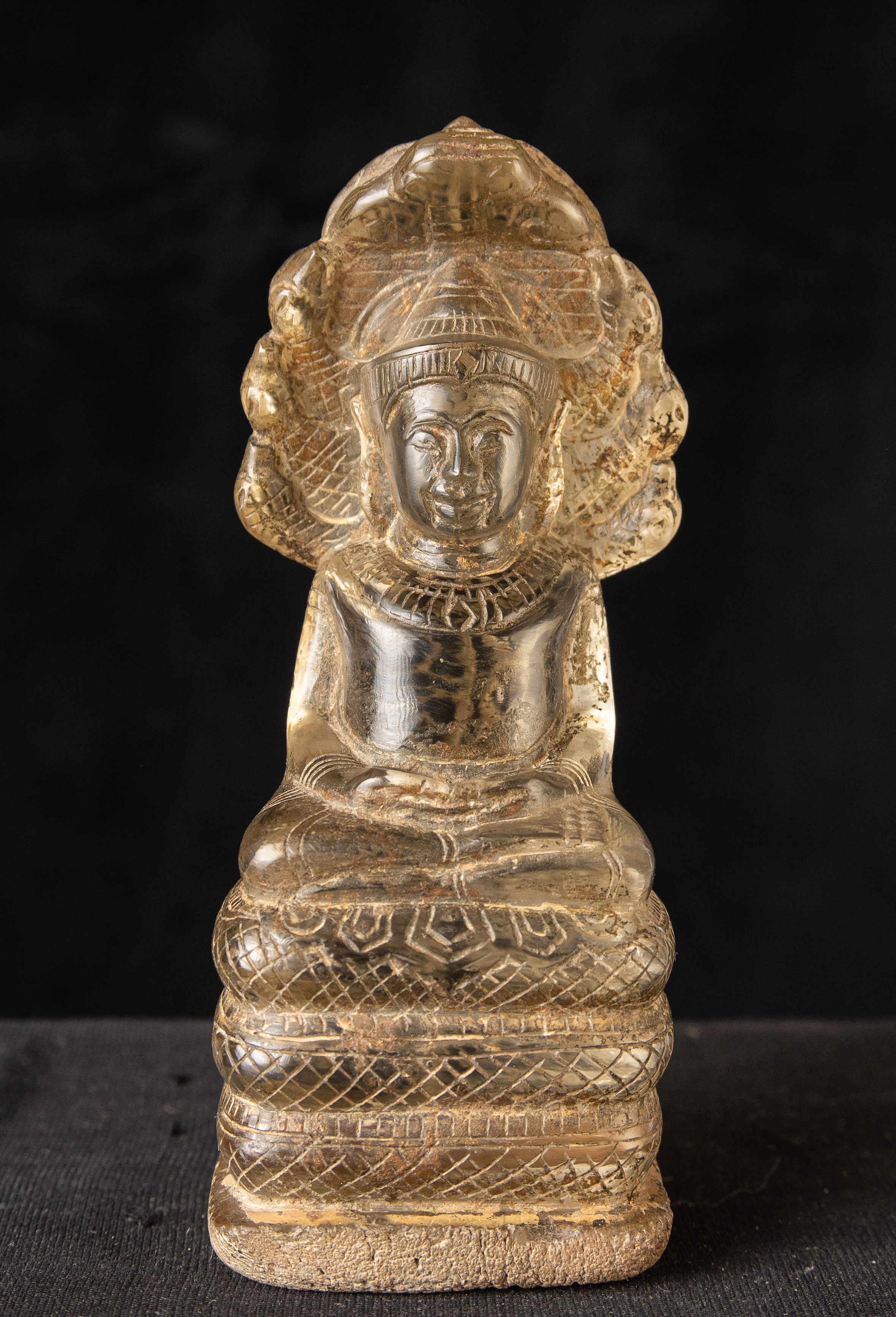
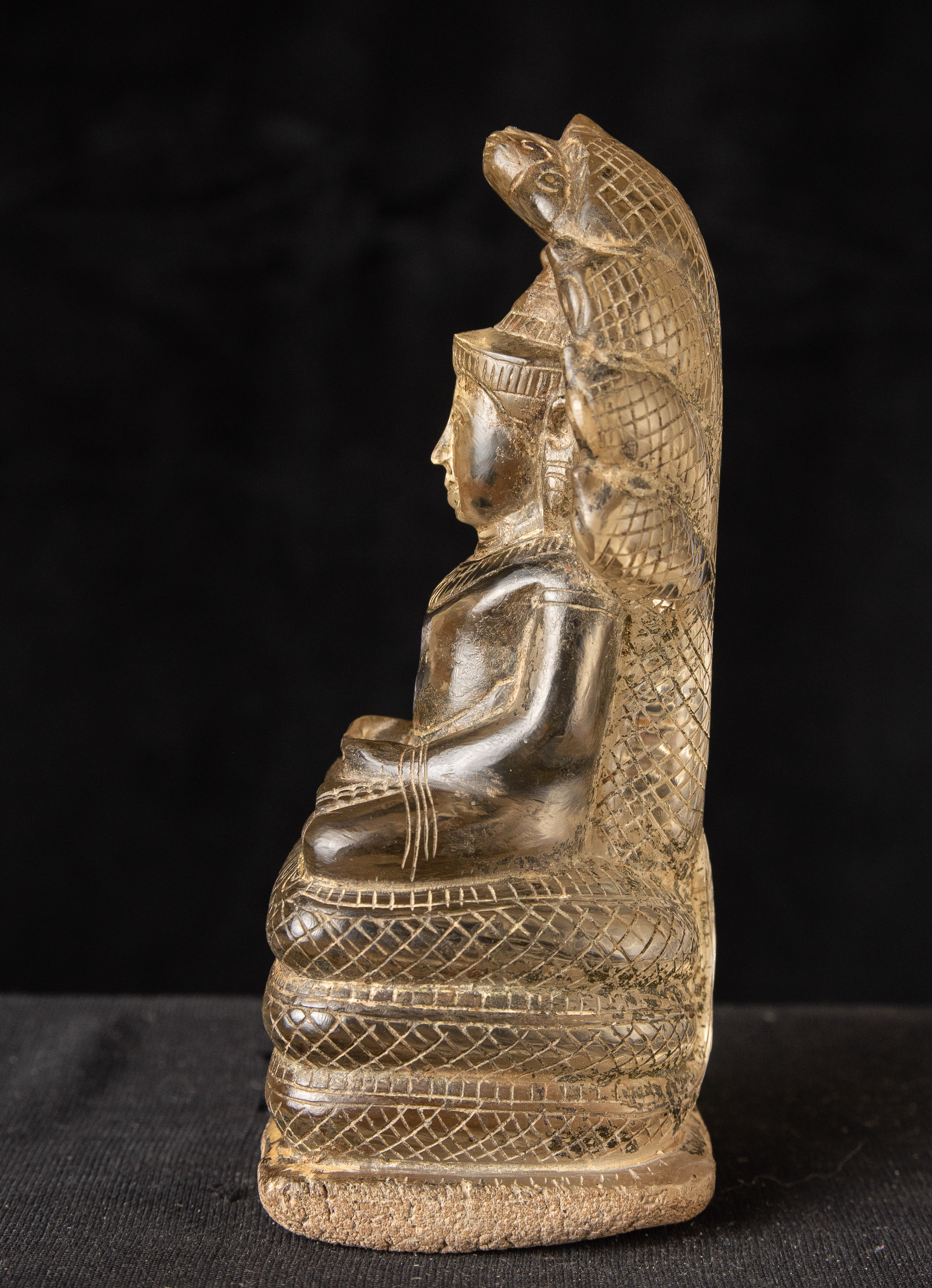
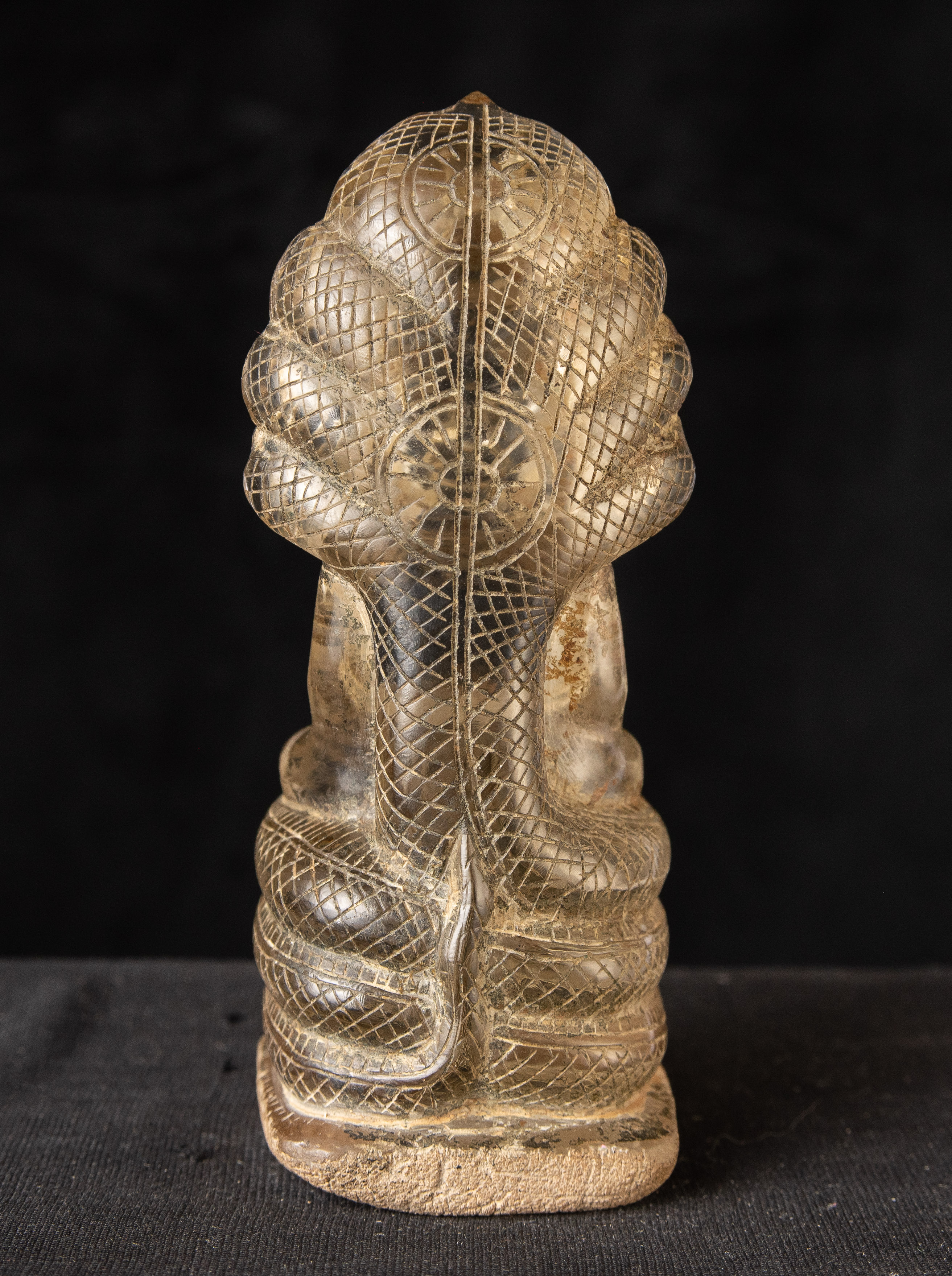
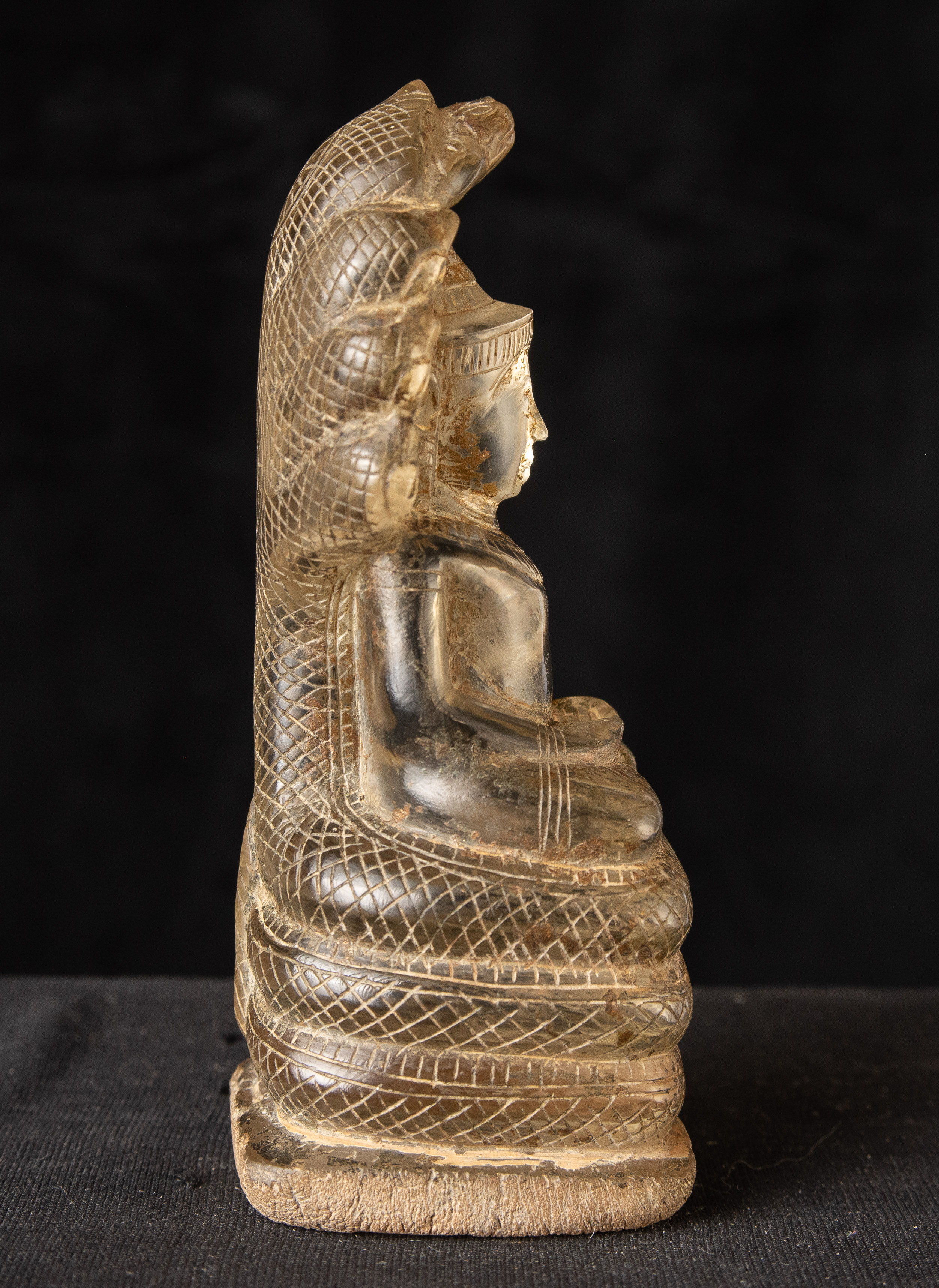
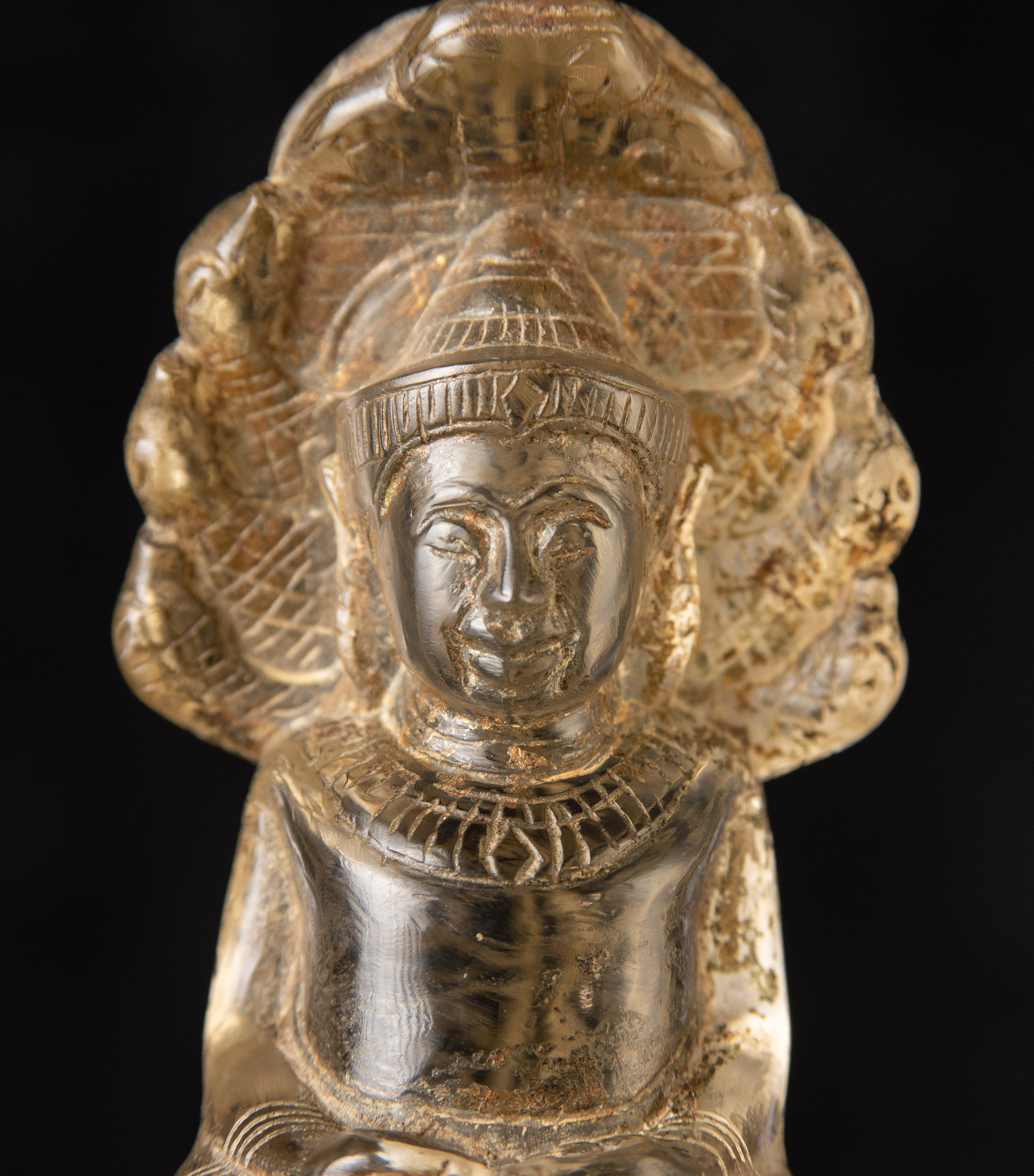
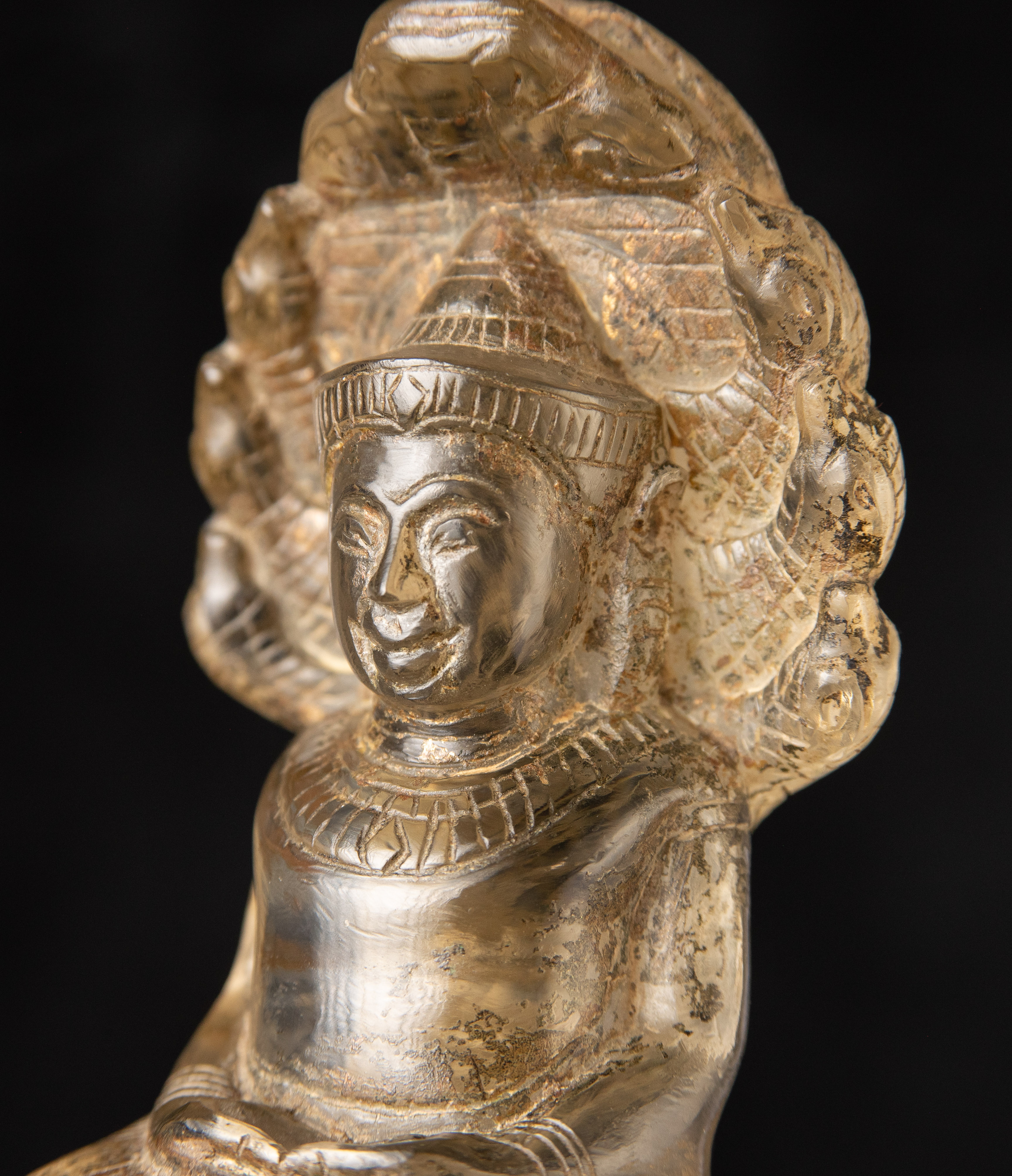
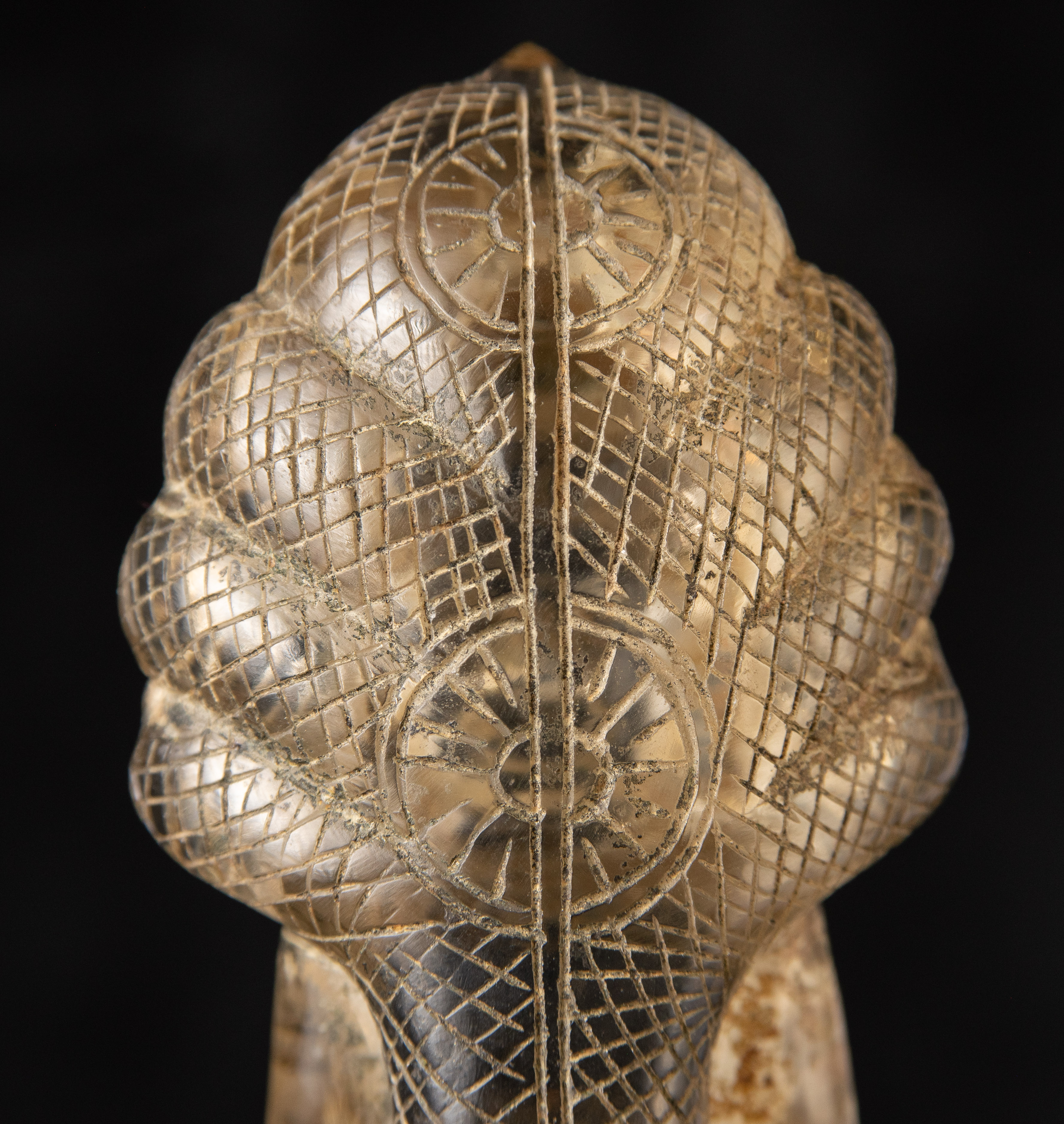
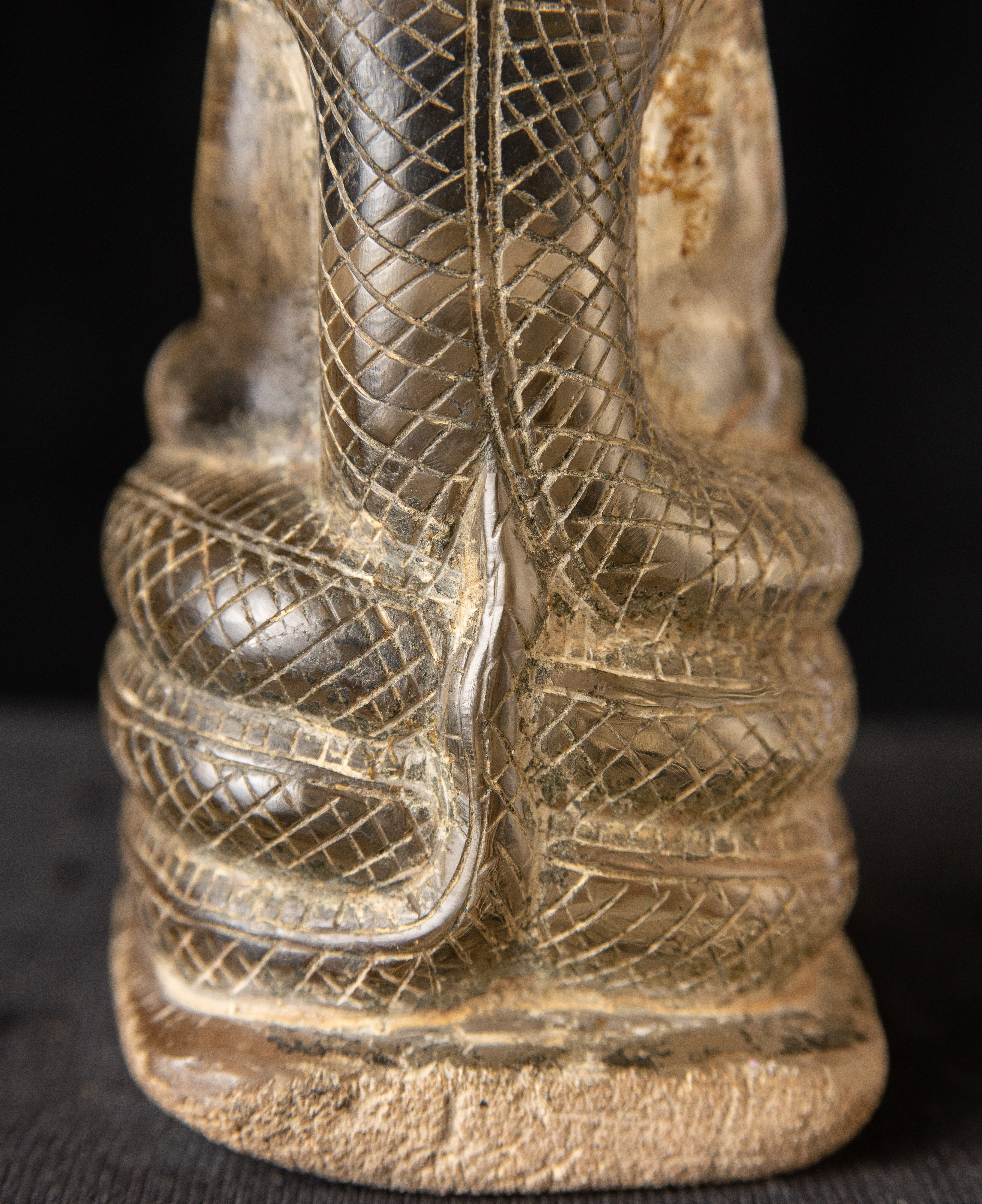
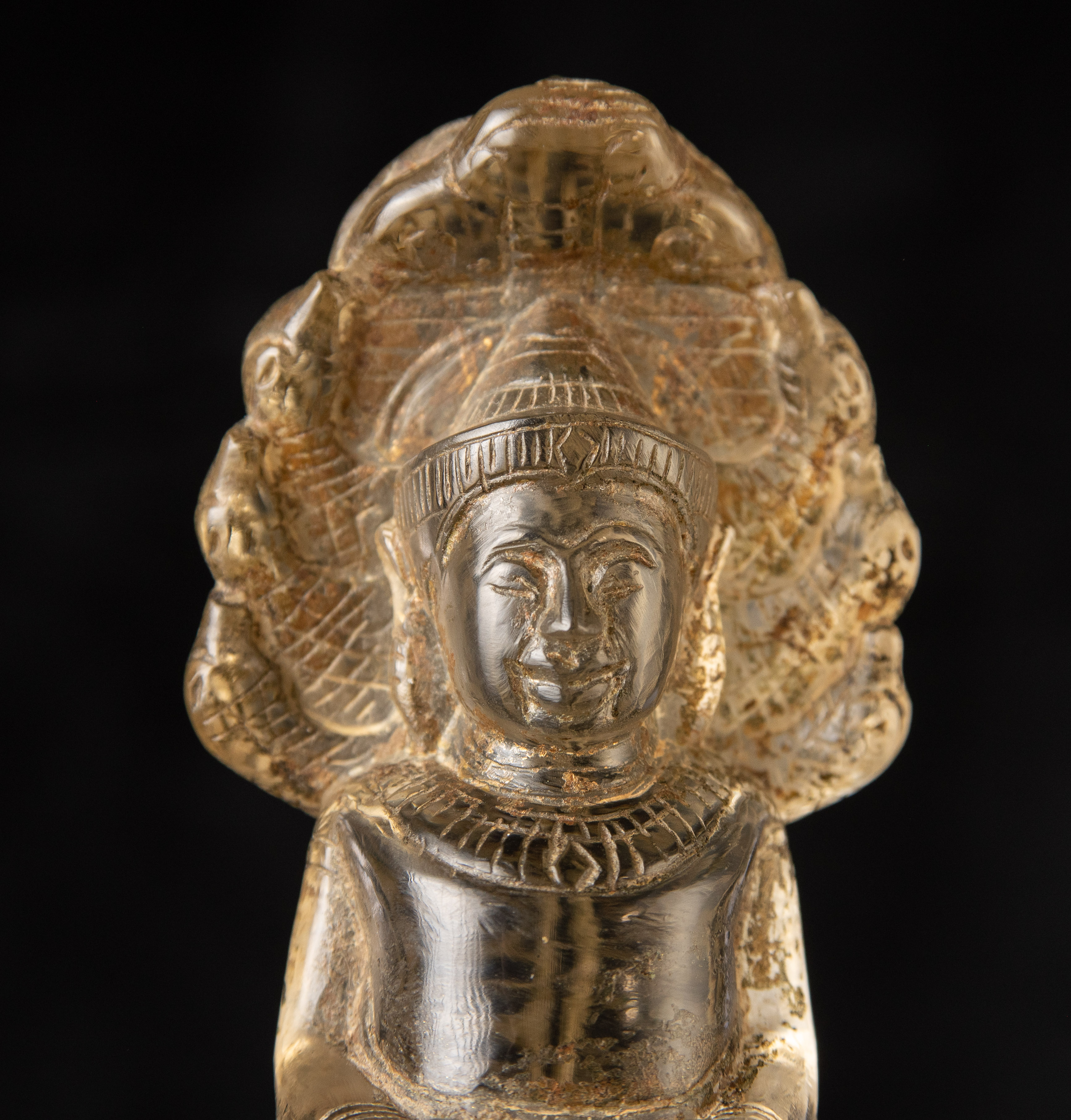
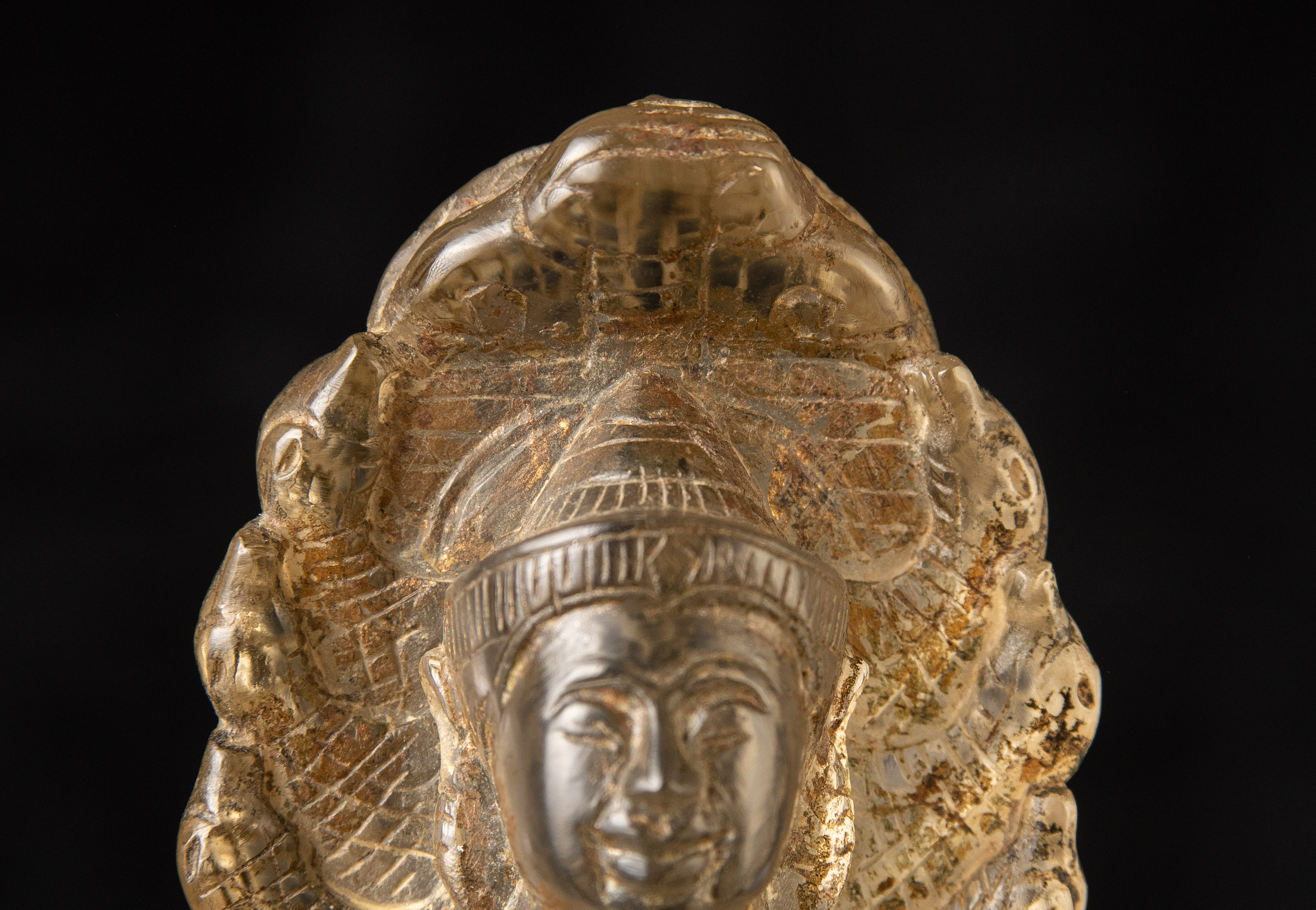
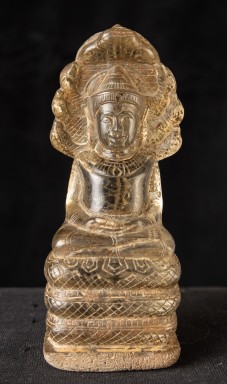
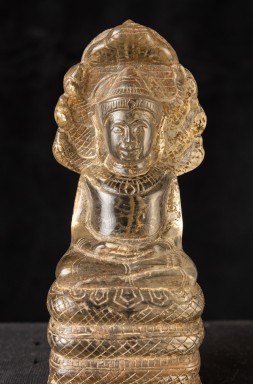
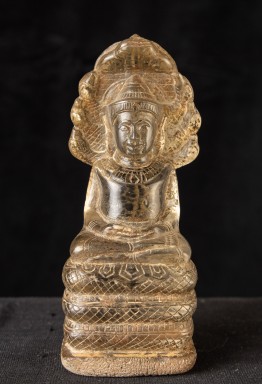
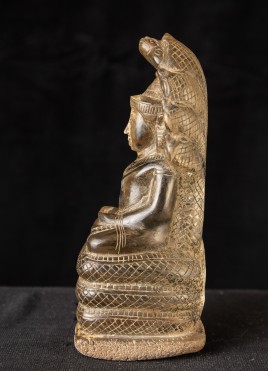
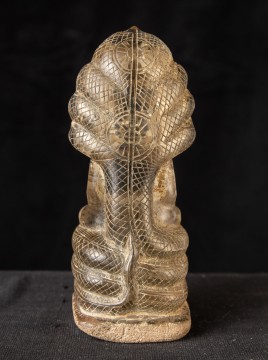
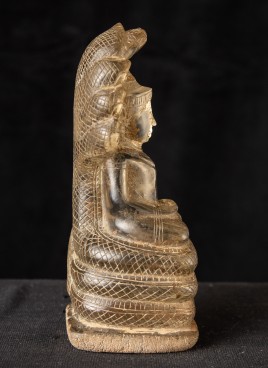
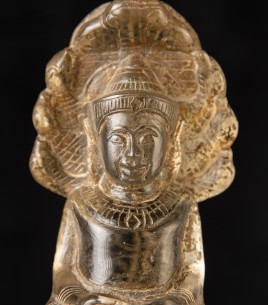
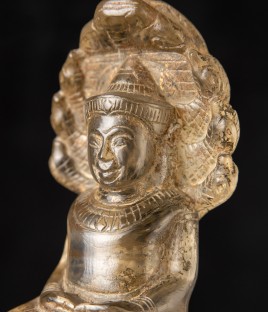
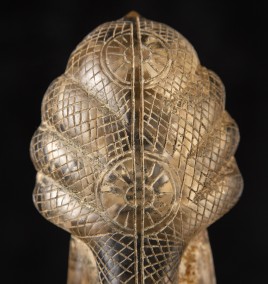
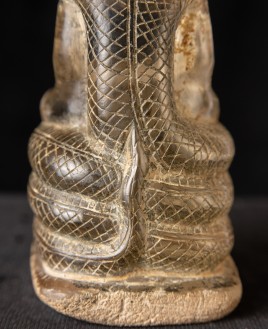
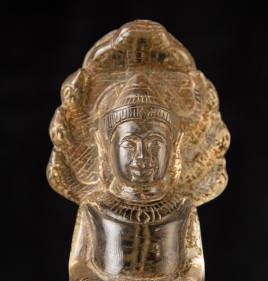
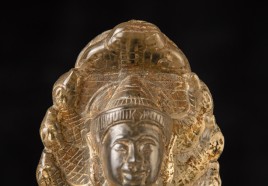
This rare Naga Buddha dates to approximately the 15th to 17th century and is most likely Cambodian in origin. The Buddha is shown seated in meditation protected by the multi-headed naga rising behind him, a powerful and iconic form within early Khmer Buddhist art that is seldom encountered in this material.
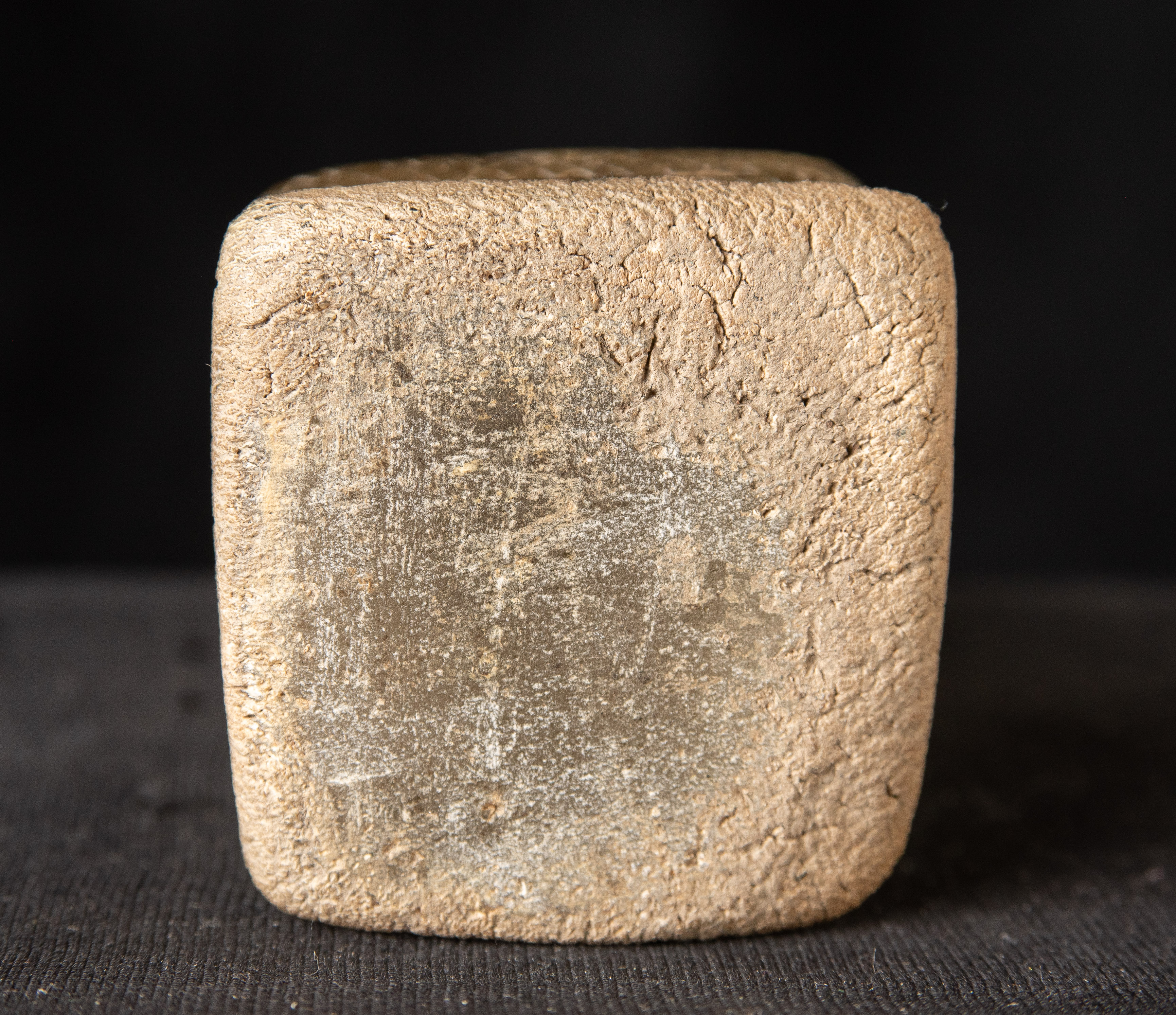
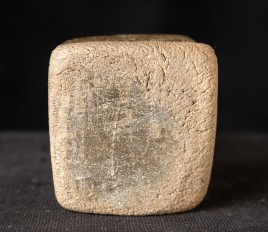
At first glance the figure appears to be carved from crystal, but closer examination suggests it may instead be carved from a block of very old glass. Either material presents the same level of difficulty in carving and the same devotional importance, and the age and presence of burial encrustation firmly support its antiquity. Traces of gilding remain visible deep within some of the recesses, evidence that the piece was once honored and embellished.
The carving shows a balance between refinement and age. While not as sharply detailed as some later examples, it carries more complexity and character than most early crystal or glass Buddhas. The surface retains the soft wear, encrustation, and subtle texture associated with objects that have spent centuries in devotional or buried environments.
The style aligns with examples from the Ayutthaya period in Thailand, though the form and facial treatment point more convincingly toward Cambodia. Dating pieces of this type with precision is difficult, but the sculpture clearly possesses several hundred years of age.
A substantial and uncommon example of a Naga Buddha in an unusual and highly challenging material, combining rarity of subject, material, and age in a single devotional carving.
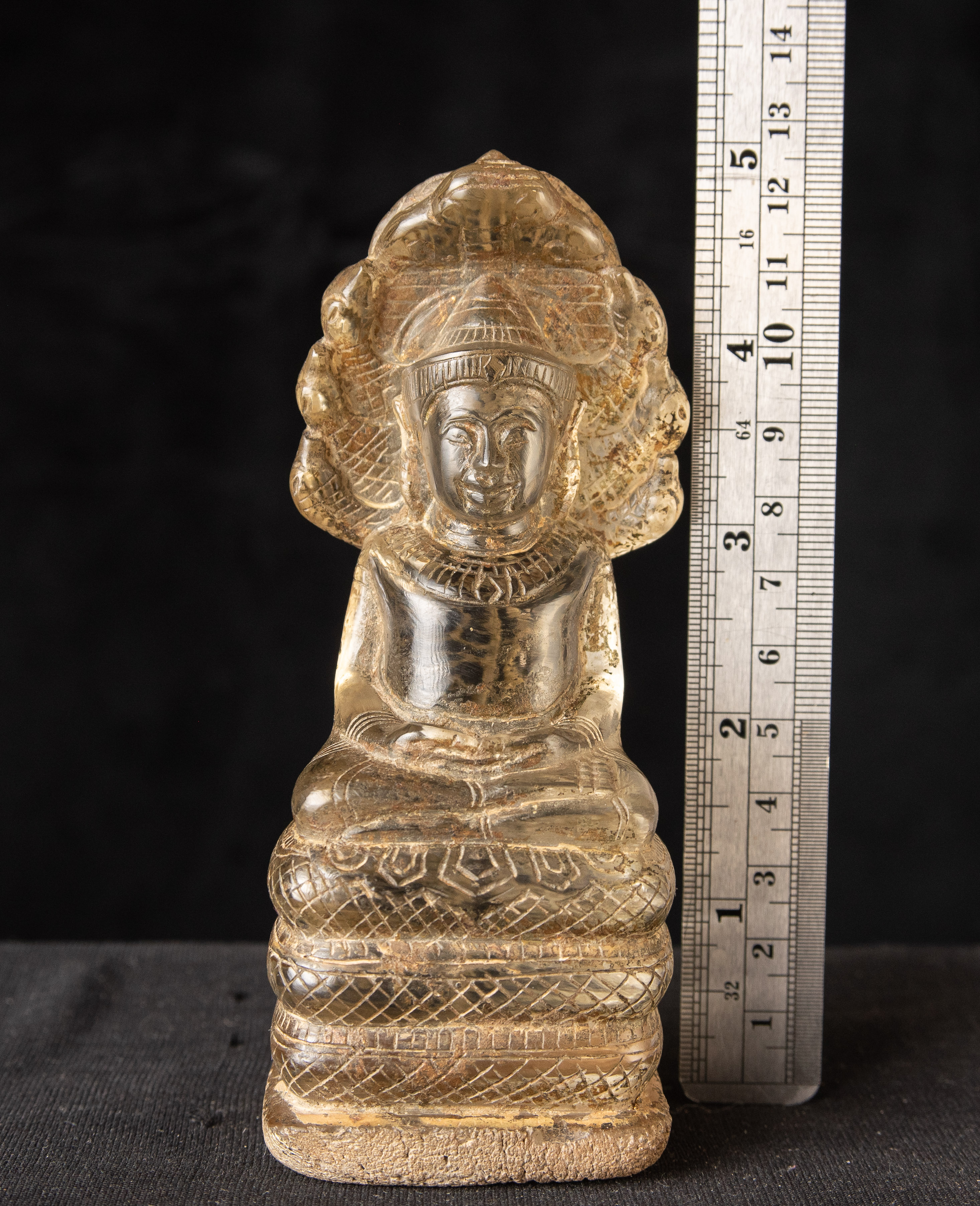
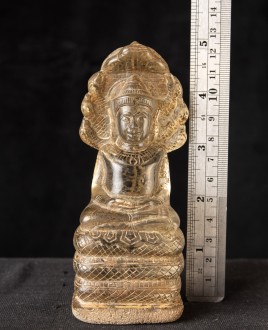
Dimensions: 5”9 x 2"W x 2"D
Weight: 410g.
 Send to a Friend
 Inquire About this Product
Search Settings