

Click to view image and other views
3780
For Sale
Country Group: South and Southeast Asia (Thailand, Burma, Laos, Cambodia, India, Indonesia, Sri Lanka and Vietnam)
Item id: 3780
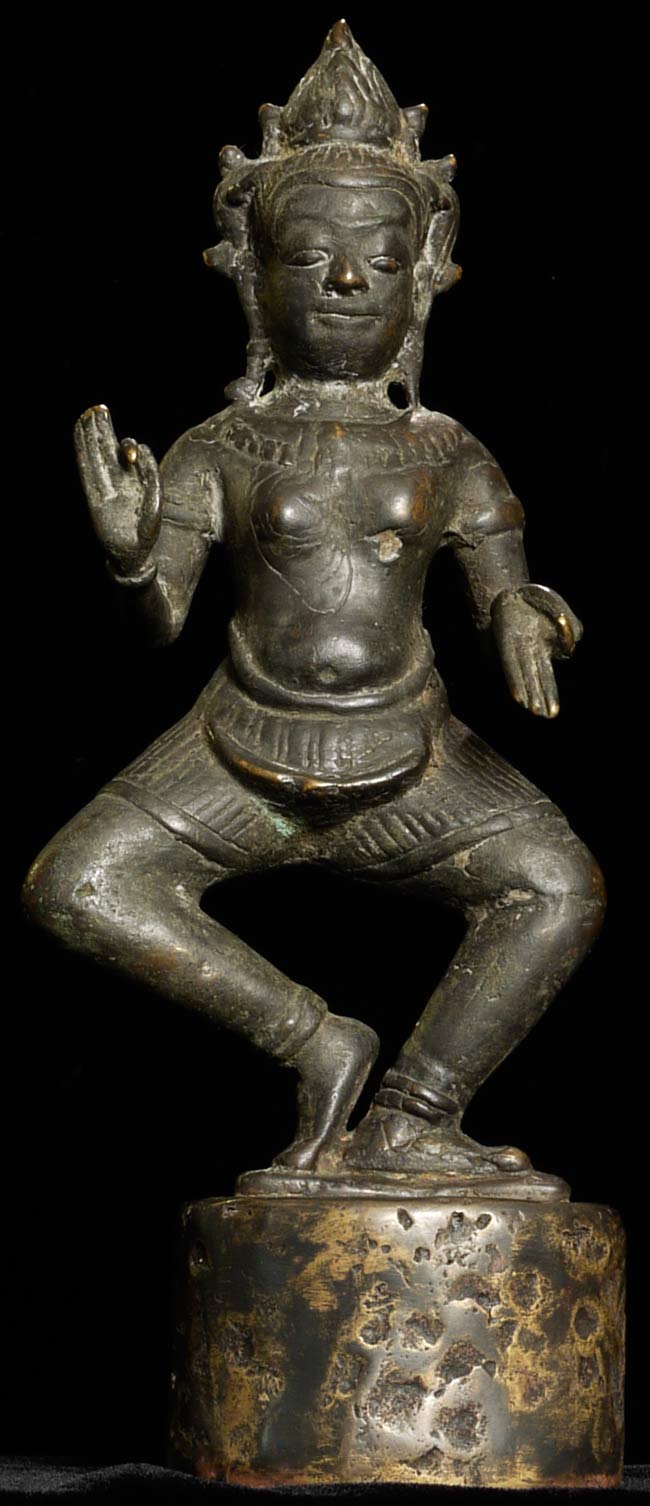
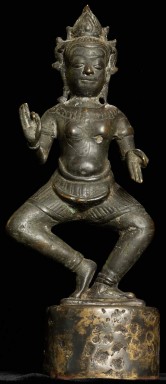
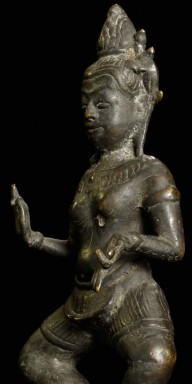
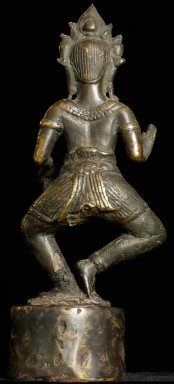
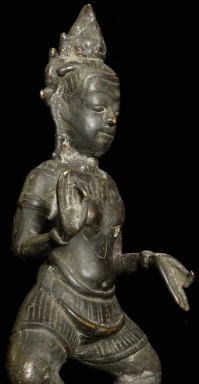
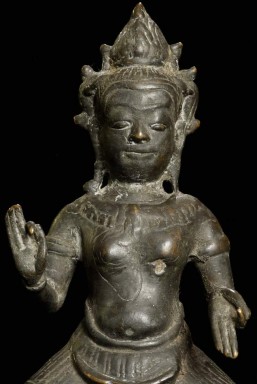
A BRONZE FIGURE OF A DANCING YOGINI OR APSARA
Cambodia, 19th Century, Emulating the Bayon Style (ca. 12th–13th Century)
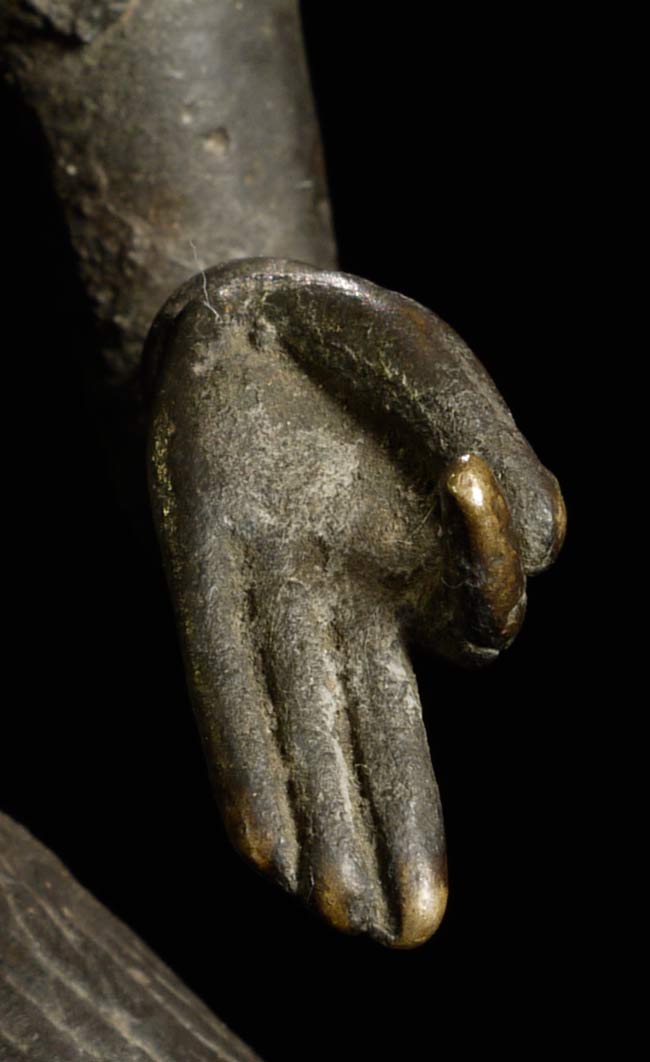
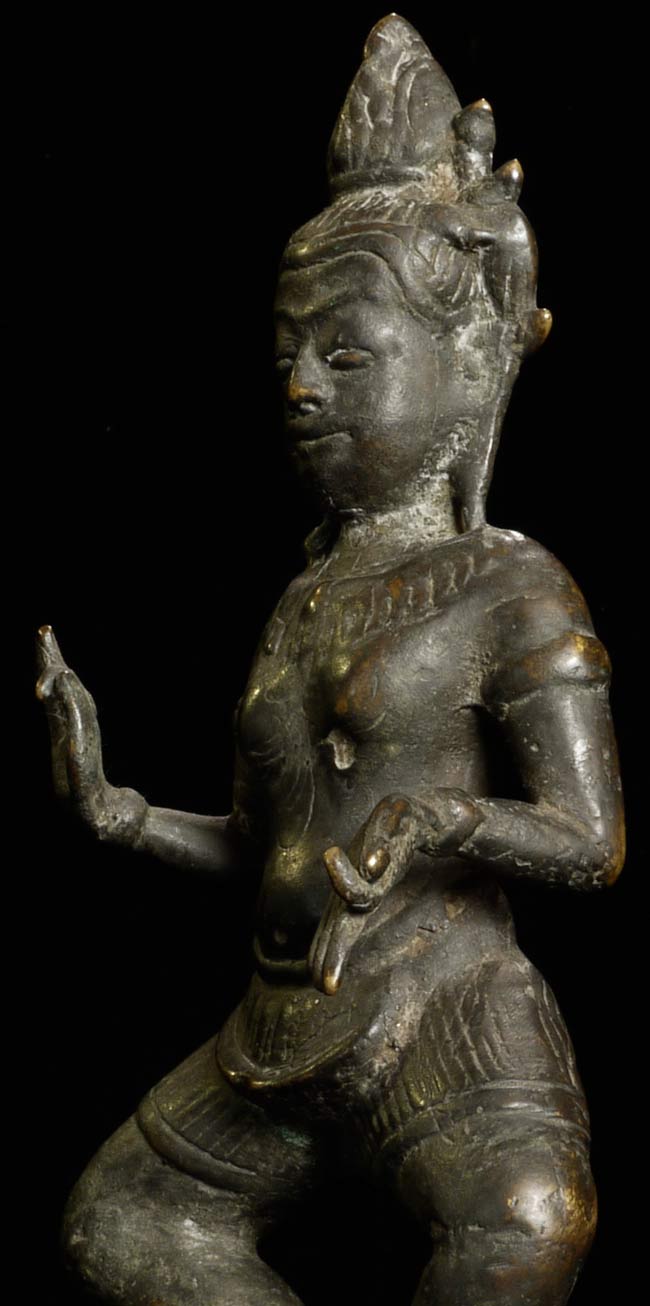
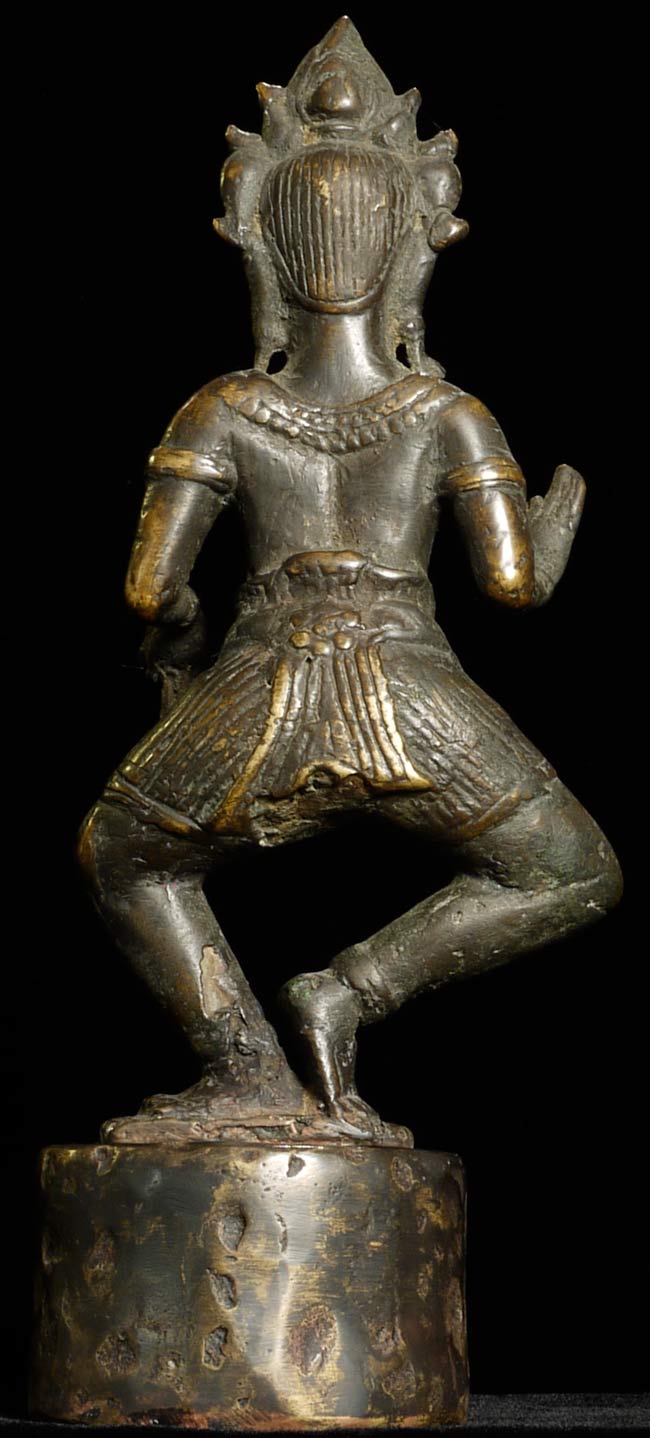
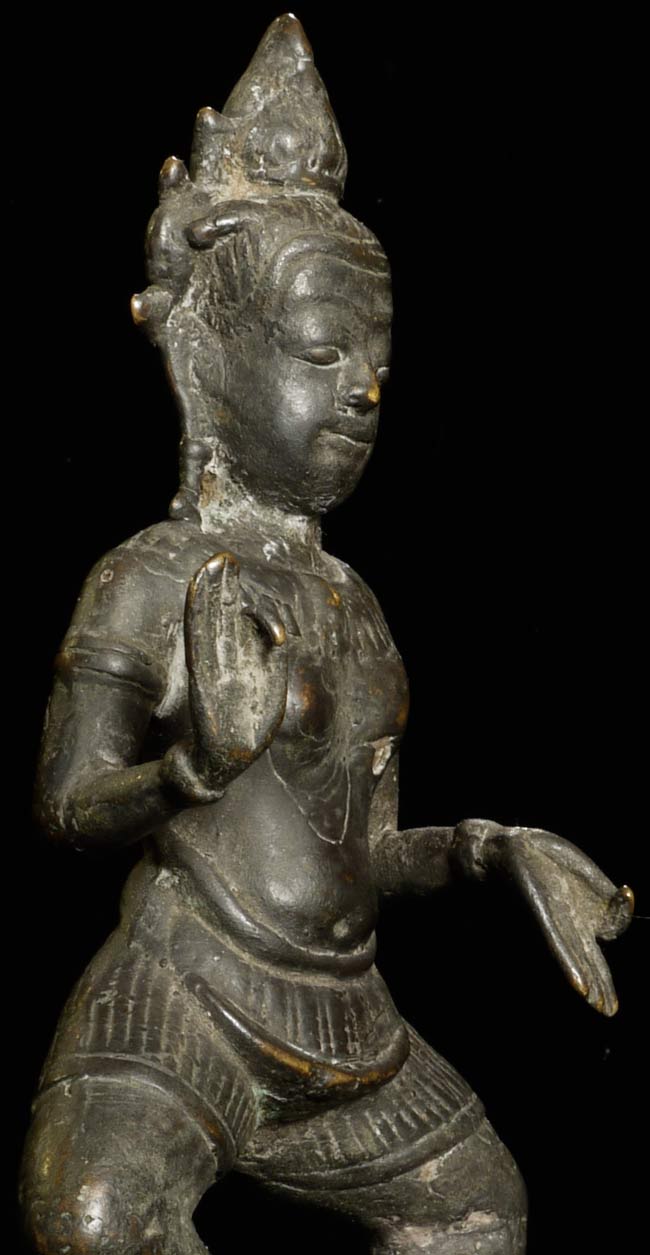
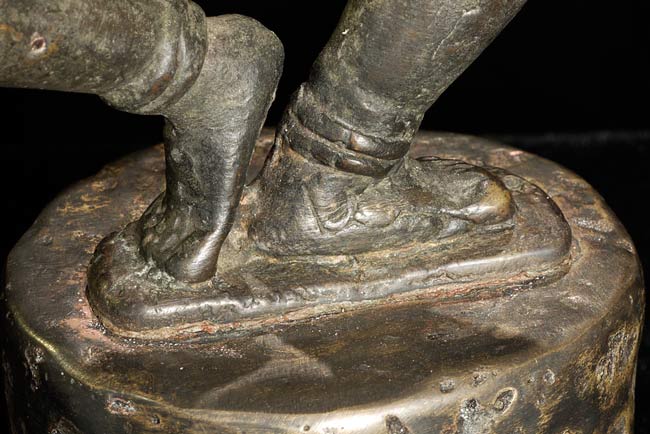
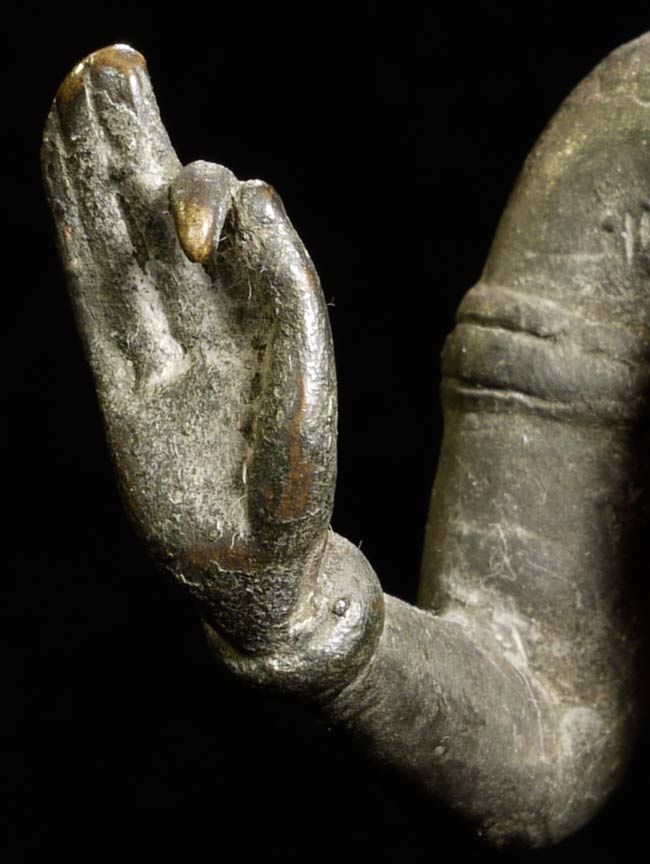
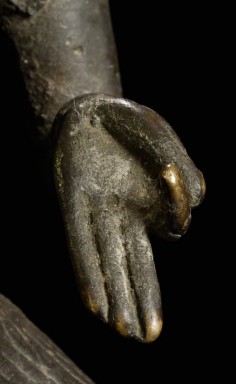
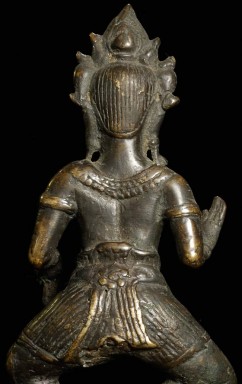
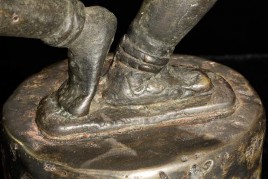
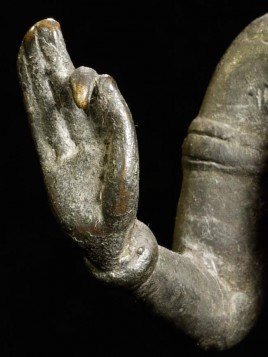
Cast in high-relief bronze, the dynamic female figure is depicted in a spirited ritual dance posture (ardhaparyanka), balanced on her right foot atop a low plinth with the left leg raised and flexed sharply outward. The right arm is bent upward at the elbow with the palm raised in an expressive dance mudra, while the left arm extends downward with splayed fingers.
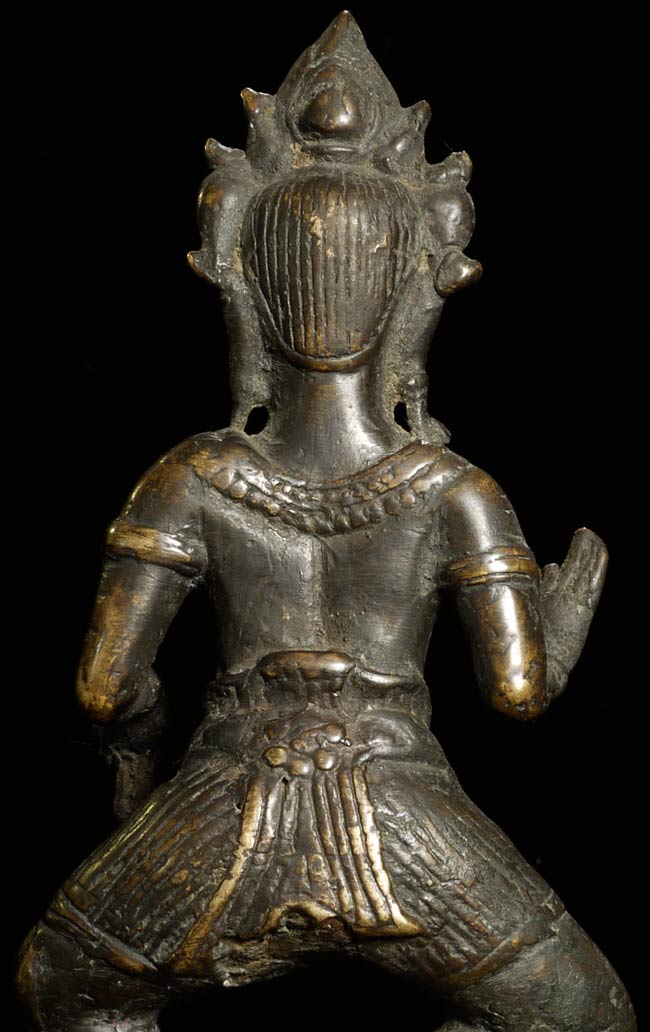
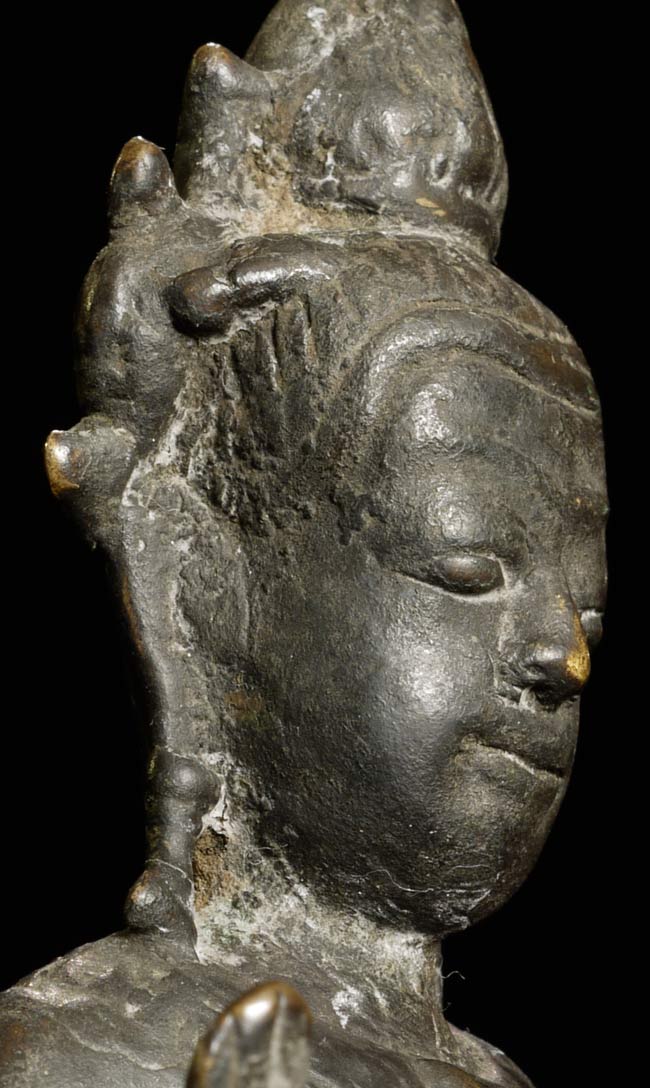
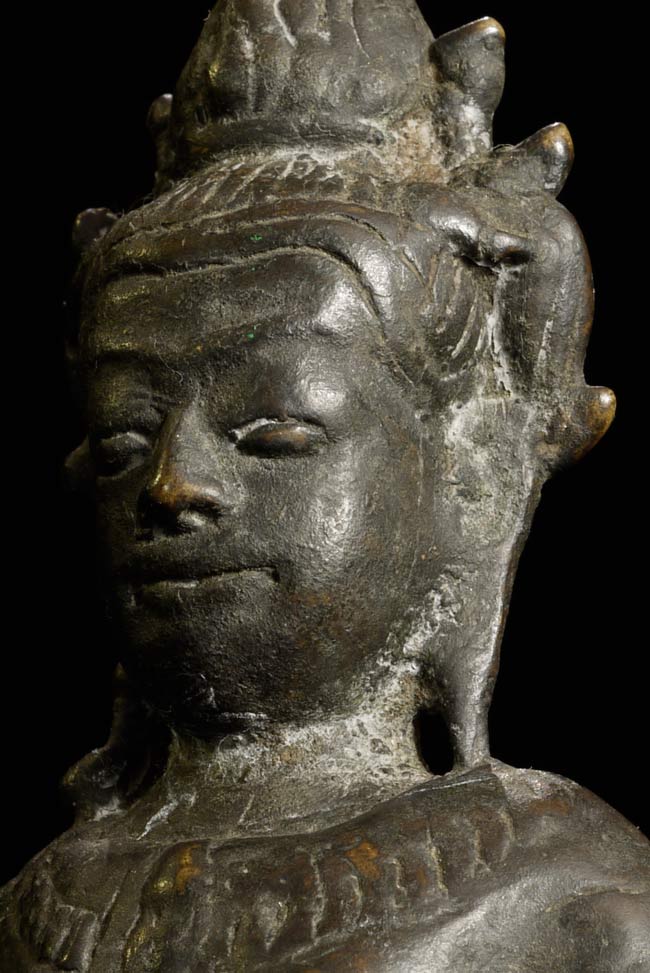
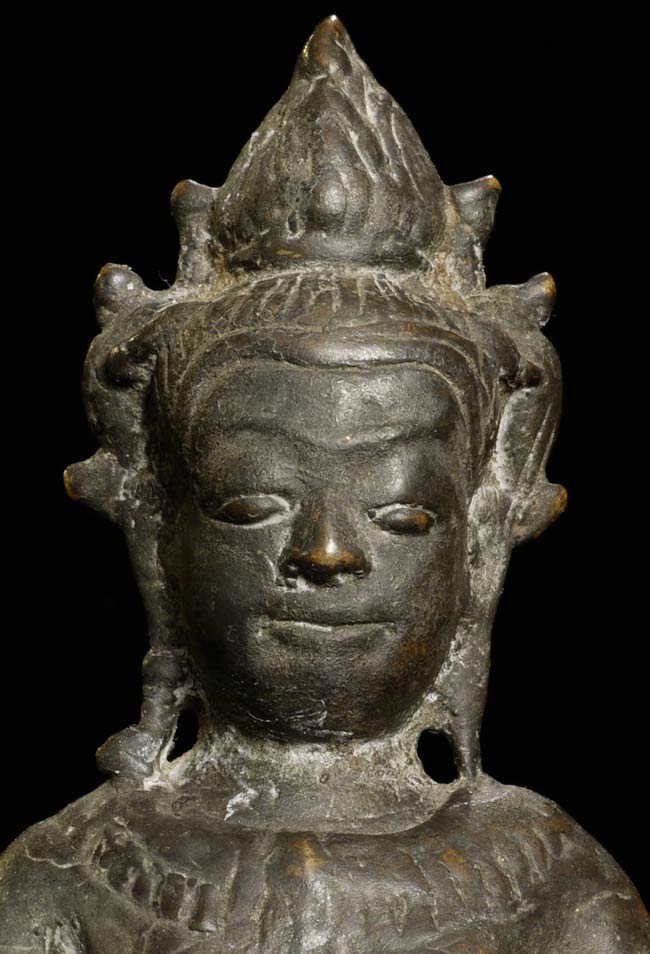
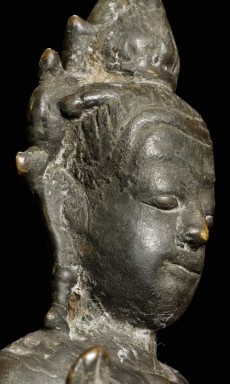
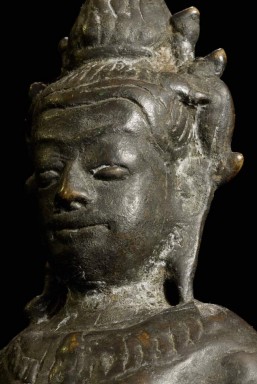
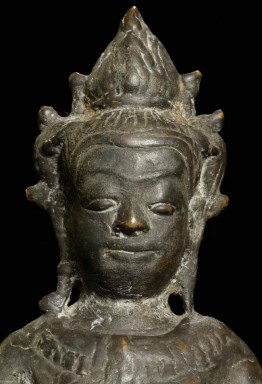
The dancer is attired in an ornate, striated short skirt (sampot) with a curved frontal apron and central sash, cinched at the waist by a detailed jeweled girdle. She wears beaded armlets, wrist cuffs, anklets, and a broad floral collar necklace. The broad, square-jawed face displays downcast, almond-shaped eyes, a wide nose, and full lips parted in the serene, introspective "Bayon smile," framed by pendulous earlobes with floral pendants. The coiffure is drawn into a conical, tiered headdress (mukuta) ringed by a peaked diadem.
The bronze displays an attractive, naturally aged deep charcoal-brown patina with soft golden-bronze undertones on high-relief contact points, accented by light mineralized oxidation within the recesses of the jewelry, skirt pleats, and the cylindrical hollow pedestal.
Dimensions:
Figure Height: 7 ⅛ inches (18.1 cm)
Base: 1 ½ inches high (3.8 cm), 2 ½ inches diameter (6.4 cm)
Total Height: Approx. 8 ⅝ inches (21.9 cm)
Material: Cast bronze with natural aged patina
Cataloguer’s Notes & Commentary
Iconographic Context:
While frequently identified as an Apsara (celestial dancing nymph), this specific vigorous posture closely aligns with the tantric Yoginis associated with the esoteric Hevajra mandala that flourished during the reign of Jayavarman VII (r. 1181–1218). In these tantric mandalas, dancing female deities embodied dynamic spiritual energy and wisdom.
Revival Period Casting:
During the 19th and early 20th centuries in post-Angkorian Cambodia and the surrounding border regions, master bronze founders created fine lost-wax revivals of classic Angkorian masterpieces. This example faithfully captures the classic Bayon aesthetic—notably the broad facial structure, serene expression, and intricate linear detailing of the regalia.
Condition Report:
Intact and in very fine antique condition. No breaks or missing limbs. Expected softening to fine chased details and gentle surface wear consistent with age and handling. Integral cylindrical base retains its original hollow casting cavity with stable, authentic age oxidation.
Collected directly along the Cambodian border in the 1970s. The sculpture stands out for its complete, unbroken preservation—exceptional for bronze dancing figures of this dynamic, open-limbed posture. The facial modeling captures the introspective dignity of the Bayon period with unusual sensitivity for a 19th-century casting.
 Send to a Friend
 Inquire About this Product
Search Settings