


Click to view image and other views







9387
For Sale
Country Group:
Item id: 9387
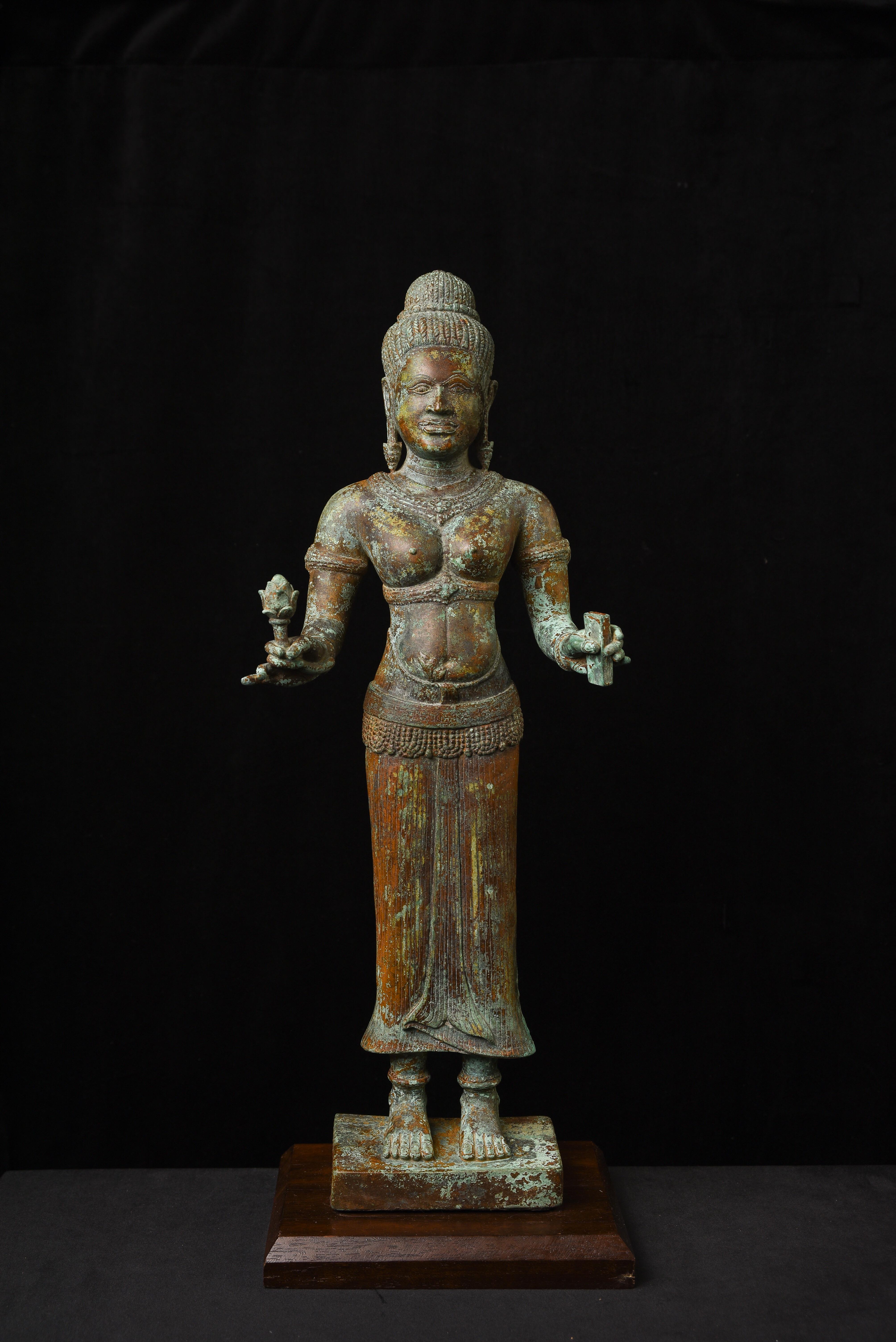
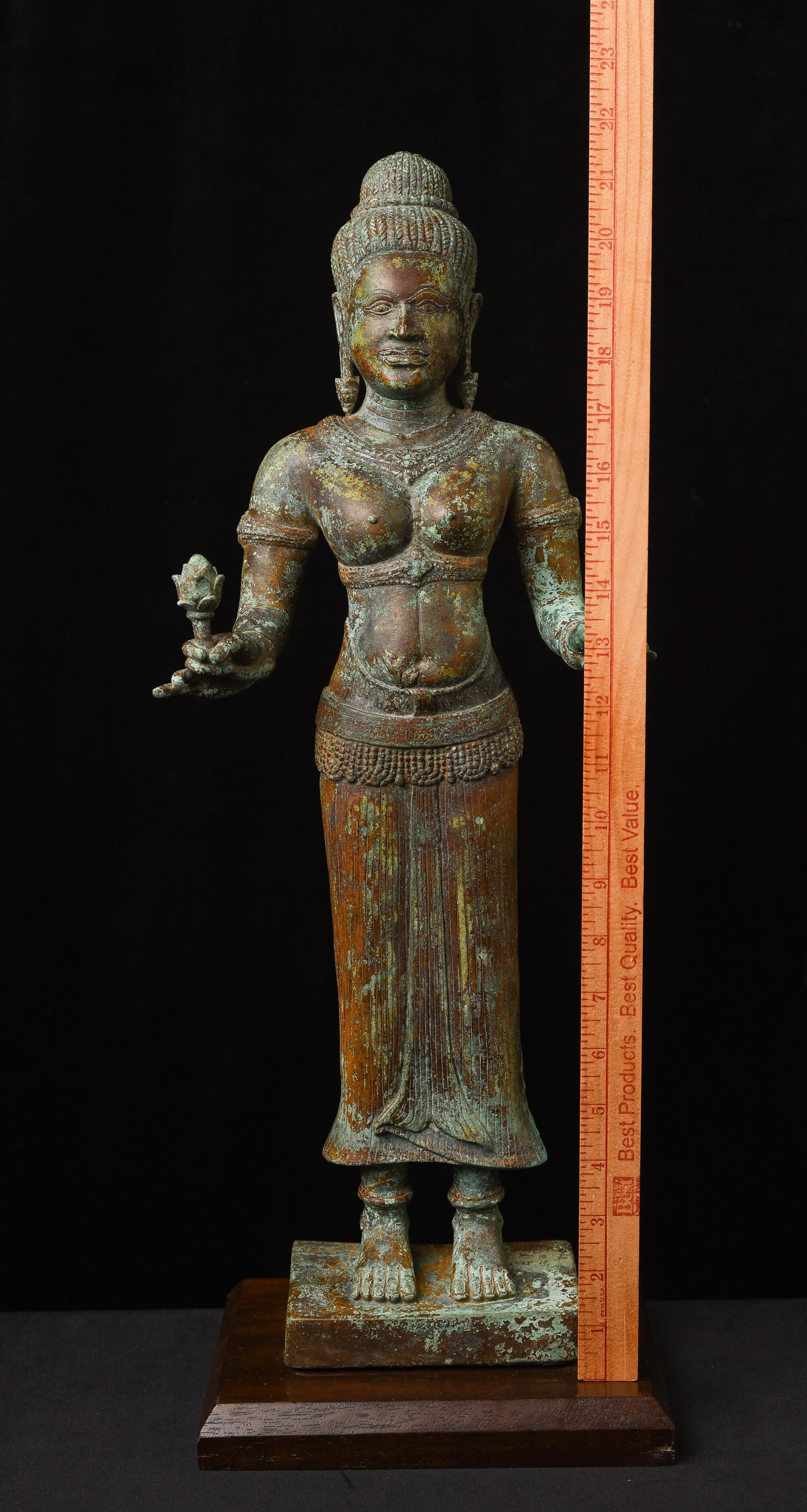
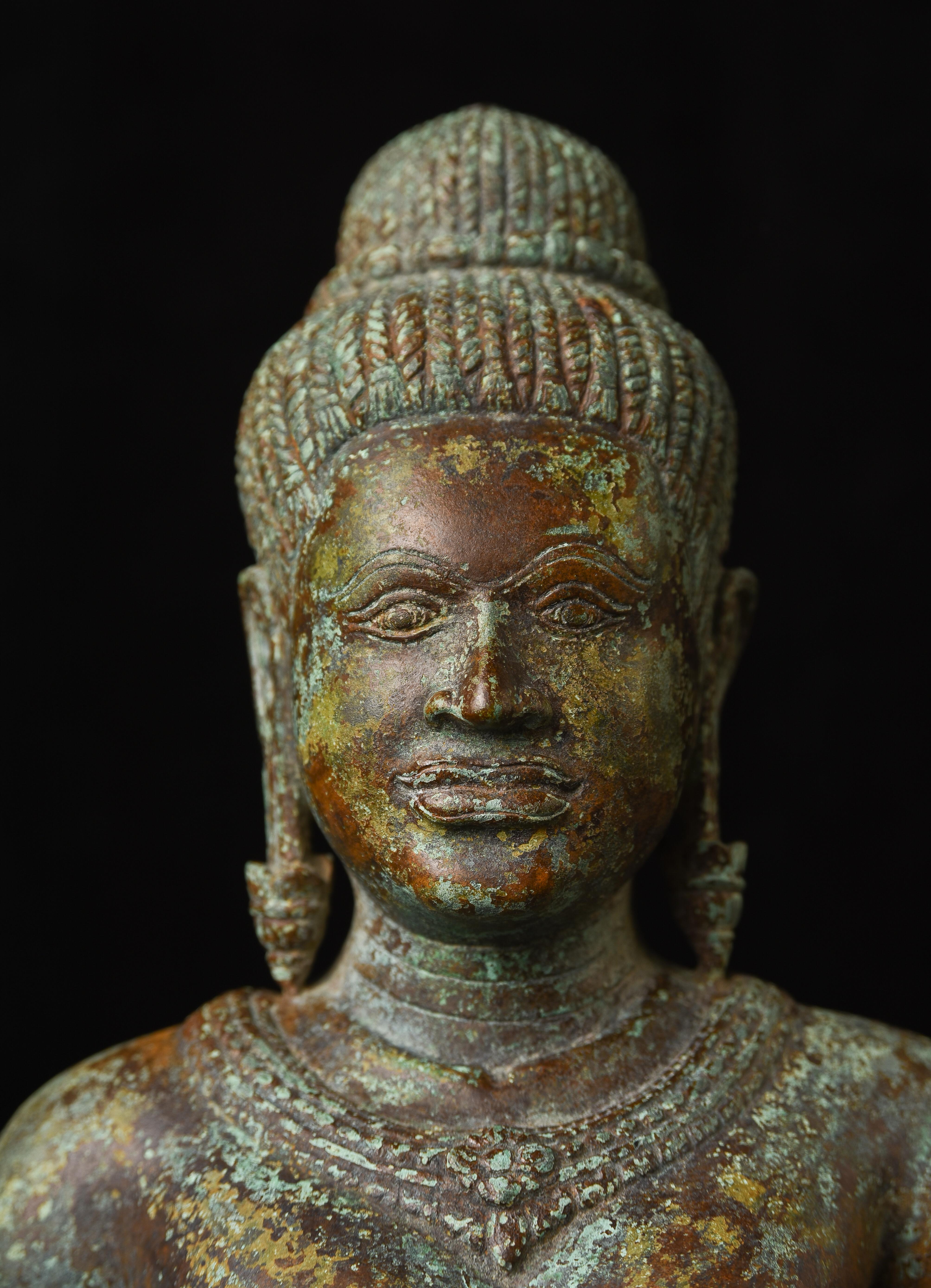
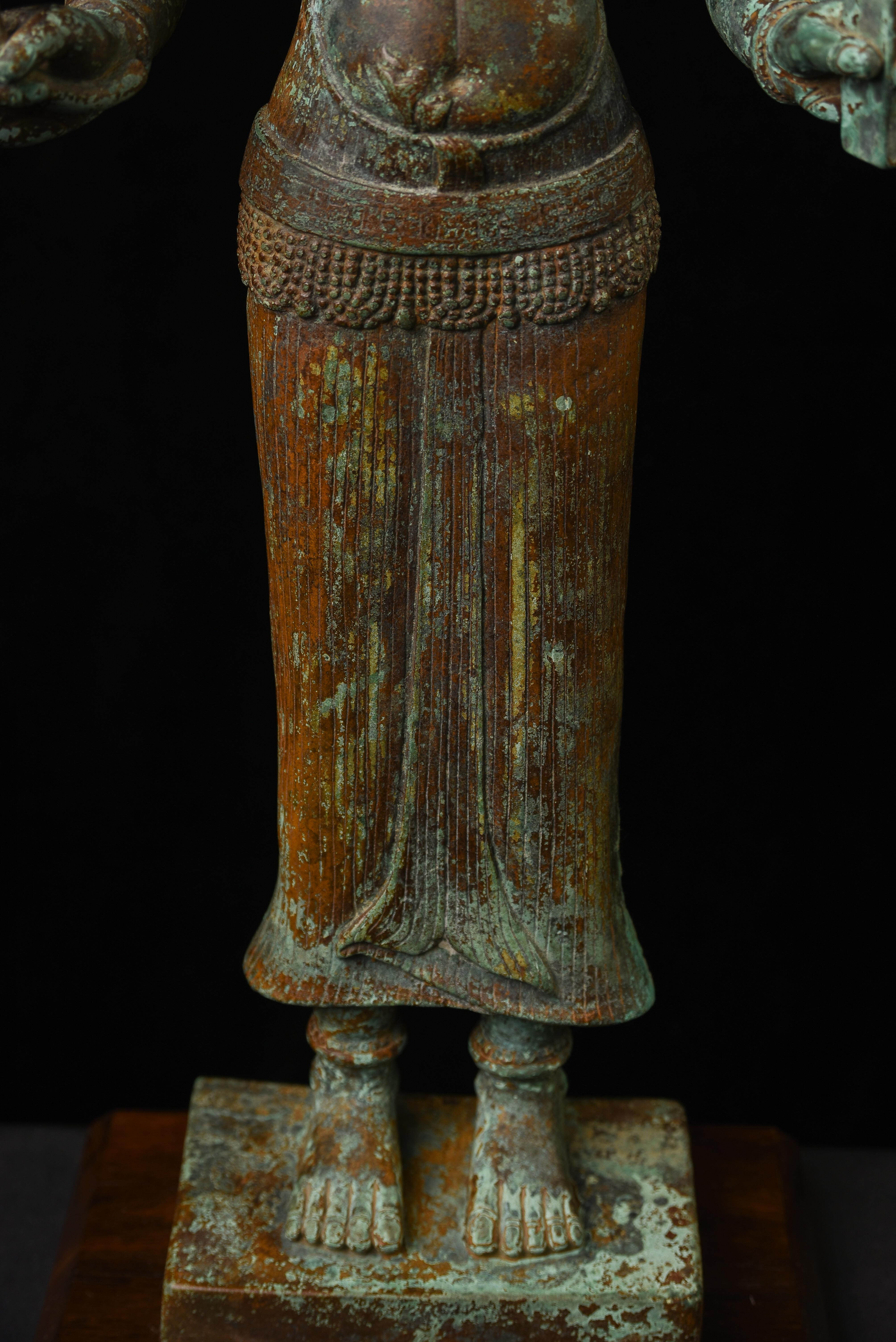
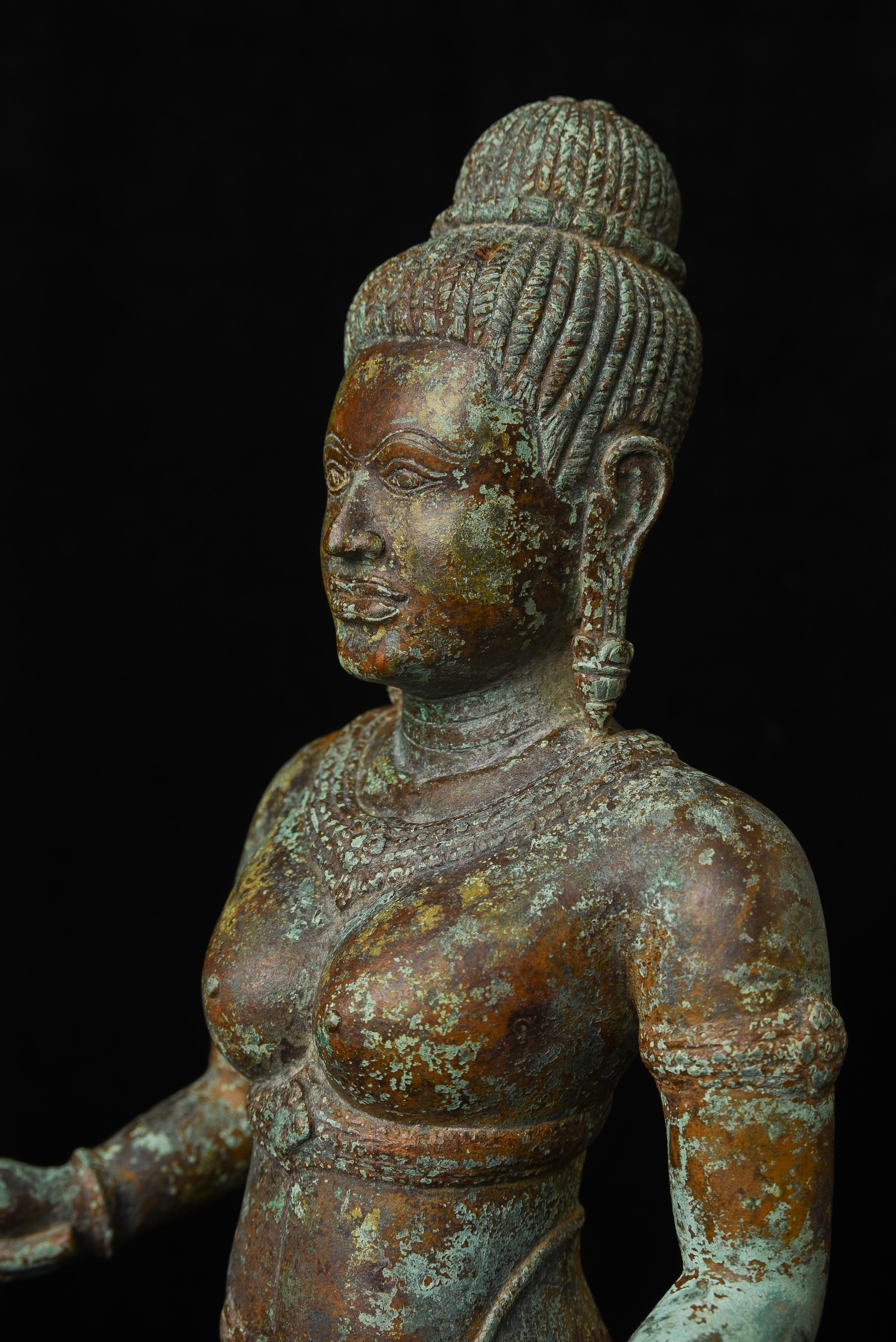
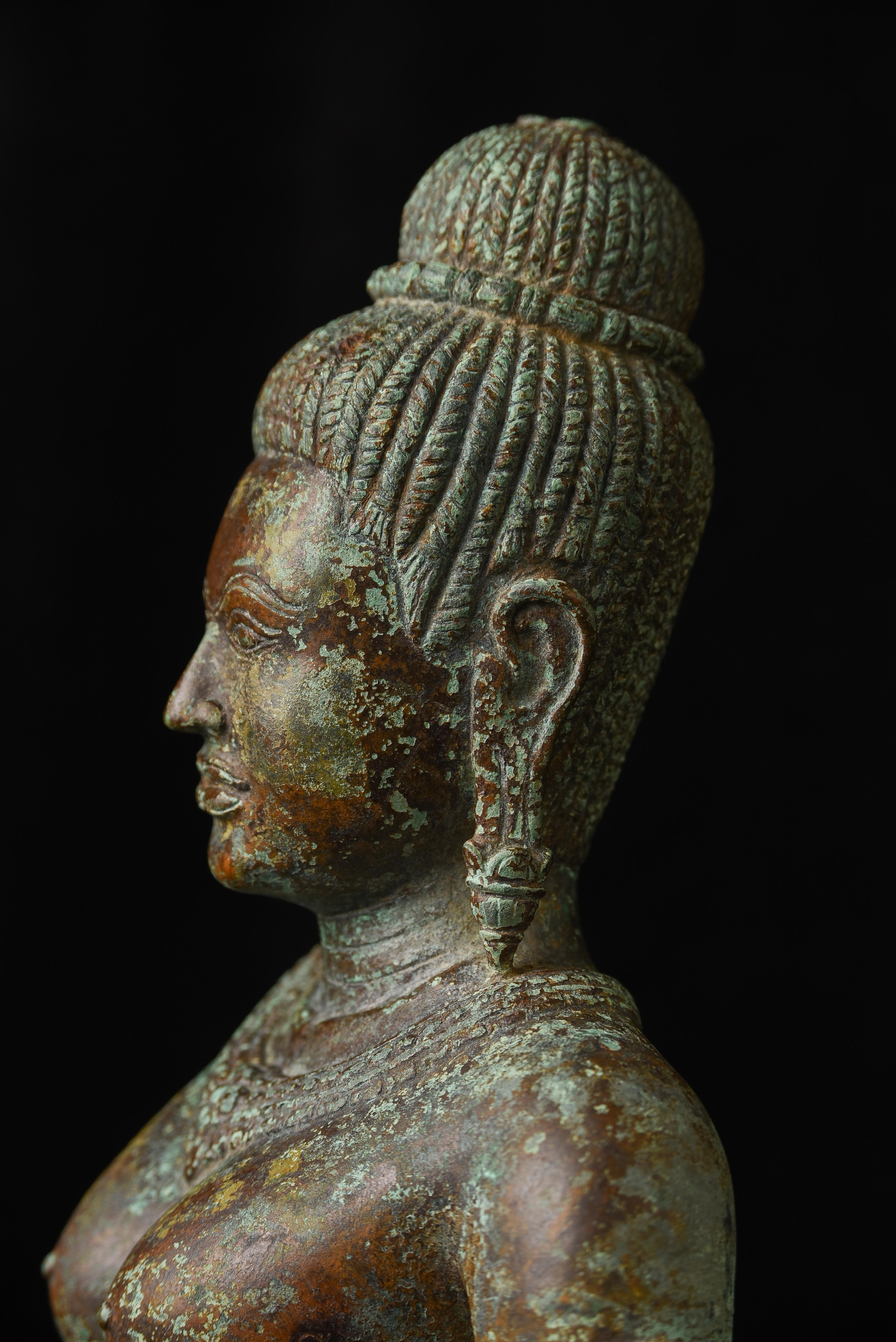
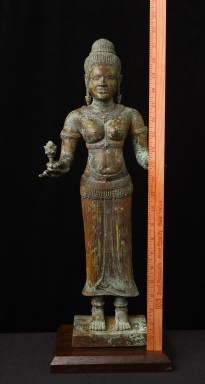
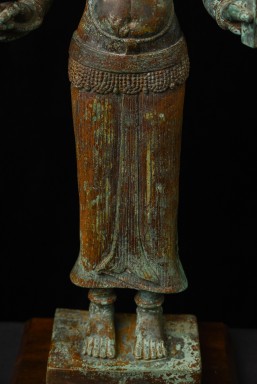
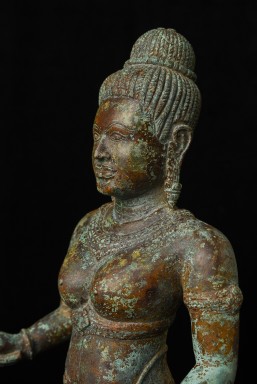
13th Century Cambodian Bronze Uma, Bayon Period — Monumental and Exceptionally Refined. This extraordinary 13th-century Cambodian bronze sculpture of the Hindu goddess Uma, dating to the Bayon period, is an exceptional and unusually large example of its type. The bronze figure alone measures an impressive 22.5 inches in height, making it one of the largest and most finely detailed Bayon-period bronzes I have encountered.
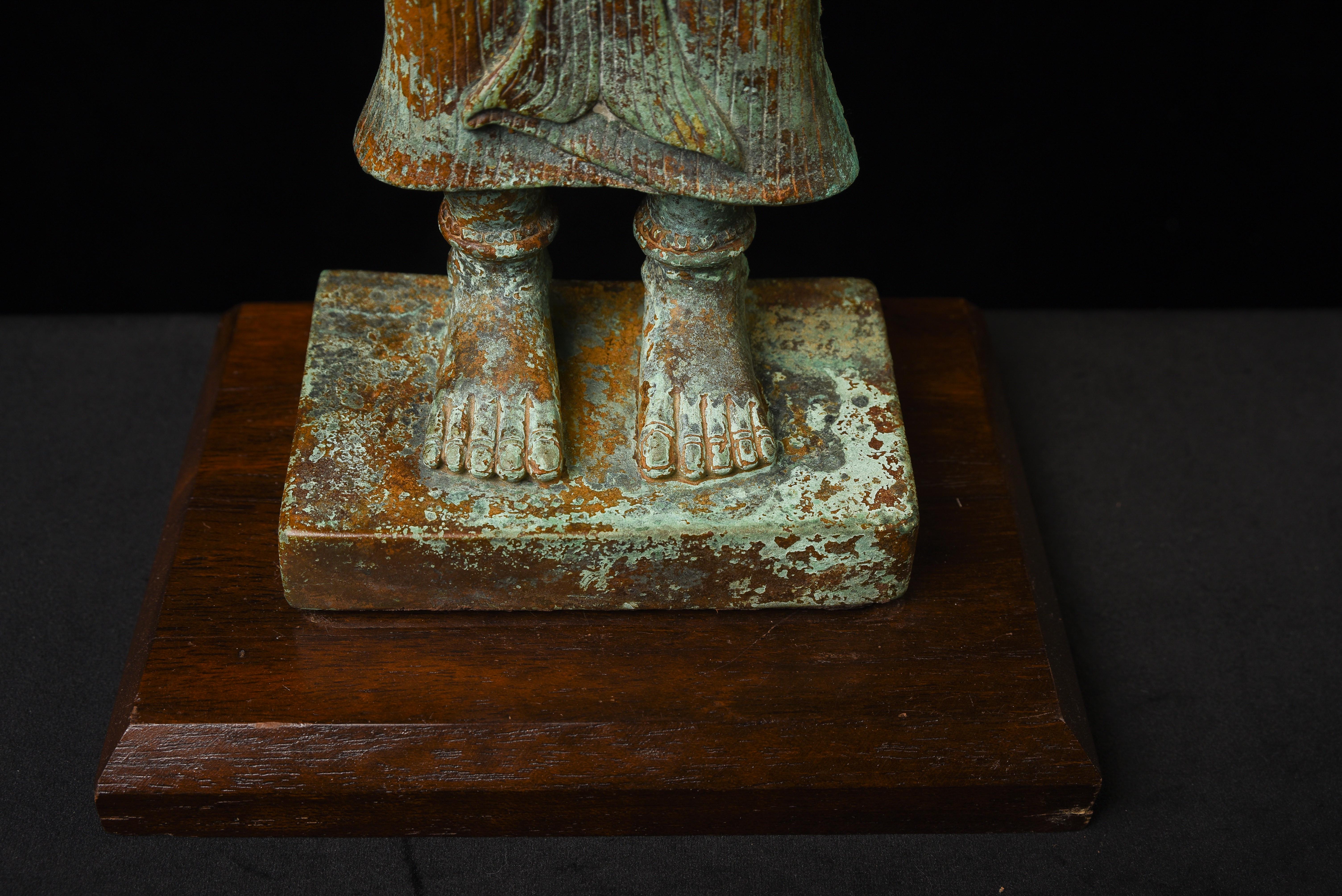
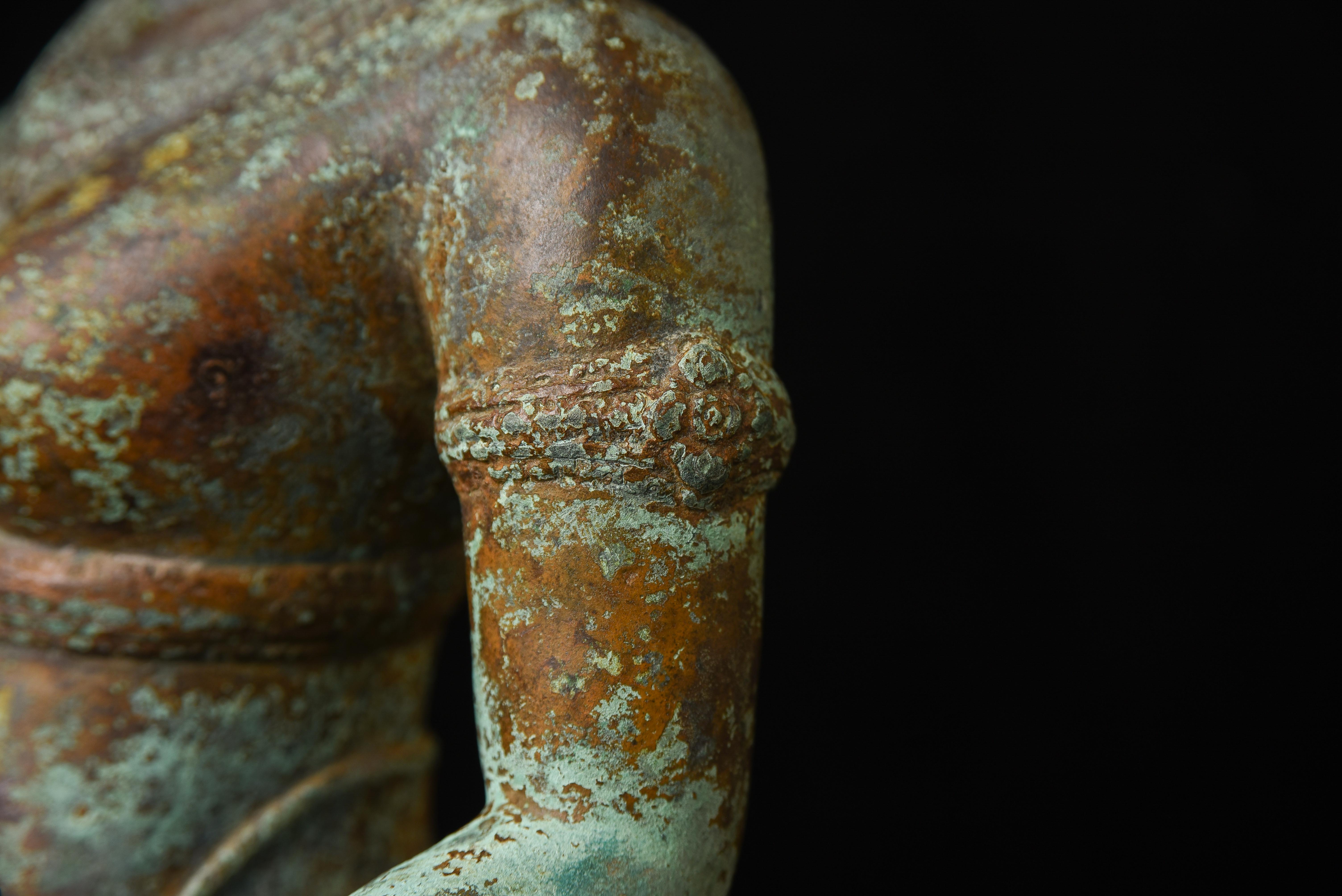
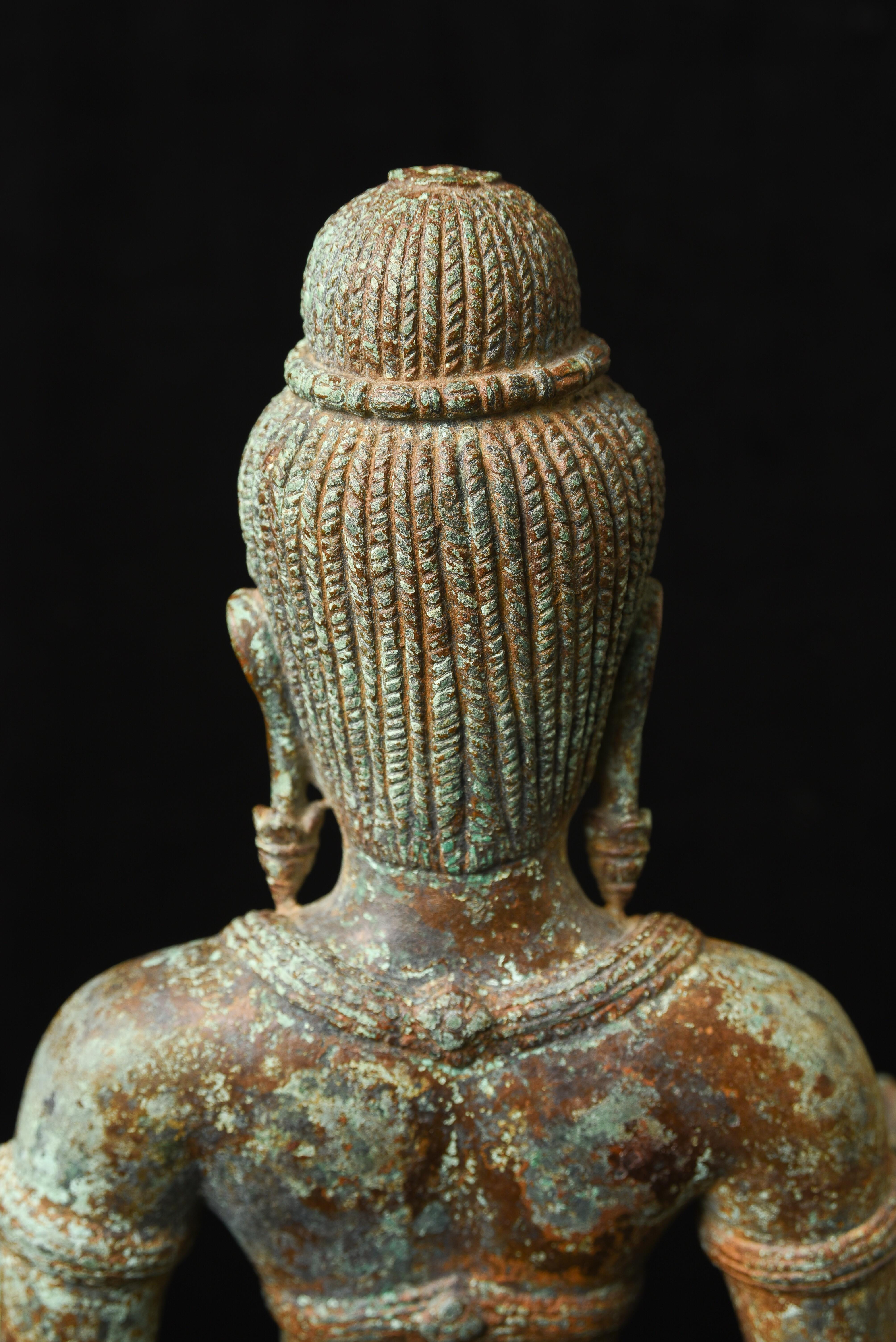
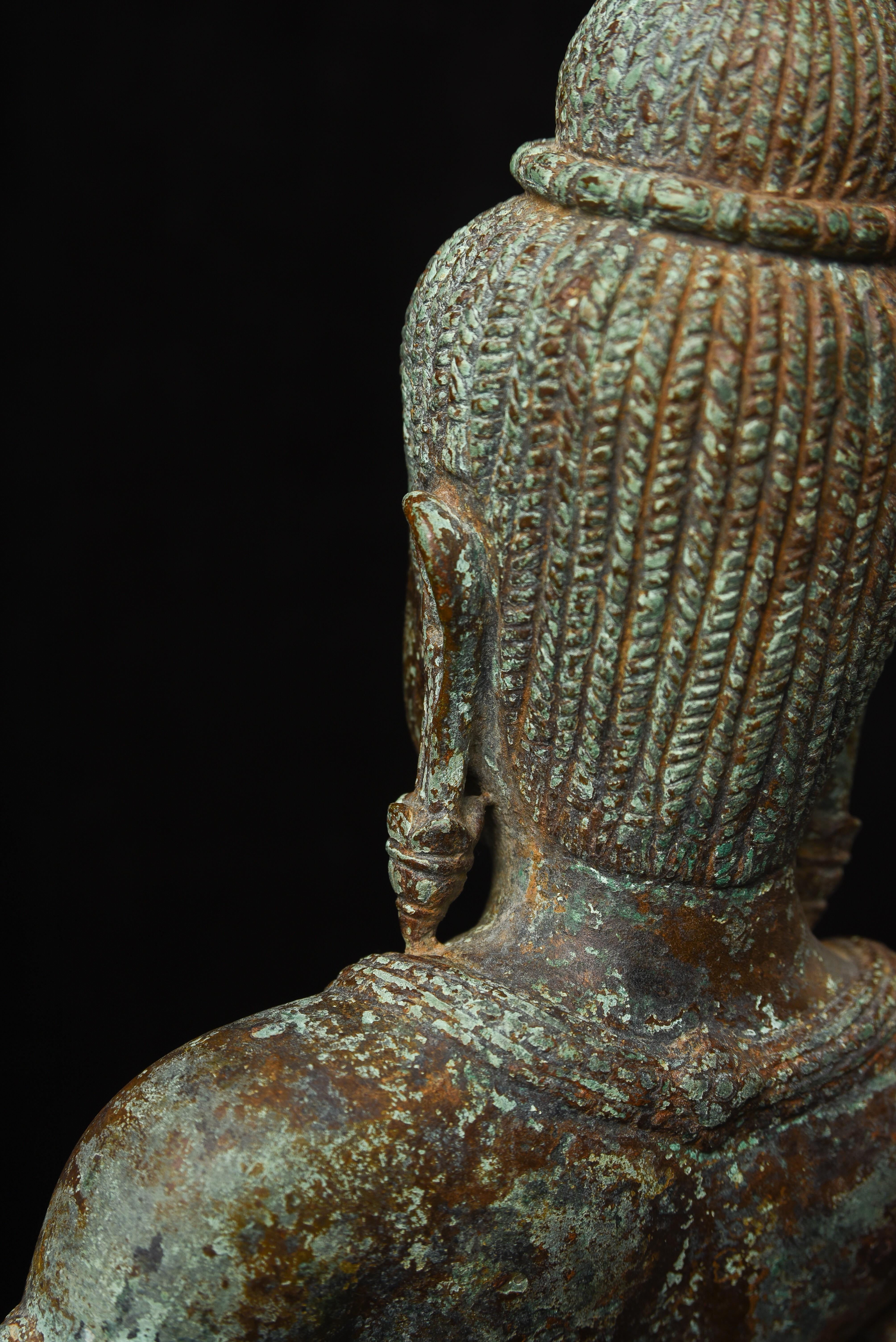
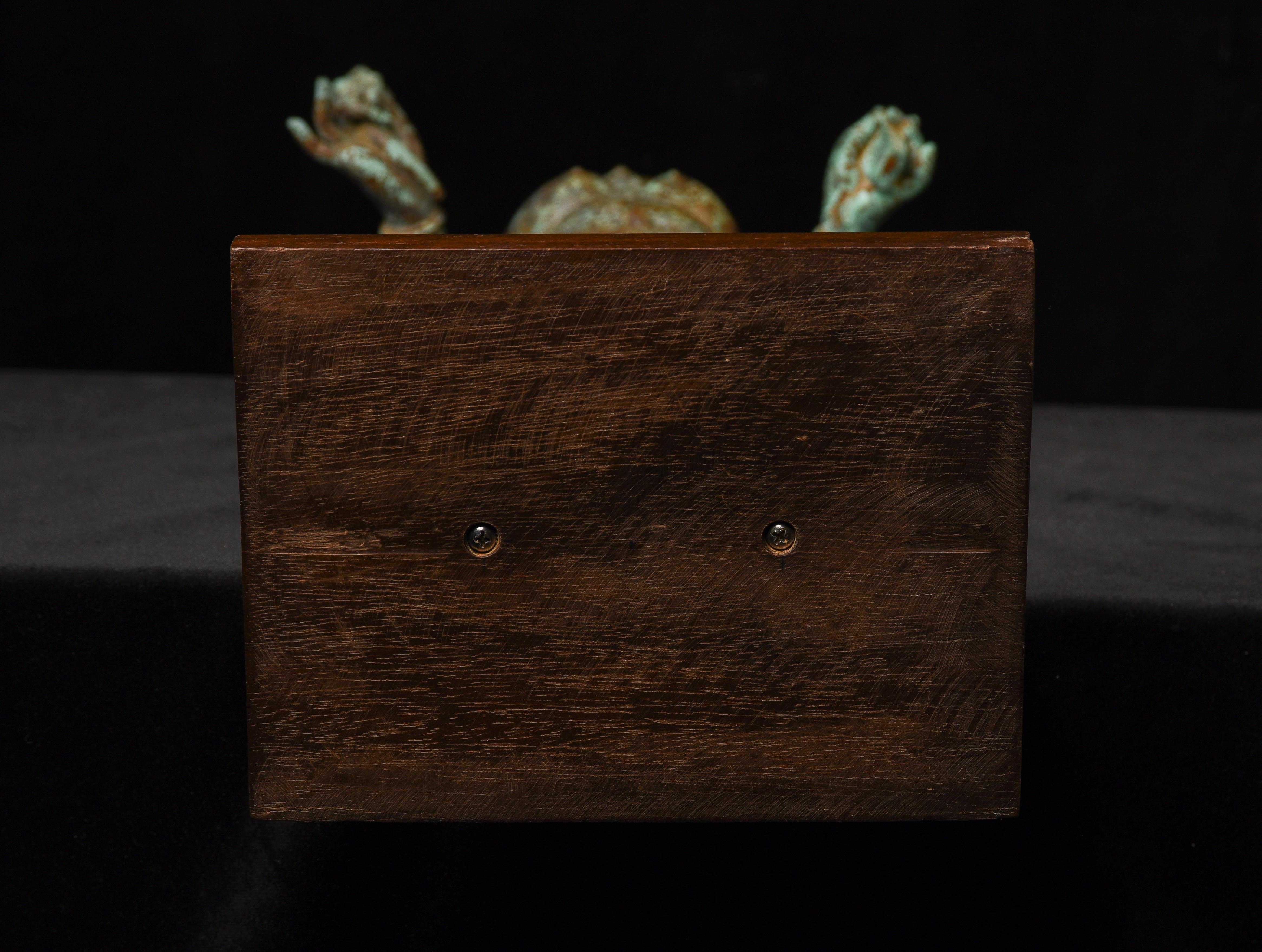
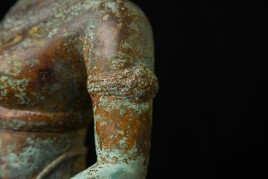
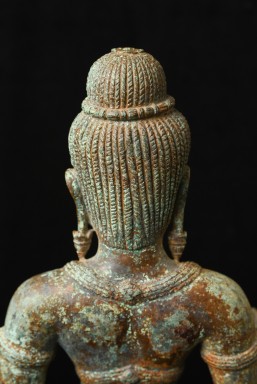
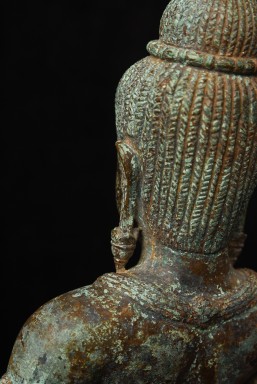
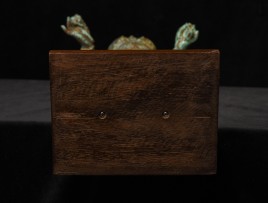
A piece of wood is tightly set into the bottom—likely added centuries ago for stability or attachment to a base. Traces of old adhesive along the lower ledge suggest it was once secured to a secondary pedestal. Over time, the base has begun to compress subtly beneath the sculpture’s substantial weight, a testament to its long history. The bronze remains in fine condition throughout, with no visible losses or repairs. The patina is notably complex, rich, and layered. At first, its beauty and evenness made me question its authenticity. However, under close examination—especially under magnification—the underlying warm honey-brown surface, remnants of degraded gilding, and the gradual emergence of internal mineral bloom (leaching from within the metal, not resting atop it) reveal a genuine and ancient surface. The sculpture appears to have been lightly cleaned at some point, removing accumulated debris from the intricately carved recesses, allowing the full refinement of the casting to come forward.
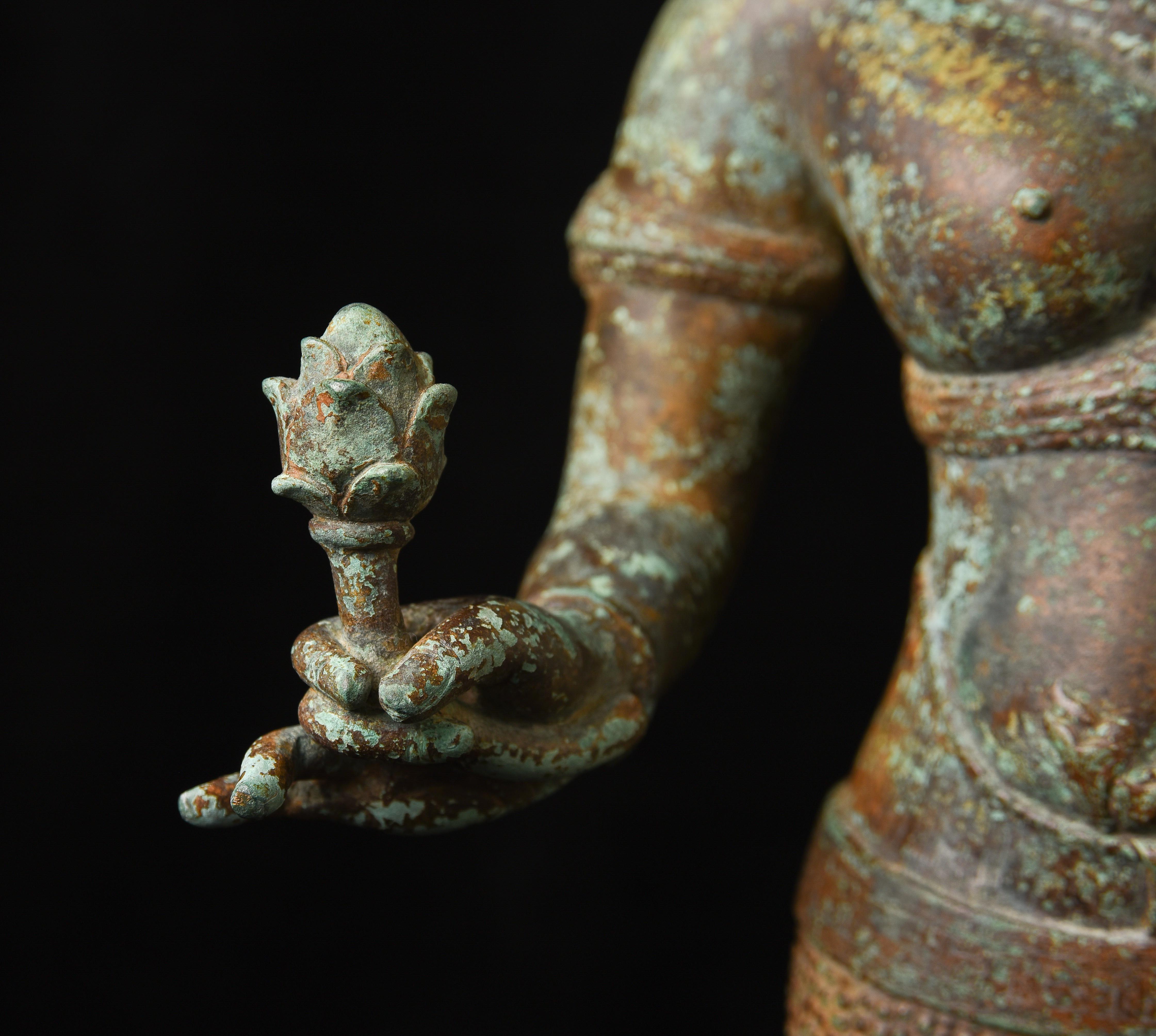
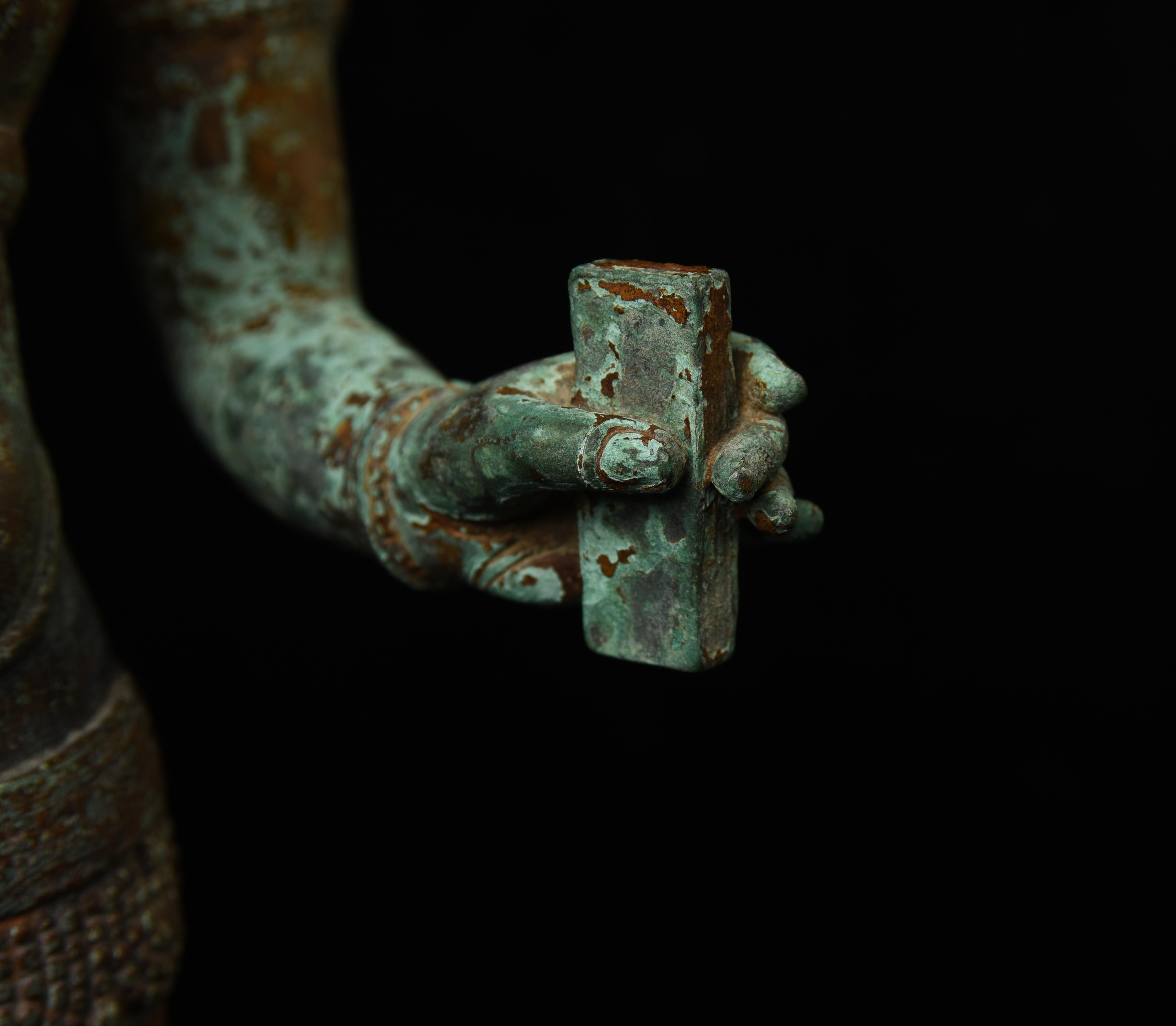
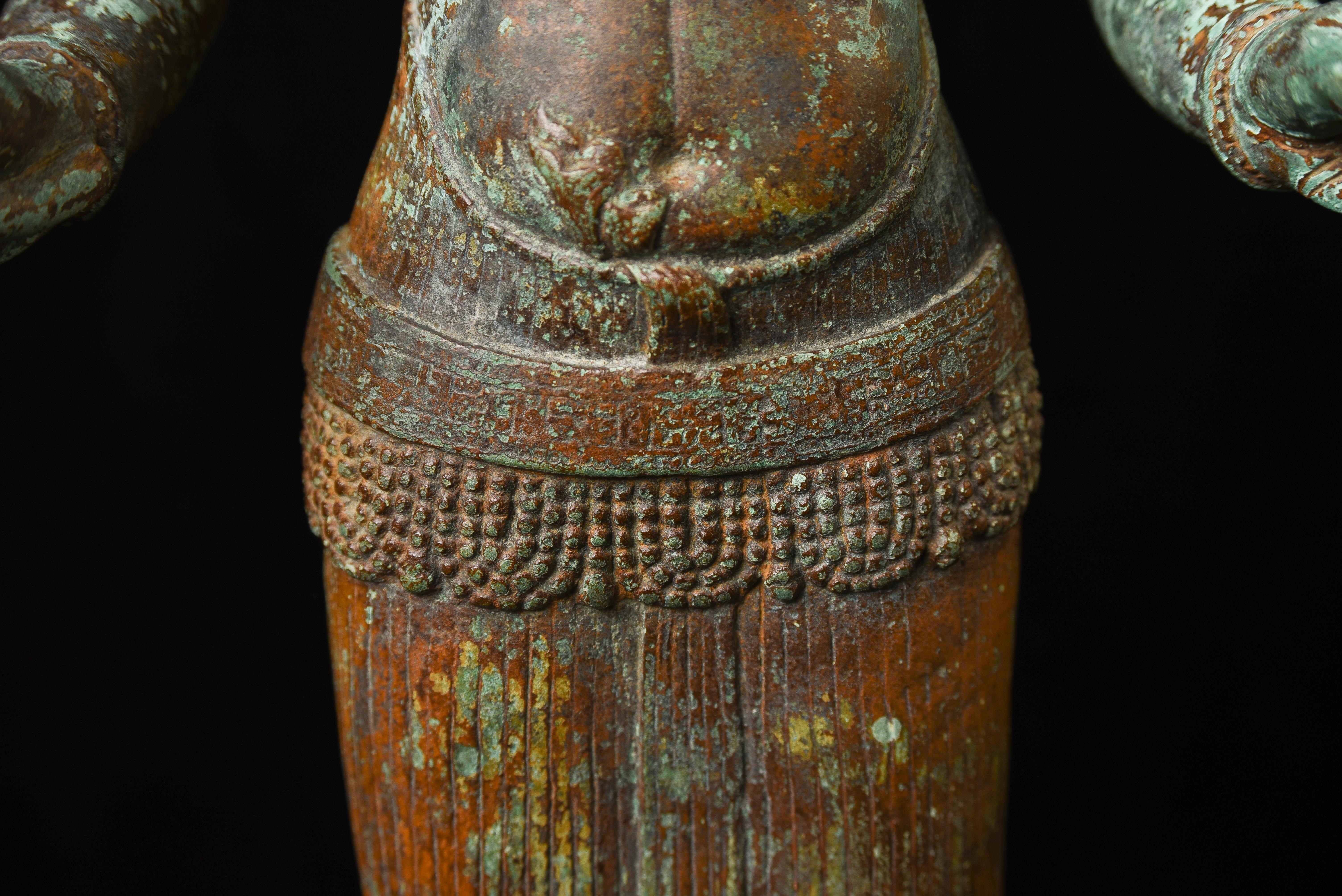
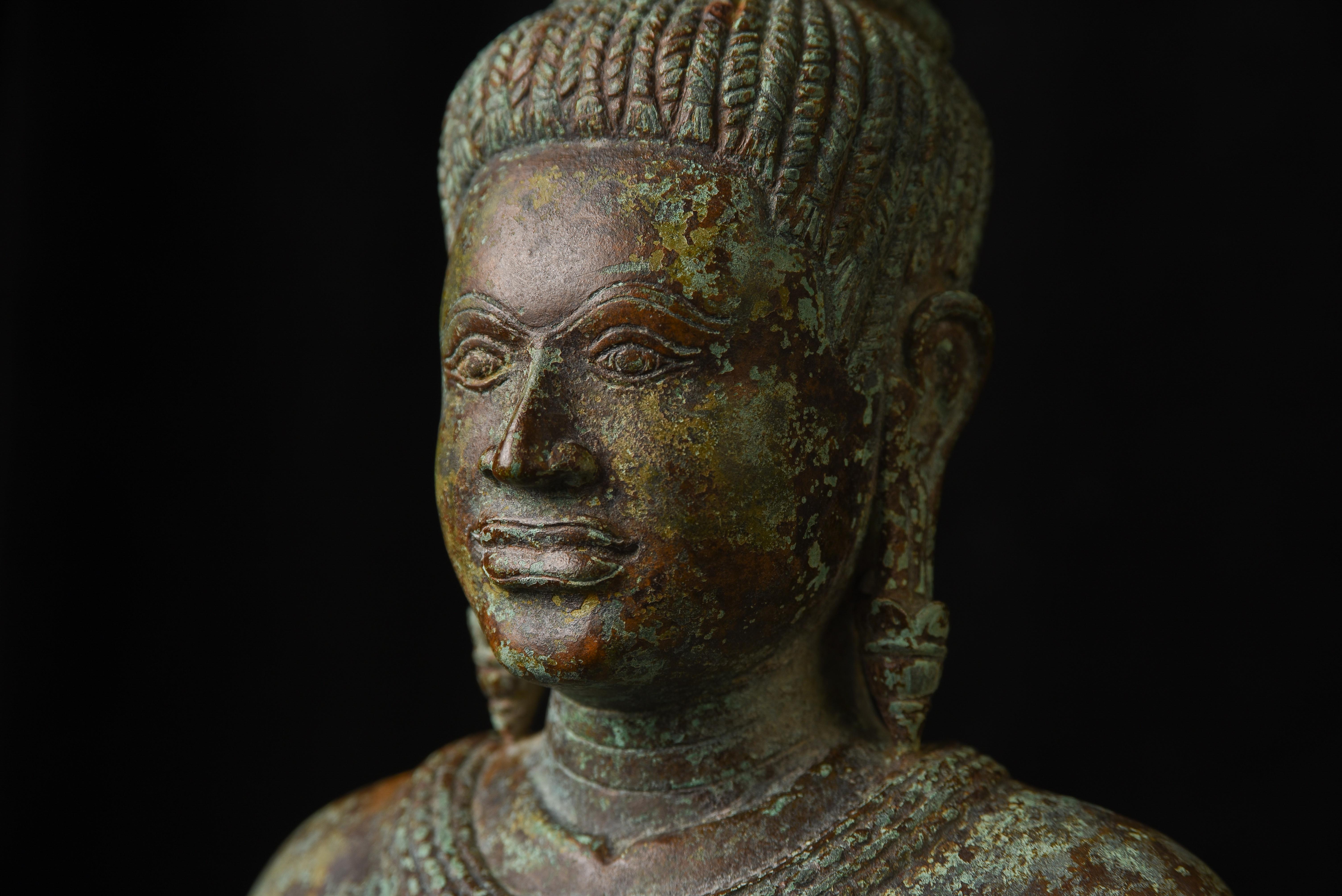
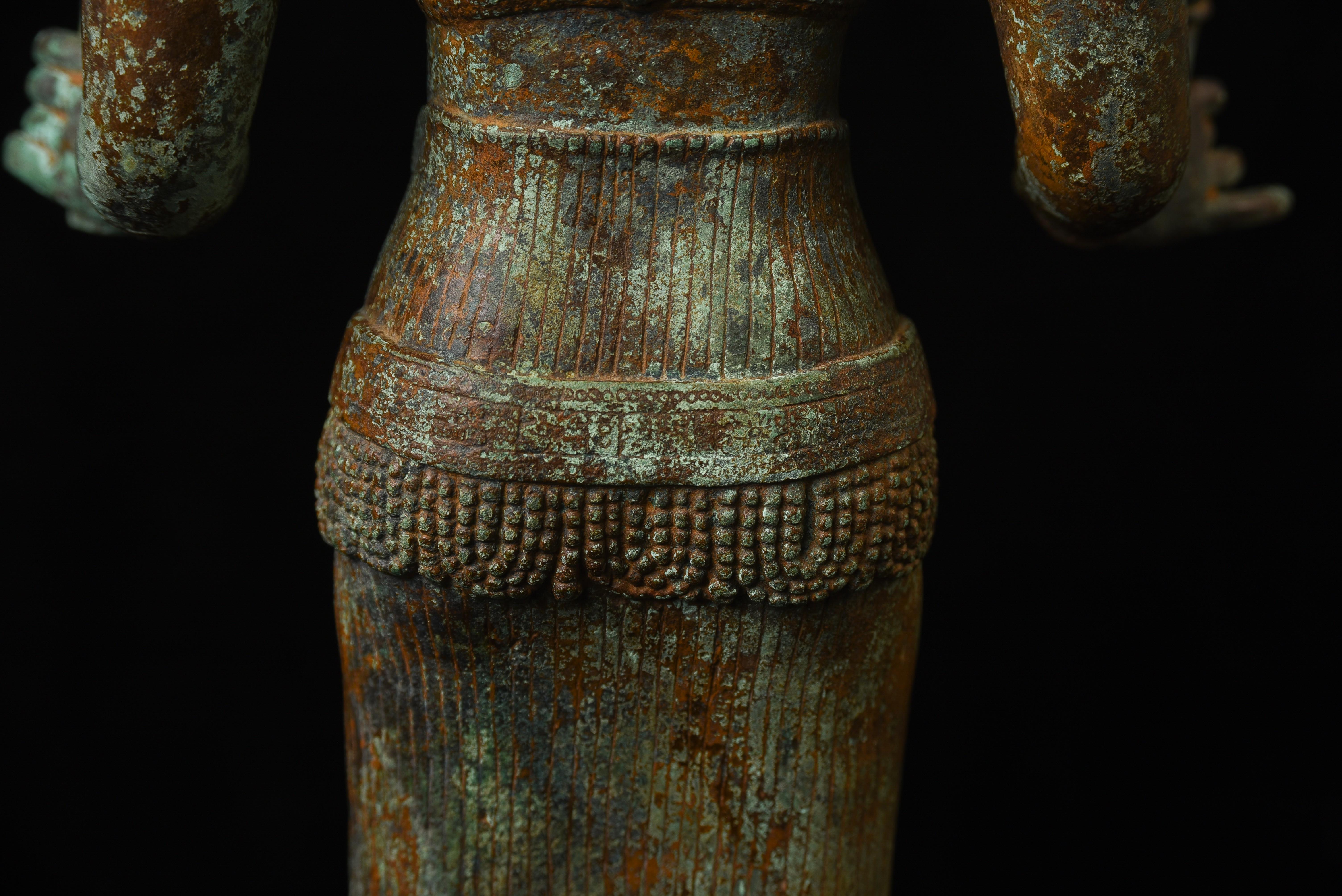
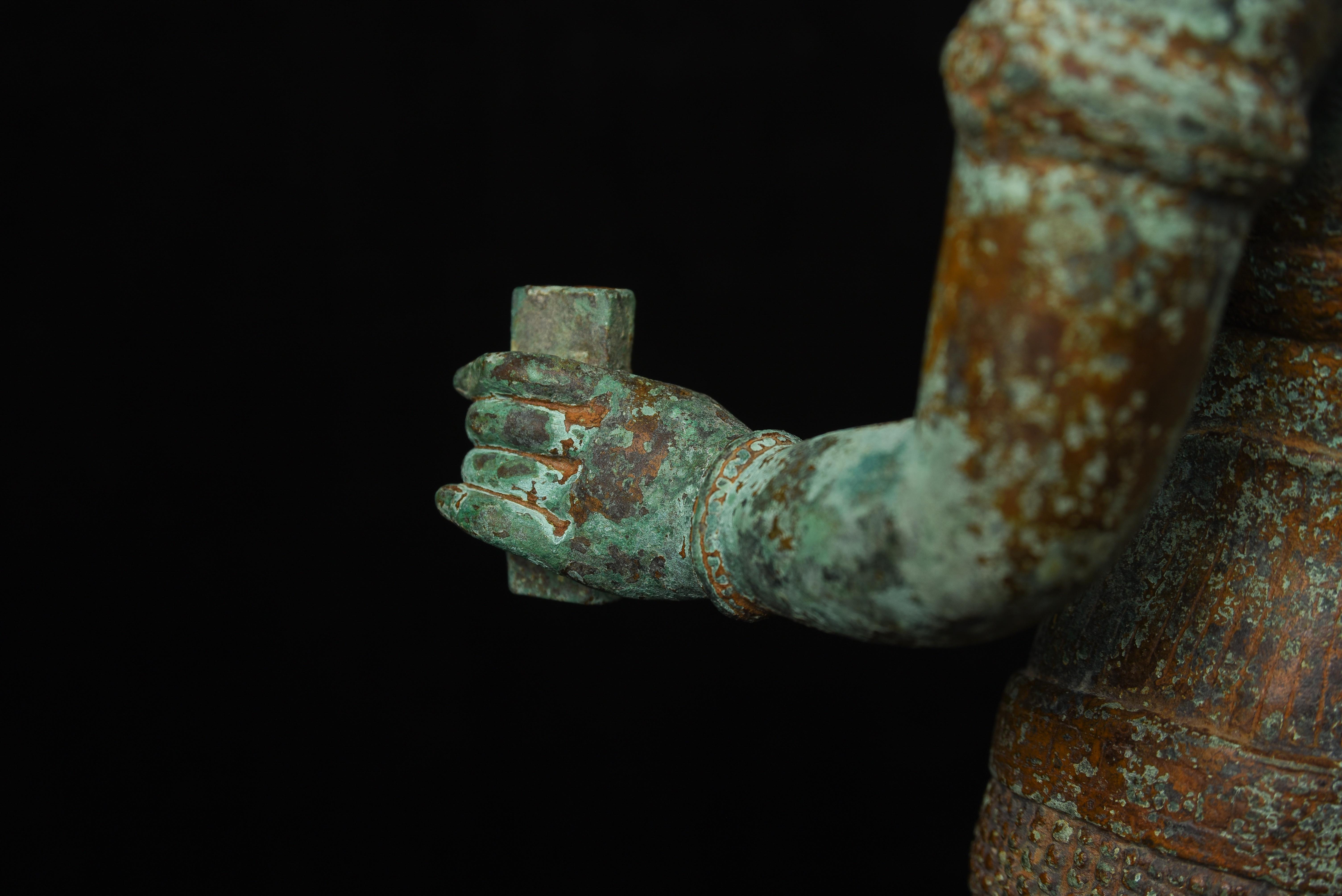
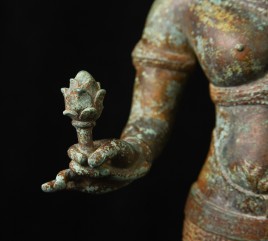
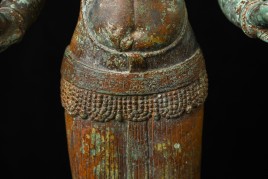
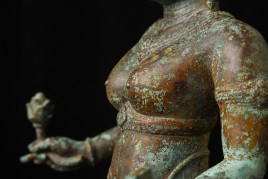
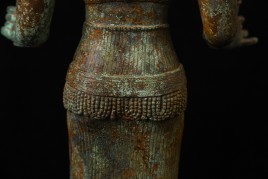
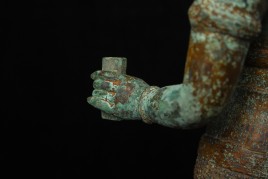
Unlike many Khmer bronzes, this work is cast with an extraordinary delicacy, suggesting a stylistic transition toward early Thai aesthetics—perhaps bridging Bayon and Lopburi influences. The garment details are astonishing: elaborate belt designs, exquisitely rendered textile folds, and meticulously finished dangling jewelry encircling the hips. Enlarged photographs reveal a level of precision in the face, hands, and lotus blossom rarely seen at this scale. The sculpture’s exceptional preservation is likely due to a protective brown lacquer coating that remained on the bronze for most of its life, coupled with long-term placement in a sheltered environment, perhaps a burial chamber or a seldom-disturbed altar.
While I remain open to further stylistic research—and welcome insights from knowledgeable collectors—the consistent mastery displayed in every element strongly supports a Bayon-period origin. It stands as one of the finest large Khmer bronzes I have ever offered. This is not an inexpensive piece—but works of this monumental size, complexity, and quality are extraordinarily rare. True comparables are almost nonexistent.
 Send to a Friend
 Inquire About this Product
Search Settings